
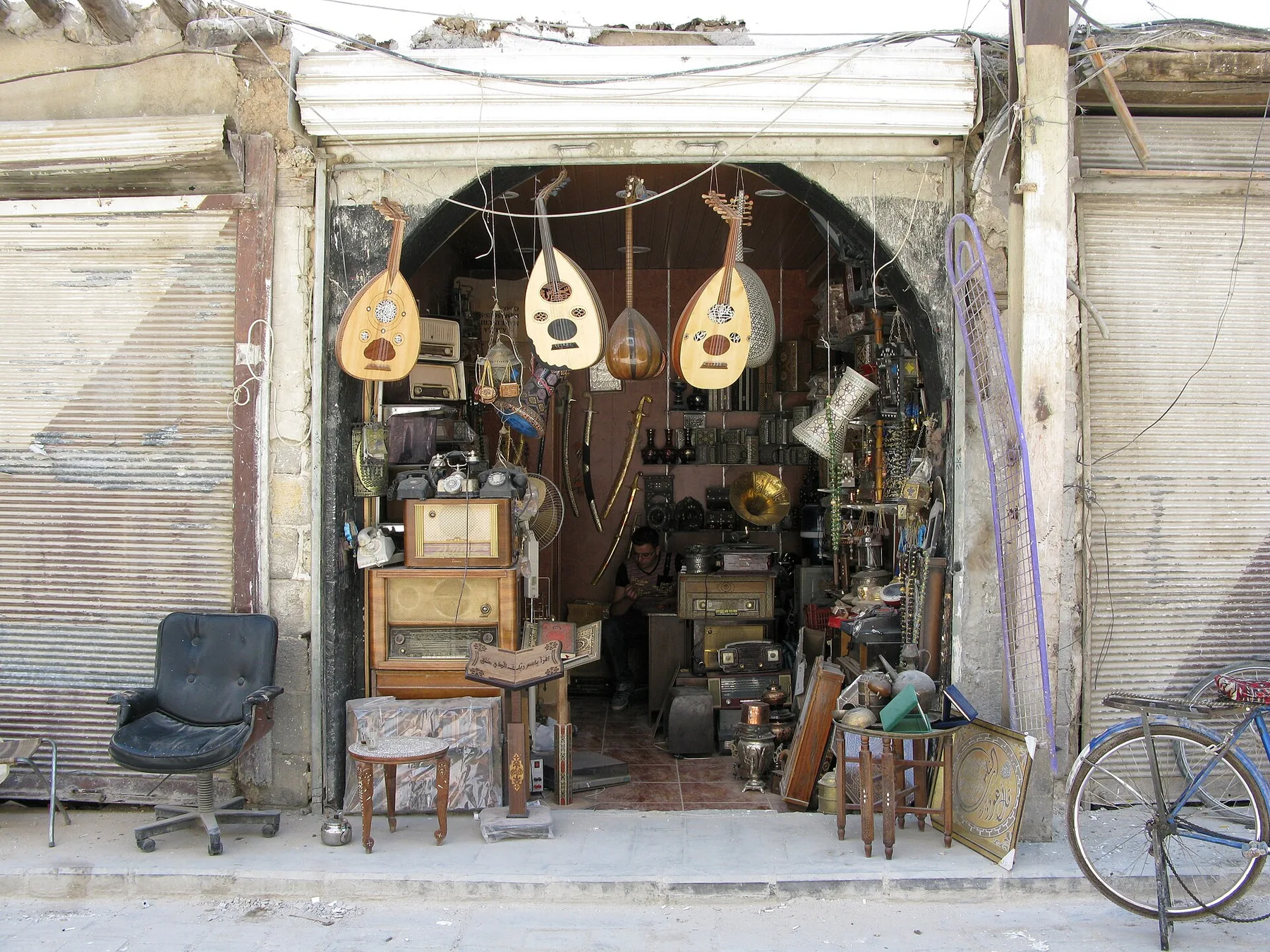
How to amplify an oud without changing its character: on stage or in rehearsal, the instrument projects relatively little sound, and feedback can arise quickly as monitor levels increase.
This practical guide explains how to choose between an external microphone, a miniature microphone, a contact pickup or a combination of these options, then how to position them to preserve the instrument’s tone.
By “discreet and effective,” we mean a solution that is barely visible, easy to install, suitable for different budgets and stable at stage sound levels.
There is no single recipe. The choice depends on the musical setting, the stage, the monitors and the sound level. We will take three steps: understand the challenges of amplification, compare the options, then examine placement and adjustments down to a few centimeters.
What you will learn: by the end, you will know what to buy or rent first, where to place your microphone or pickup, and what trade-offs to accept between natural tone, isolation and resistance to feedback.
Understanding the challenges of amplifying an oud today
On stage, the oud’s low acoustic volume calls for carefully controlled amplification.
Why it projects so little: this plucked-string instrument has a lightweight body and produces limited volume. Its internal resonances are sensitive, making it difficult to isolate in a dense mix.
How feedback occurs: gain is increased to compensate for the instrument’s low projection. The microphone then picks up more sound from the monitors and the room, creating a loop that quickly builds.
Sound preferences: natural or amplified
Since the 1990s in Europe, two approaches have coexisted. One aims to preserve a sound close to the acoustic instrument. The other accepts a more distinctly amplified sound in exchange for volume, isolation and more options for effects.
In practice, a natural sound requires precise placement. A more amplified sound favors reliability and control in a noisy environment.
The people behind the sound
Musician: adjusts position and playing technique. Luthier: makes noninvasive adaptations. Sound engineer: sets gain and EQ and manages the monitors.
“Working as a team of three reduces compromises and helps deliver reliable sound on stage.”
| Challenge | Consequence | Recommended action | Setting |
|---|---|---|---|
| Low projection | High gain required | Precise microphone and careful placement | Small stages and rehearsals |
| Sensitive resonances | Feedback loops | Isolation and a contact pickup | Busy stages |
| Sound preferences | Natural or amplified sound | Choose the appropriate pickup method | Jazz and world music |
Amplifying an oud: discreet and effective solutions
On a noisy stage, choosing the right way to capture the sound can transform how the oud comes across. Here are practical options, from an inexpensive backup to a concert setup.
A dynamic microphone as a backup
Plan B: a Shure SM57 placed a few centimeters away can often save a rehearsal. It handles high sound levels and is easy to position behind a screen.
Its limitation is that it sounds less smooth than a condenser microphone. It requires precise placement and a controlled stage.
A discreet miniature microphone
DPA 4060: well suited to placement near the soundboard to achieve more level before feedback. It delivers a natural sound and can be mounted almost invisibly on stage.
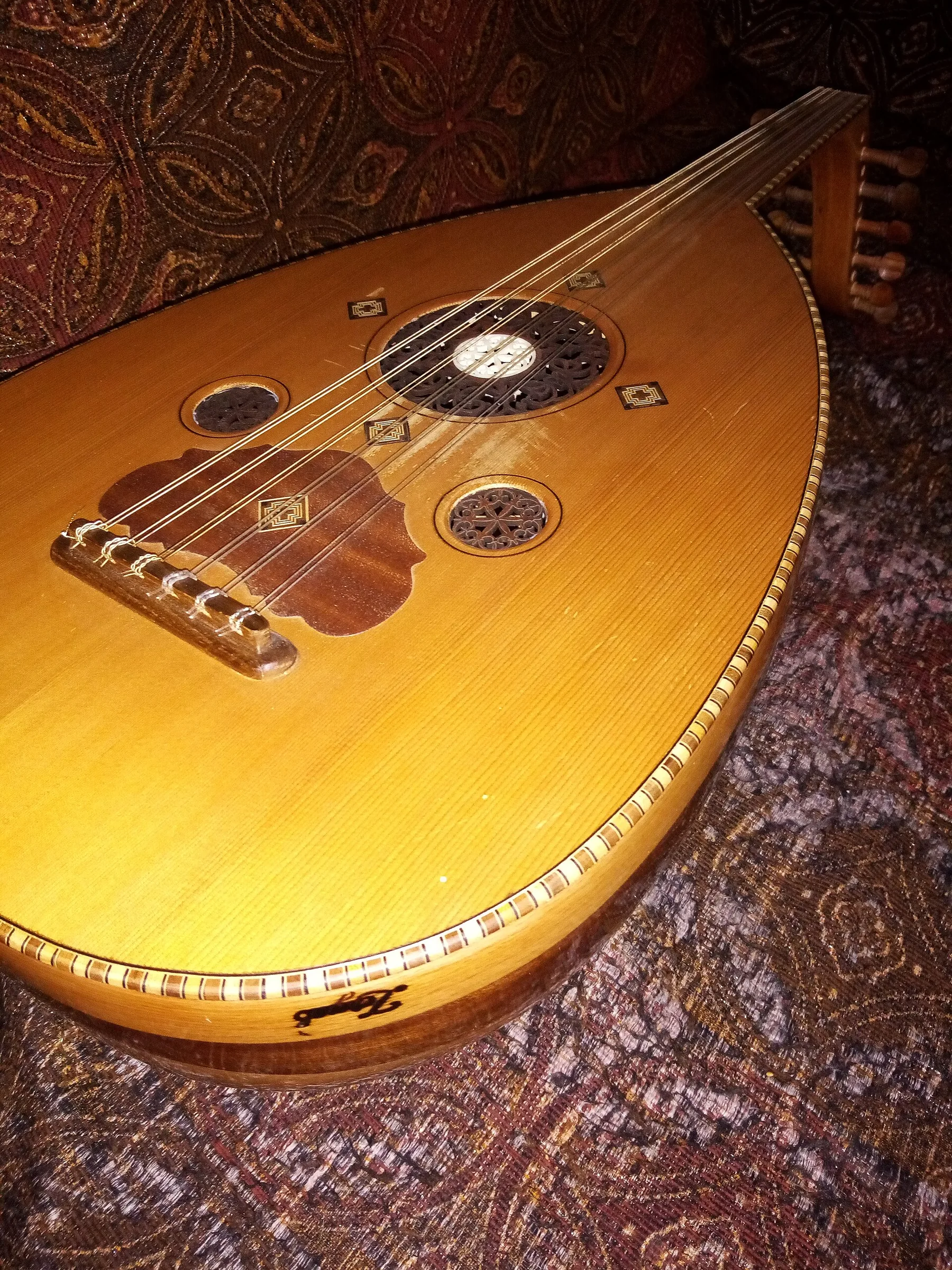
Transducers and contact pickups
Ehrlund EAP and Schertler Dyn-P48 reduce drum bleed and provide more headroom before feedback. Their sound depends heavily on the contact point and the pressure applied.
Moving one by a few centimeters noticeably changes the balance between attack and bass.
Removable and adhesive pickups
AKG C411: the recommended position is below the bridge, on the right when holding the instrument. Use suitable mounting putty and remove it gently to avoid damaging the soundboard. Ischell putties are often cited as reliable.
Recommended combinations
On stage: Ischell C2 + Neumann KM184 + Beyerdynamic M88c to manage attack, air and body. For a simpler setup, use the Ischell alone if it is positioned perfectly.
“The best option is not the most expensive one, but the one that suits the stage volume and preserves the instrument’s character.”
Choose according to the setting: with drums, percussion or brass, favor a contact pickup or transducer for isolation. In an acoustic ensemble, favor microphones positioned near the instrument for a more natural sound.
For a ready-to-use option, also consider this affordable backup microphone if your budget is tight.
Discreet placement and adjustments to limit feedback and preserve the oud’s character
To limit feedback while preserving the instrument’s character, every centimeter around the bridge matters. Sit as close to your oud as possible to reduce the gain needed on stage. This already greatly lowers the risk of a feedback loop.
Step-by-step method: start near the soundboard, around the bridge. Move the microphone or pickup in small adjustments of a few centimeters. Listen to the tone, note the balance between attack and air, then mark the position that works.
For a contact pickup such as the AKG C411, place it “below the bridge” and remove the putty gently. Favor Ischell putty if you often move the pickup between soundcheck and the concert.
- Increase the gain gradually until you reach the feedback threshold.
- Identify the troublesome frequency before applying EQ.
- Avoid pointing the microphone’s sensitive side toward a monitor.
Stage guidelines: stay close to the instrument, ask for a focused monitor mix with little bass, and favor listening at close range over high volume. Always note the position, height and distance so you can reproduce the sound from one concert to the next.
To explore listening and isolation further, read this article on the importance of the mute, which complements this discussion of amplification.
Conclusion
In conclusion, the best approach starts with placement and your position on stage. A few centimeters can change the tone far more than the model you choose.
As a backup, a dynamic microphone placed near the instrument remains effective. For a natural sound, choose a discreet miniature microphone. For noisy stages, choose a pickup or transducer to limit bleed.
Test and record each setting. Put together a suitable kit with a simple option and a high-end option. Documenting your settings saves you from starting over at every show.
Work together: the musician, luthier and sound engineer all contribute to a reliable setup and a coherent musical result.
FAQ
Why does the oud project so little without amplification?
How can you reduce feedback when amplifying an oud?
External microphone or contact pickup: which gives a more natural sound?
Which pickups can be fitted without damaging the soundboard?
Is the SM57 useful as a backup for an oud in concert?
Which combinations are recommended for concerts?
How should you position a microphone or pickup near the bridge?
Do you need a luthier to install a pickup?
What front-of-house equipment helps preserve the instrument’s character?
How should you choose for world music, jazz or amplified ensembles?
What problems commonly arise when changing venues?
Are there recommended options for beginning to amplify an oud on a small budget?
How can you protect the soundboard when using putty or adhesives?
What role does the sound engineer play in successful amplification?
.