
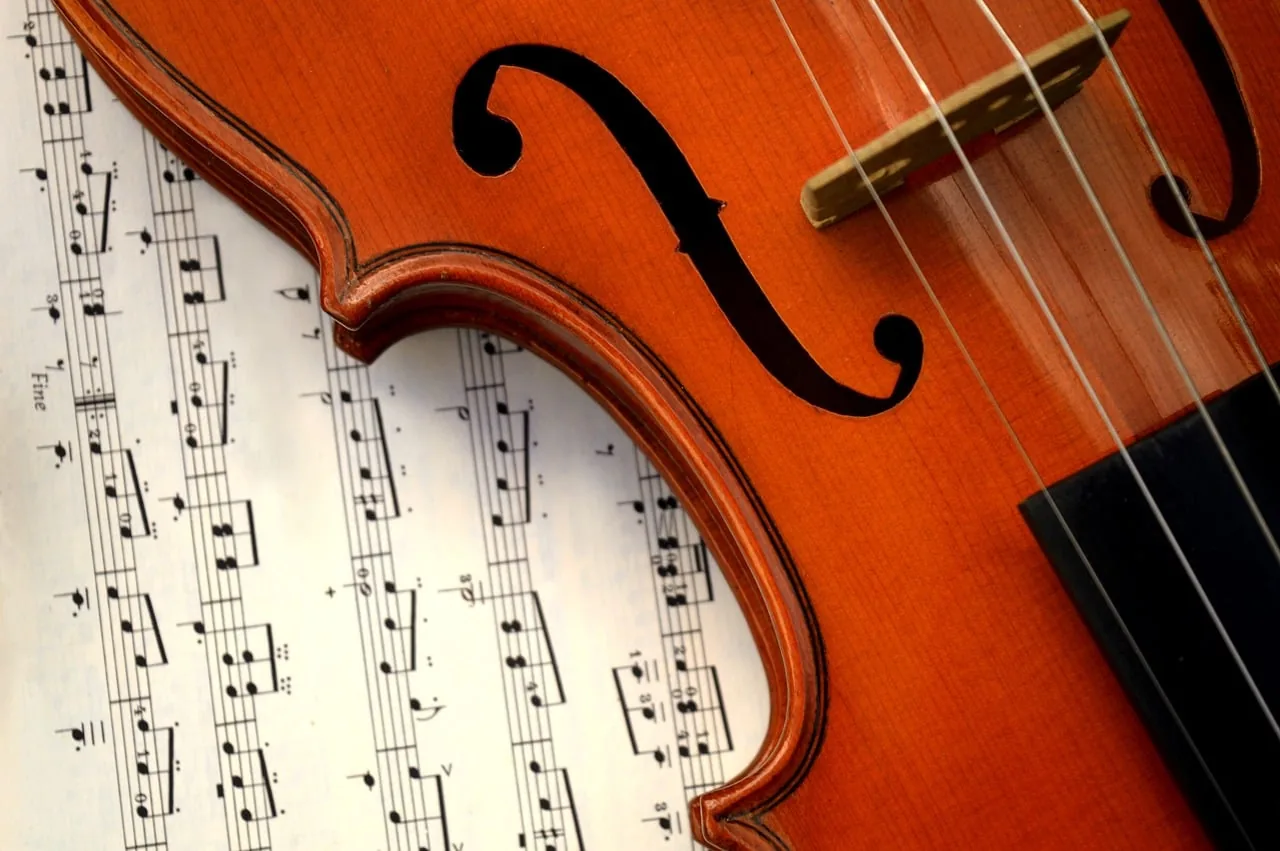
Ingres’s violin refers to a passion or hobby pursued outside one’s profession. This expression invites us to explore its origin and meaning. French in origin, it describes an activity pursued with passion and dedication.
It comes from the French painter Jean-Auguste-Dominique Ingres, an enthusiastic violinist. He lived from 1780 to 1867 and cultivated his passion for music and painting. A Neoclassical painter, Ingres is known for his portraits and history paintings. His interest in music helps us understand the expression Ingres’s violin.
Ingres’s violin is an expression that symbolizes passion and dedication to an activity, artistic or otherwise. Its history sheds light on the meaning of the expression.
The story behind Ingres’s violin
Le Violon d’Ingres is also the title of a 1924 photograph by Man Ray. It shows Kiki de Montparnasse nude, with violin sound holes on her back. The work is considered a masterpiece by Man Ray and presents the woman as a work of art.
Man Ray, an American photographer, is famous for his Surrealist photographs and portraits of celebrities. He met Kiki de Montparnasse in the 1920s. Together, they created iconic works, including Le Violon d’Ingres.
The artistic context of the 1920s
The 1920s were a period of artistic innovation. Artists, including Man Ray, experimented with new techniques. Photography, in particular, had become a recognized means of artistic expression.
Man Ray meets Kiki de Montparnasse
The meeting between Man Ray and Kiki de Montparnasse was pivotal to Le Violon d’Ingres. Kiki, a model and muse, inspired major works by Man Ray. Their collaboration pushed the boundaries of photography and art.
How the photograph came about
The creation of Le Violon d’Ingres is tied to the artistic context of the 1920s. Man Ray, an artist and photographer, wanted to reflect the spirit of his time. The photograph, showing a nude back adorned with violin sound holes, became a symbol of the woman represented as a work of art. It strengthened Man Ray’s reputation as a photographer.
Technical and artistic analysis of Le Violon d’Ingres
The photograph Le Violon d’Ingres is a masterpiece of art. It combines technique and passion. Both Surrealist and erotic, the image depicts a woman’s nude back with violin sound holes drawn on it.
The photograph’s technical characteristics are as follows:
- Technique used: a silver-salt print enhanced with graphite and India ink
- Photograph dimensions: 28.2 cm × 22.5 cm
- Year created: 1924
Man Ray’s passion for art and photographic technique is palpable. Light and shadow create a striking contrast that emphasizes the image’s shapes and textures.

In conclusion, Le Violon d’Ingres is a unique work of art. It combines technique and passion. This Surrealist and erotic image continues to captivate lovers of art today.
| Characteristic | Value |
|---|---|
| Technique used | Silver-salt print enhanced with graphite and India ink |
| Photograph dimensions | 28.2 cm × 22.5 cm |
| Year created | 1924 |
The symbolism and meaning of Le Violon d’Ingres
Le Violon d’Ingres is a work of art rich in symbolism and meaning. Jean-Auguste-Dominique Ingres, a painter and violinist, loved music. That passion is reflected in Man Ray’s work, which connects the visual arts with music.
The meaning of the photograph also concerns the representation of a woman as a work of art, a common theme in Surrealism. It shows a nude woman with violin sound holes on her back. This creates a Surrealist and erotic image that symbolizes passion and creativity.
By visiting Man Ray Violon, you can learn more about Man Ray and his use of symbolism and meaning in photography. The violin, with its 71 parts and four strings, inspires many artists, including Man Ray.
The title’s double meaning
The title “Le Violon d’Ingres” has a double meaning. It refers to Jean-Auguste-Dominique Ingres’s passion for the violin and to the representation of a woman as a work of art. This duality enriches the work and gives it greater depth.
Cultural impact and artistic legacy
Le Violon d’Ingres is a highly influential work of art. Florence Gétreau’s study shows how the photograph changes the representation of women in art. It highlights the work’s cultural impact on how artists depict women and the female body.
Photography has transformed art, particularly modern photography. Man Ray’s works hold an important place in art today. Contemporary artists use photography to explore new ideas.
Many artists have revisited Man Ray’s work. Here are some examples of his influence:
- Contemporary artists use photography to explore new themes and styles.
- Reinterpretations of Man Ray’s work attest to his influence on modern photography.
- Artists use photography to depict women and the female body in innovative ways.
In conclusion, Le Violon d’Ingres has had a major impact on art. The photograph has influenced many artists. The place of Man Ray’s works in contemporary art attests to their importance today.
| Artist | Work | Year |
|---|---|---|
| Man Ray | Le Violon d’Ingres | 1924 |
| Contemporary artists | Reinterpretations of Man Ray’s work | 2000 |
Conclusion: Le Violon d’Ingres, a timeless work
Le Violon d’Ingres is a masterpiece that has stood the test of time. Created in 1924 by the celebrated photographer Man Ray, this Surrealist photograph has captivated audiences since its creation.
It represents a woman as a work of art, a theme dear to the Surrealists. The image is both sensual and creative.
Le Violon d’Ingres still inspires artists today. Its reinterpretations and the tributes paid to it testify to the photograph’s symbolic depth. It continues to prompt reflection on the place of women in art and society.
It represents passion, creativity and the timeless nature of art.