Arab Lute: Differences Between the Oud, Qanbûs and Other Models

Arab lute: differences between the oud, qanbûs and other models. Explore the history and distinctive features of each instrument.

Goal: distinguish the “classical” oud from the Yemeni qanbûs and place related instruments in context without confusing their families.

For readers in France, I suggest a simple method: examine the body, soundboard and neck; listen to the timbre and projection; and consider the repertoire and ensembles in which the instrument is played.

Working definition: “Arab lute” mainly refers to plucked string instruments with a neck that are associated with the modal system (maqām) and ornamentation.

We will also discuss regional variations in names and how the same instrument can acquire different names. Concrete examples will cover song accompaniment, improvisation (taqsīm) and the role of these instruments in major regional suites.

To place the instrumental ensemble in context, we will mention the qānūn, rabāb and nāy without presenting them as lutes.

A brief historical overview runs from the Islamic Golden Age through the revivals of the nineteenth and twentieth centuries to modern changes in strings. Readers will find clear reference points here for recognizing shapes, names and playing practices.

Understanding the Arab lute: instrument family, uses and essential features

Before identifying each instrument, let us establish a few simple reference points for understanding the plucked string family.

What the term covers in French concerns both playing technique and shape: a plucked string instrument with a neck, played for melody and ornamentation. Organological classifications further describe its melodic role and the frequent absence of frets.

Musical role: the instrument supports the maqām, enables ornamentation and taqsīm, and accompanies the voice in many repertoires. Its woody tone and ability to produce microintervals are useful listening clues.

In an ensemble, it interacts with the qānūn (articulation and arpeggios), the nāy (sustained lines) and the rabāb (continuous tonal color). The Arab World Institute remains a useful reference and catalogue for discovering instruments in its collections.

Feature Characteristic What to listen for
Neck Often fretless Microintervals, glissandi
Soundboard and body Wood or skin, depending on the variant Warm or percussive tone
Function Melody and accompaniment Support for the maqām

To learn more, consult this study of fretting and theory. The next section sets out the visual and sonic features that distinguish the variants: size, soundboard, timbre and playing position.

Arab lute: differences between the oud, qanbûs and other models

Let us now examine the visual and musical features that distinguish these two instruments.

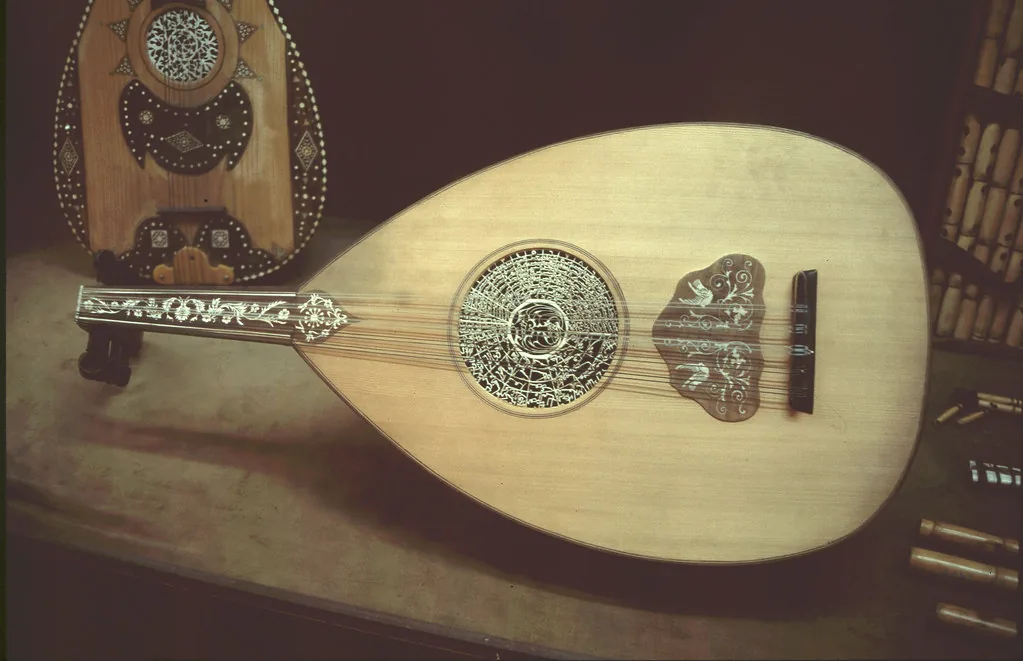
What a “classical” oud looks like

Identification: a large instrument with a pear-shaped body, short neck and rosettes.
This shape helps it project in an ensemble. Its sound develops quickly and supports the maqām in an orchestra.

What a Yemeni qanbûs looks like

Small lute: it has a more compact body and a narrower outline. Associated with ghinâ’ san‘ânî, it has local names including turbî, ‘ûd san‘ânî, qabûs and qabbûs. Its sound favors an intimate connection with the voice.

Close-up of an oud soundboard

Visual features and musical role

Observe the proportions of the neck and body, the soundboard material (wood or skin) and the overall impression: an instrument for intimate settings or for an ensemble. Musicians often use the terms inconsistently, while audiences hear “oud” as a generic name, leading to frequent confusion.

  • Oud: a mainstay of the takht and a solo instrument for taqsīm.
  • Qanbûs: associated with the urban repertoire of Sanaa and a more intimate aesthetic.
Keep reading  Lute and guitar: similarities, differences and connections

To understand how construction affects sound, consult this account of the qanbûs-making process. The next section compares these instruments’ structure, soundboards and necks.

Oud and qanbûs: an organological comparison (shape, neck, soundboard and body)

In summary, remember the essentials: construction, timbre and playing context together help explain each instrument.

The differences in appearance and sound stem from body size, soundboard material (wood or skin) and attack. A larger lute projects more strongly; a more compact instrument favors intimacy. Playing techniques and instrument shapes directly influence the texture of the music.

The oud remains a historical and theoretical model documented since the ninth century; the qanbûs embodies a local tradition that is vulnerable but still alive. Its names convey information about geography and practice; they are more than simple labels.

Choosing an instrument also means choosing a repertoire and techniques. Listen to focused examples to connect structure with sound: explore the oud’s varied histories, a study of the qanbûs and a broader historical perspective in these resources (the many lives of the oud, Swahili and Comorian variants, legacies and transformations).

FAQ

What does “lute” mean in the musical traditions of the Arab world?

The word refers to several plucked string instruments, including the oud and qanbûs. It covers forms with wooden bodies or skin soundboards, fretted or fretless necks, and uses ranging from vocal accompaniment to learned instrumental pieces. Its meaning varies by region and period.

How can you tell an oud from a qanbûs by sight?

The oud has a pear-shaped wooden body and a short fretless neck. The Yemeni qanbûs often has a skin or flat wooden soundboard, a smaller body, and fixed or movable frets depending on the variant. The number of strings and overall size are also important clues.

Which materials affect the timbre of the two instruments?

The soundboard and body shape the sound: solid wood produces a warm, rich tone, while skin produces a drier, more percussive sound. The choice of wood (maple, spruce or walnut) and whether the body is carved from one piece or assembled also affect resonance.

Why do some necks have no frets?

A fretless neck allows the microtonality and glissandi essential to maqām. It gives players the flexibility to express intervals characteristic of classical and popular repertoires across the Arab world.

Has the number of strings changed over time?

Yes. Sources describe four courses of strings during the Islamic Golden Age, followed by the gradual addition of a fifth string (attributed to Ziryab in some traditions) and a sixth in the twentieth century to extend the range and meet modern musical demands.

What roles do these instruments play in traditional ensembles?

They accompany singing, carry the melody in the waṣla, serve in improvised taqsīm and support the rhythm while interacting with the qānūn, rabāb and nāy. Their function varies with the repertoire, from discreet accompaniment to virtuosic solos.

Is the qanbûs found only in Yemen?

The qanbûs is most strongly associated with Yemen, but variants occur in the Hijaz, Oman and the Ottoman world under other names, including qabûs and qabbûs. Both shape and name vary with local tradition.

What are the characteristic playing techniques of the right and left hands?

The right hand uses a plectrum or finger picks to produce the attack and octave effects; it creates accents and ornaments. The left hand controls microtonal positions, glissandi and finger pressure that shape the maqām and rhythmic articulation.

Which historical sources mention these instruments in the medieval period?

Treatises by al-Kindī and al-Fārābī describe music theory and related instruments from the ninth century onward. Medieval texts and images document changes in their shape and musical use through the Ottoman period.

How did modernization during the Nahda transform these instruments?

The Nahda encouraged more standardized shapes, additional strings, wider circulation through 78 rpm recordings and the adoption of larger models for greater volume. It also brought new aesthetics and instrument-making techniques.

Is there a repertoire specific to the Sanaani qanbûs?

Yes. The Sanaani qanbûs belongs to a Yemeni urban tradition that includes sung and instrumental repertoires, oral transmission and heritage preservation. Some pieces and Yemeni modes remain distinctive to this practice.

What are the current challenges in passing on and safeguarding these traditions?

The declining number of master musicians, globalized tastes and commercial pressures threaten traditional knowledge. Teaching initiatives, recordings, UNESCO projects and a new generation of musicians help preserve these traditions.

How should you choose an instrument for learning in France?

Assess comfort, volume, maintenance and the availability of strings and replacement parts. Beginners should favor a stable, properly adjusted instrument and consult respected luthiers or associations specializing in world music to find one suited to their intended repertoire.

Can these instruments be used in contemporary world music?

Yes. Many musicians include the oud and qanbûs in fusion, jazz and contemporary music projects. Their range of sounds and rich microtonal possibilities appeal to composers and improvisers internationally.

Which regional differences in naming should you know?

The same instruments can have various names: ‘ûd, san‘ânî, turbî, qabûs, qabbûs and others. These names reflect regional identity, construction and use. Knowing the context helps avoid confusion.

Where can you find teaching resources and reference recordings?

Look for historical recordings (Oum Kalthoum, Munir Bashir), university collections, specialist conservatories and publications by instrument makers. Sound archives and Arab music centers offer valuable methods and documents.

Leave a Reply

Your email address will not be published. Required fields are marked *