

What is a lutenist in France looking for when entering this search? They want reliability, legibility and pieces they can play. They also want sources to be respected and editorial decisions to be traceable, so they can practise early music with confidence.
A modern score indicates pitch and rhythm, while historical tablature shows where to place the fingers and how to pluck the strings. Both forms of notation are used today because they serve different purposes.
We will cover the main options: online libraries, websites and organizations, publishers, and recent urtext editions. By the end, you will know where to look, how to choose an edition and how to adapt your reading to your instrument, whether it is a lute, liuto forte or guitar.
Some tablatures can be learned in a few days, opening up access to many original sources. A “reliable” edition does more than avoid errors: it must be traceable and consistent with instrumental practice. Bear in mind that the same repertoire may appear in different notations, and your choice affects both technique and sound.
What makes a lute tablature “reliable”?
Knowing how to recognize trustworthy tablature helps musicians save time and play more accurately. Reliable tablature lets you play the right notes, follow the source and avoid common problems: faulty copies, ambiguous rhythms or impossible chords.
- Original notation: maximum authenticity, implicit fingerings and the logic of its period.
- Facsimile: a faithful reproduction of a manuscript or print; useful for checking sources.
- Transcription into a score: easier for readers of standard notation, but it may impose interpretive choices.
To assess quality, look for references to the sources, a critical apparatus, clearly identified corrections and a legible layout. Presenting variants separately helps prevent confusion.
Tablature “shows exactly where to put your fingers”; a lutenist can therefore learn a piece in a few days. A guitarist, by contrast, often reads from a conventional score and follows a different approach.
Next, we will see how to find these editions online and through specialist publishers. For a practical example, see a useful free score to compare the methods.
Lute sheet music: where to find reliable tablature
To choose between a facsimile and a modern edition, start by defining what you need for your playing.
Today, urtext means returning to the sources, comparing variants and clearly identifying corrections. A genuine critical edition explains its decisions; it does not erase alternative readings.
In practice, you have three types of publication to choose from:
- Facsimile: direct access to the original source, useful for research and verification.
- Critical edition: justified editorial decisions, a critical apparatus and greater legibility for performance.
- Practical transcription: designed for learning and often easier to use on the guitar, but less traceable.
When should you choose a facsimile? When you want to compare versions, understand period notation or consult the source directly.
Choose a modern edition when you need to study and rehearse quickly and turn the pages easily. Its price often reflects the work of checking sources and preparing a performer-friendly layout.
Before adding a publication to your cart, check which sources it cites, preview its pages and see how it presents variants. For an example of a complete edition, see this complete Dowland edition.
Major online sources: libraries, manuscripts and digitized prints
Many original sources are now accessible through major libraries. Start with these sites, then explore their early music holdings or digitized lute collections.
Where and how to search
Visit the home page, search for “music” or “early music,” then filter the results for manuscripts and prints. Favour collections that provide a catalogue record and date.
Benefits and limitations
Benefit: free access to original sources is ideal for comparing pieces and variants.
Limitation: a raw scan is not always ready to play from. Missing pages, poor contrast or folios in the wrong order call for further checks.
How to read a scan efficiently
- Check the pagination and contents lists; note any missing folios.
- Identify French or Italian notation, spelling conventions and ornament signs.
- Compare at least two sources where possible, and record differences that affect playability.
| Step | What to check | Why it matters |
|---|---|---|
| Home page | Catalogue record and metadata | Confidence in dating and attribution |
| Scan | Contrast, resolution, pagination | Reliable reading or the need for a critical edition |
| Comparison | Variants between manuscripts | An informed interpretive choice |
For a scholarly approach and annotated editions, consult an available critical edition. It helps turn a raw source into a usable document within a few days, whether you play lute or guitar.
Reference websites and organizations for finding tablature
Specialist organizations often provide access to checked sources. They offer a reliable starting point for bibliographies, scans and active communities, saving you time searching online.
Lute Society of America: a useful lead
The website of the Lute Society of America points to catalogues, articles and manuscript records.
Use it to identify repertories and links to original sources. It is useful when you need an authentic version or a focused bibliography.
Directory and links pages: lautengesellschaft.de/links-en.html
The Lautengesellschaft page lists libraries, publishers and digitization projects. It helps you identify relevant repositories quickly.
- Create a list of bookmarks organized by period, composer and instrument.
- Record the quality of the scans and whether the catalogue records are complete.
- Always compare several sources before settling on an edition.
A word of caution: a link does not guarantee the quality of a document. Check its cited sources, consistency and legibility before using it to play.
“You can find original sources… for example, on lutesocietyofamerica.org”
Specialist publishers: buying reprints and getting advice
Specialist publishers offer more than a publication: they select works, reprint them carefully and help you choose repertoire.
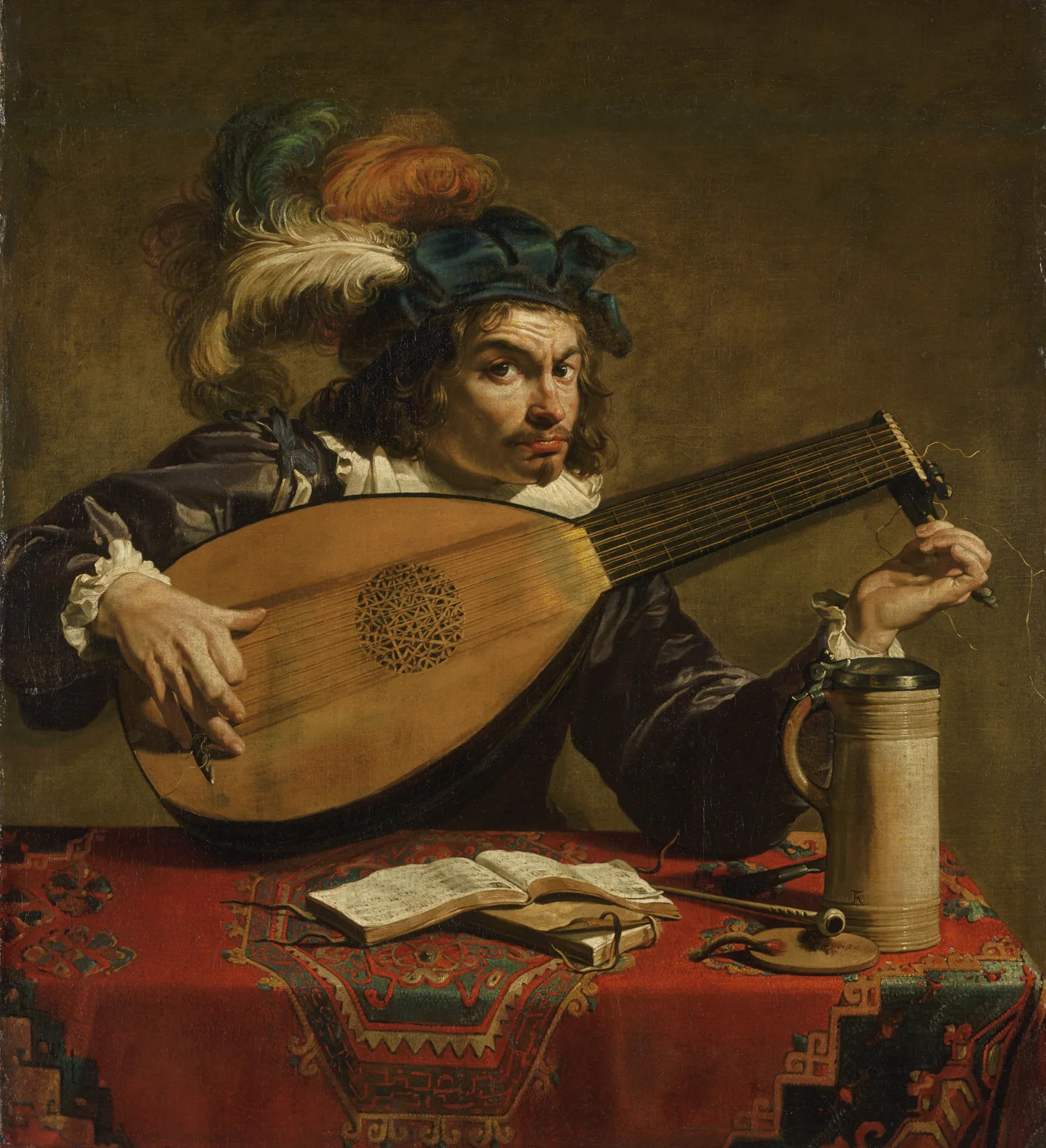
Seicento (Rainer Luckhardt) offers transcriptions and reprints. You can order a suitable score, ask for advice on your first pieces and choose a version that fits your instrument.
Always check the intended tuning, range and stated number of courses or strings. An edition unsuited to your instrument will be unusable in rehearsal.
What a publisher provides
- Selection: editorial quality and source checking.
- Reprints: clear, legible copies for playing.
- Advice: help choosing pieces and adapting them to guitar, liuto forte or lute.
| Service | Benefit | When to use it |
|---|---|---|
| Transcription | Immediate reading in modern notation | For workshops and rehearsals on a tight schedule |
| Reprint | Clear pages and practical pagination | Concerts and ensemble work |
| Editorial advice | Selection by skill level and instrument | Building a coherent library |
Ordering from Seicento (www.seicentomusic.de) can save days of checking. Before buying online, select publications that meet your needs and review their critical apparatus.
“Le Luth Doré” urtext editions: what a modern critical edition promises
An urtext edition should give musicians choices they can read and trace. A modern edition should provide consistent tablature, support fluent reading and clearly explain its editorial decisions.
Engraving, layout and critical apparatus: what are they for?
Careful engraving: controlled staff density and page turns planned to help you practise quickly and accurately.
Practical layout: visible phrasing and durable materials make rehearsals and concerts easier.
Parallel French and Italian tablature
Providing both notations makes comparison easier and respects both traditions. Lutenists can switch between them and choose the one they read most comfortably.
Annotations and variants
The critical apparatus identifies errors and alternative readings. Treat variants as options supported by sources A and B, then choose the one that makes musical sense.
Avoid excessive editorial intervention: consider the notes without letting them make your interpretation rigid. This leaves room for your own playing.
| Element | Benefit | Use |
|---|---|---|
| Engraving | Easy reading | Daily study |
| Parallel tablature | Quick comparison | Interpretive choices |
| Critical apparatus | Traceability | Research and verification |
For a concrete example, see the announced Dowland edition, presented as a reference volume.
Dowland in focus: a reference edition announced for 2026 (Nigel North)
A complete Dowland volume changes how early music can be studied and programmed. Published in Paris in 2026, “John Dowland – The Complete Works for Lute Solo and Duet,” edited by Nigel North, aims to bring the sources together in a form performers can use directly.
What the volume covers
The collection includes solo lute works and duets: pavans, galliards, almains, corantos, jigs, ballad tunes, preludes and seven fantasias.
Editorial method
The edition is based on an exhaustive comparison of sixteenth- and seventeenth-century manuscript and printed sources. Nigel North offers a consistent rendering in tablature to make performance and the checking of readings easier.
Organization and catalogue contents
90 authenticated works are presented, with their multiple versions edited in full. Appendices address disputed attributions and alternatives.
Tools for performers
The book provides an extensive critical apparatus, a guide to left-hand ornaments and both French and Italian tablature. Its layout is designed for daily study and ensemble work.
| Element | Description | Usefulness |
|---|---|---|
| Scope | Solo works and duets in varied genres (pavans, galliards…) | Balanced repertoire for study and concerts |
| Sources | Comparison of sixteenth- and seventeenth-century manuscripts & prints | Traceability and historical fidelity |
| Catalogue | 90 authenticated works and multiple versions | Choosing a version to suit your level and instrument |
| Tools | Ornament guide, parallel tablature, critical apparatus | Practical reading for conservatory and ensemble use |
In practice, this presentation helps you understand how a piece evolved and choose a version suited to your instrument, from lute to guitar. Moving on to Baroque repertoire such as Bach then calls for a check of playability and tuning before you buy an edition.
Bach in focus: finding and using a playable edition (Moseler Verlag)
Playing Bach on a plucked-string instrument calls for a clear edition suited to performance.
Bach / Kompositionen für die Laute (Moseler Verlag) is described as the first complete and critically revised edition. This means its editorial decisions are explained and its corrections are based on the sources, allowing musicians to distinguish the editor’s choices.
Playability: six- or ten-string guitar and the “8” markings
The score can be played directly on guitar without tablature. Guitarists read the modern notation and often begin on a six-string guitar.
A ten-string guitar can reproduce the original more faithfully: its extra bass strings make the lines more natural. The “8” markings indicate a lower octave. Ignoring them makes the music easier to read on six strings but leads to awkward fingerings.
Tuning and transposition for lute
A lutenist can tune the instrument “like a guitar” and add four basses (D, C, B, A), or transpose the work up a minor third. Each option changes the works’ tone colour and range.
| Option | Benefit | Limitation |
|---|---|---|
| Six-string guitar | Direct reading and comfortable hand positions | More complex fingerings if the “8” markings are ignored |
| Ten-string guitar | Bass notes available and a sound closer to the lute | A less common instrument |
| Lute tuned like a guitar | Compatible with the score | Requires additional basses and adjustments |
In practice, choose an edition that explains its interventions and suits your instrument. Your study will be quicker and more reliable within a few days.
Choose by instrument and tuning: lute, liuto forte, guitar
Adapting an edition to your instrument affects both fidelity to the original sound and ease of performance. An edition’s reliability therefore depends on how well it fits the instrument, tuning and range, as well as on its musicological decisions.
D-minor lute: beware of transposing upward
Transposing works in D minor for a six-string guitar often pushes the musical lines into a higher register.
This changes the tone colour, weakens the bass and complicates some fingerings. The result can distort the intended sound.
Liuto forte: make use of the bass strings
The liuto forte has additional bass strings. You can retain the original key or transpose down by a semitone or whole tone for keys with many flats.
Example: Sylvius Leopold Weiß’s works in D minor gain depth on a liuto forte.
Pitch at 415 or 392 Hz: a direct effect
Tuning to 415 or 392 Hz brings you closer to a historical sound. It changes how the string tension feels under your fingers and how comfortable the instrument is to play.
| Parameter | Effect | Advice |
|---|---|---|
| Transposing upward | Loss of bass resonance | Avoid it if possible; favour instruments with bass strings |
| Additional strings (liuto forte) | Better reproduction of bass lines | Keep the key or transpose down by a semitone to a whole tone |
| Pitch at 415 or 392 Hz | Historical tone colour and different tension | Choose according to playing comfort and ensemble needs |
Once you have decided on these parameters, use a checklist to assess an edition before buying it. This reduces the chance of buying an unsuitable score.
How to spot a good edition before adding it to your cart
Before adding a volume to your cart, check what makes it usable.
Check the catalogue
Catalogue: check the period, list of composers, cited sources, index of pieces, treatment of different versions and presence of appendices.
Check legibility
Check the print size, spacing, density of the systems and how easily you will be able to turn the pages.
Ask to preview the first page: legibility is an essential consideration before purchase.
Check the context
Look for stylistic guidance and information about ornaments and fingerings, and check whether the tablature uses plausible positions.
Note whether the scores indicate transpositions or include tuning warnings.
Tip: match your selection to the player. A beginner can learn tablature in a few days, while a guitarist may sometimes prefer a conventional score. Spending two or three days on these checks can prevent costly mistakes and help you build a useful library.
Build your sheet-music library: a suggested path for your goals
A gradual approach turns buying sheet music into a learning project. Set yourself a goal: performing, studying or playing with others. It will guide your choice of editions, methods and layout.
Starting out: short pieces and methods
Begin with short pieces and simple methods. The aim is to learn to read tablature in a few days and gain quick access to the sources.
Choose easy songs and dances. Work on basic reading and memorizing fingerings.
Intermediate level: Renaissance and Baroque music
Expand your repertoire to include the Renaissance (Dowland), then the Baroque period. Study variants and compare editions.
A complete Dowland edition helps conservatories and ensembles work from a common text.
Advanced level: cycles and ensemble work
Take on longer works, cycles and duets. Prepare for concerts and recordings by checking pagination and consistency between editions.
For conservatories and ensembles
Use the same editions and keep the presentation of the pages consistent. This prevents discrepancies in rehearsal and makes group work easier.
If you also play guitar, keep compatible editions or clear transpositions so your library works across instruments.
Practical advice: to account for public access and the needs of amateur musicians, consult this useful guide to serving musicians in libraries: practical guide for music libraries.
Conclusion
In summary, use three criteria to guide your choices.
Understand the formats and signs of quality: facsimile, critical edition or urtext. Choose according to your purpose (study, concert or research) and instrument.
Know where to look: digitized libraries, specialist societies and directories. Check that the sources are cited and legible.
Adapt the score to your instrument (lute, guitar or liuto forte). Consider tuning, range and what six or ten strings make possible, as with Bach, or the 2026 Dowland edition for a complete repertoire.
Follow the checklist before adding a publication to your cart. Learn tablature in a few days to access the original repertoire quickly. You now have a practical method for finding, checking and using reliable resources in France.