
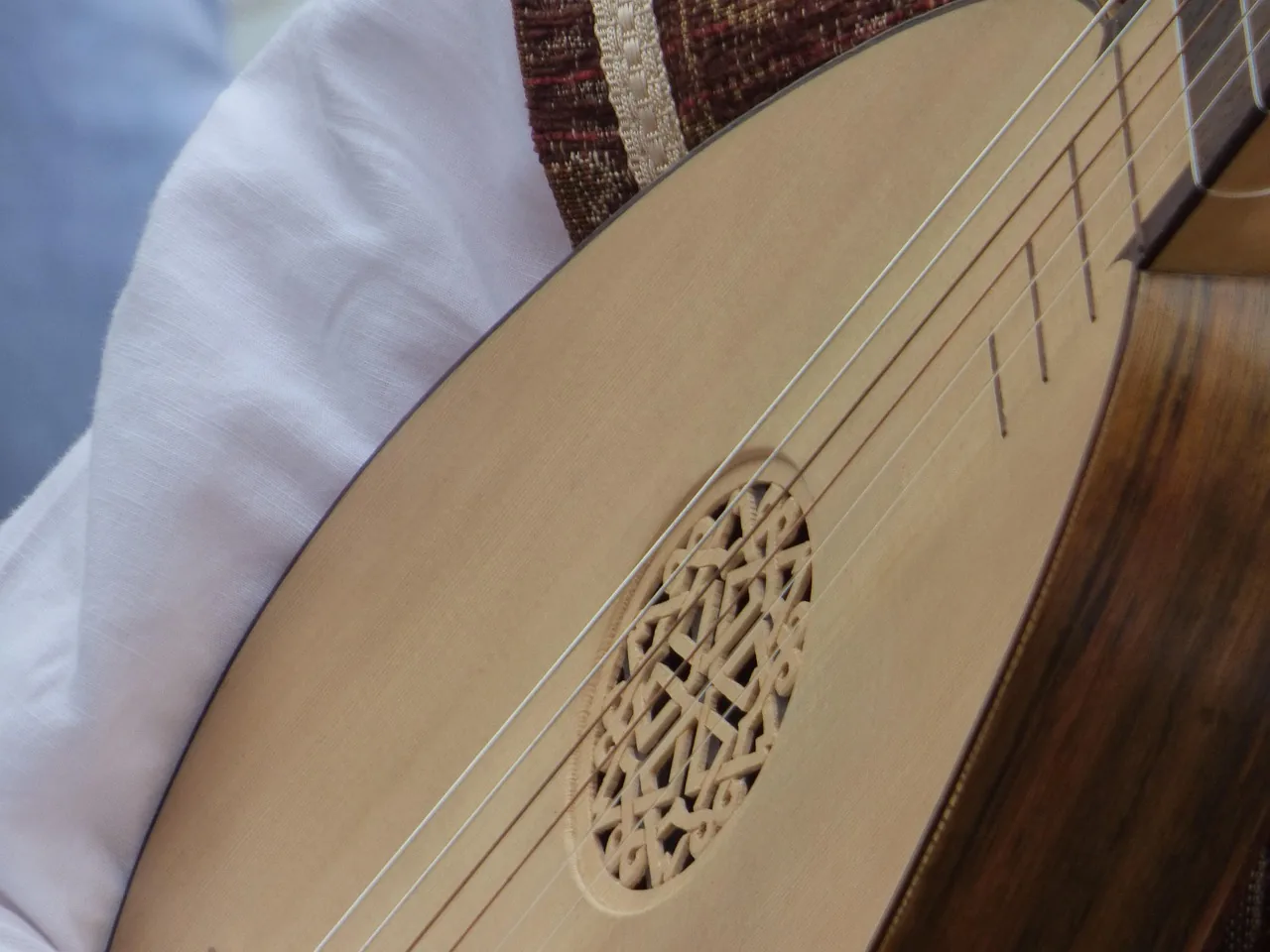
What this guide offers: a clear overview of the lute, its definition, history and uses.
You will find practical answers: what the instrument looks like, how to tune it and what distinguishes it from the guitar.
The guide places the lute in early and contemporary music, from its central role in the 16th and 17th centuries to its revival in the late 19th century. It explains its Middle Eastern origins and its links to the oud and Arab tradition.
Key terms: strings, courses, chanterelle, frets, pitch standard, tablature.
Reading path: first understand what the instrument is, then explore its origins (from the oud to Europe), its construction (body, soundboard, neck), its strings and tuning, and finally how to learn and listen to it.
To explore the history of the lute and discover its different configurations, use this guide as a practical reference and a starting point for playing or listening.
What is a lute, and which family of instruments does it belong to?
Appearing in many forms, the lute refers to a group of plucked string instruments designed to be played with the fingers. Most models have strings grouped into courses and a pear-shaped body, often with a sharply angled pegbox.
In the Hornbostel–Sachs system, the term can describe any instrument whose strings run parallel to a neck. In other words, the classification extends beyond the best-known Renaissance and Baroque lutes.
Compared with the guitar, the playing action is similar: the strings are plucked. The construction differs, however, with double courses, an angled pegbox, carved roses and a distinctive tablature. The sound is softer and less projecting, rich in nuance and suited to intimate polyphony.
To place plucked string instruments from around the world in context, we will discuss the theorbo, archlute and oud later. Its outline can help you recognise a lute, but many historical variants exist.
Origins and spread of the lute: from the Middle Eastern oud to the Western lute
The history of the lute begins in the Middle East with the oud, which reached Europe through the Iberian Peninsula. The word itself comes from the Arabic al-ʿūd, reflecting exchanges between Mediterranean cultures.
Persian and Arab roots
The original oud has a short, fretless neck. It is used mainly to play melodic lines. This role contrasts with the one the instrument would later take on in Europe.
Arrival in Europe and the 14th-century turning point
Having arrived through Moorish-influenced Spain, the lute changed in construction during the 14th century. The addition of frets and a longer neck made polyphony possible.
From monody to polyphony
Frets made accurate playing and the layering of voices easier. The instrument thus found a place at the heart of courts and salons. The search for richer harmonies encouraged a wider variety of forms and tunings.
In short, this lineage explains its construction (ribbed body and angled pegbox) and the variety of forms found across countries and repertoires.
Main types of lute: the oud and Western forms
The lute family divides between the Arab tradition and European developments. These two branches differ in playing style, shape and musical role.
The oud’s role today
The oud remains central to music in North Africa and the Middle East. Its playing favours melodic lines and ornamentation.
It often has few frets or none at all. Its singing tone lends itself to modes and improvisation.
Evolution of the Western lute
The Western version favours polyphony. Over the centuries, lower courses were added to extend its range.
Visual guide: Renaissance (6 to 8 courses), pre-Baroque period (several courses), Baroque (up to 13 courses). The need for additional bass notes gave rise to the theorbo and archlute.
| Type | Use | Number of courses | What to listen for |
|---|---|---|---|
| Oud | Melodic (North Africa, Middle East) | 1 to 6 | Singing line, ornaments |
| Western lute | Polyphonic (Renaissance to Baroque) | 6 to 13 | Broken chords, counterpoint |
| Theorbo / archlute | Accompaniment, extended bass range | Additional courses | Continuo, continuous bass line |
To learn to identify what you see or hear, compare three examples: a solo oud, a Renaissance lute and a Baroque lute. You will soon hear differences in texture and use.
For more historical background and examples of instruments, consult this history of the lute.
The lute: understand this musical instrument in one page
Before listening or buying, identify what gives the lute its distinctive sound. These pointers make choosing one easier and help guide your playing.
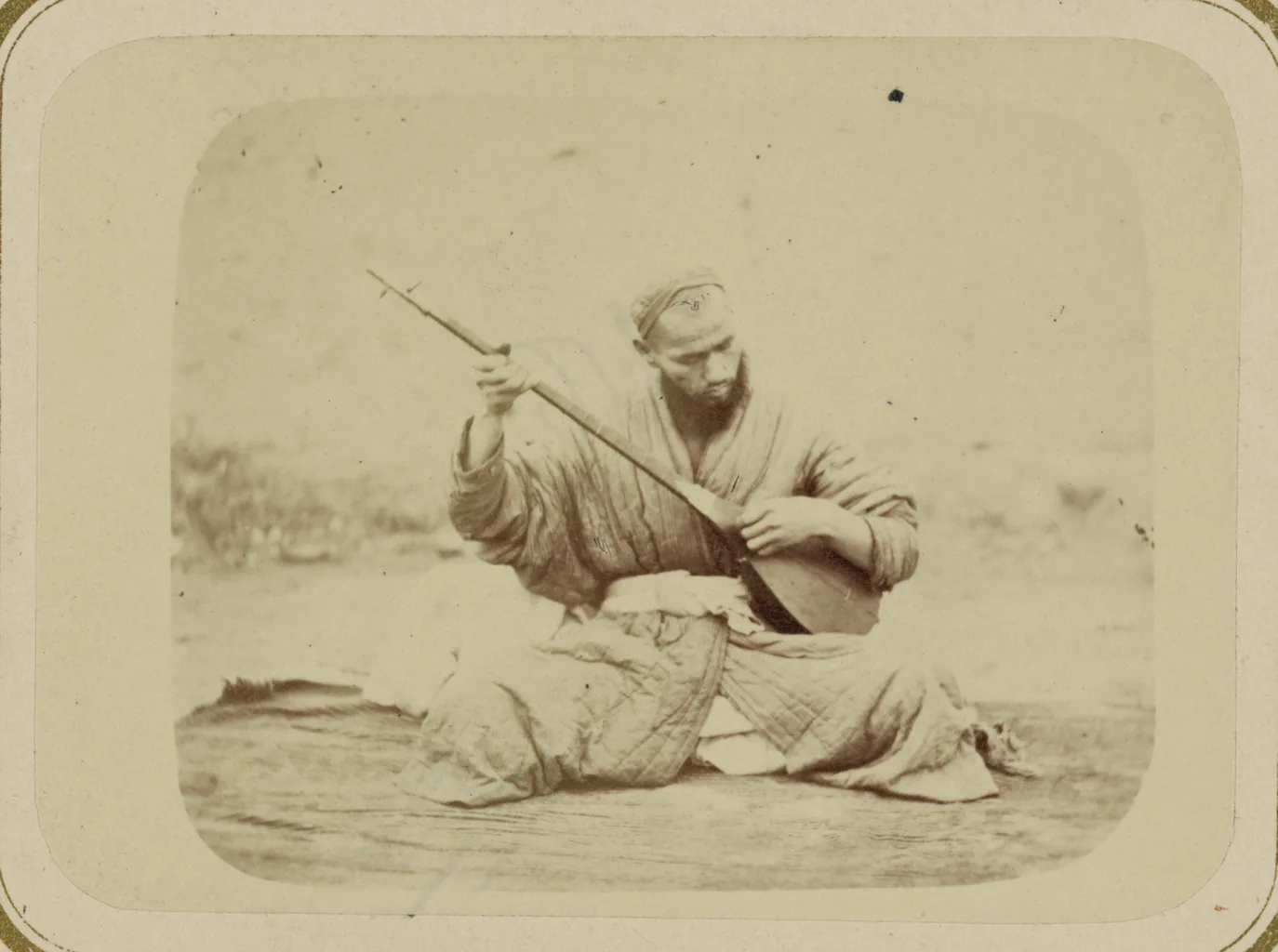
Practical checklist
- Type: Renaissance or Baroque.
- Number of courses: directly affects harmonic density.
- Materials: spruce soundboard, back made from various woods, hardwood fingerboard.
- Intended tuning and string length: these are not standardised; check the intended tension.
- Strings: gut or metal strings change the tone and projection.
Size and string length change how the instrument feels to play: a larger soundboard favours the bass. A more tightly tensioned string gives a brighter sound. String length affects perceived intonation.
Materials affect tone colour. Spruce offers clarity and a quick response. The woods used for the back add warmth and sustain. An ebony fingerboard sharpens the attack.
Finally, the courses determine harmonic richness. The more there are, the deeper the bass seems. This clue helps you distinguish a Baroque lute from a Renaissance model by ear.
To understand the instrument part by part, also consult the history of the lute, then continue with its anatomy.
Lute anatomy: shape, body, neck and construction details
The lute’s structure can be understood as a cross-section: the body creates volume, the soundboard projects sound, the neck and fingerboard support playing, and the pegbox and pegs serve for tuning.
The pear-shaped body and ribbed back
The body has a pear shape. Its back consists of wooden ribs glued edge to edge (an assembly of narrow strips).
This rounded structure is light and rigid. It responds quickly and supports the blend of the courses. Parchment strips reinforce stressed areas inside.
Spruce soundboard and carved roses
The soundboard is often made of spruce. Its thinness affects clarity and projection.
The rose, carved into the soundboard, is a distinctive visual feature. It shapes the movement of air differently from a modern soundhole.
Neck, fingerboard and playing comfort
The neck is wide enough to accommodate several courses. The fingerboard, often ebony, sits level with the soundboard, contributing to the distinctive feel of this historical instrument.
Angled pegbox and tapered pegs
On most older models, the pegbox is bent back at nearly 90°. This arrangement helps hold the strings in place and maintain their tension.
Tapered pegs are held by friction. Tuning requires a precise touch; its stability depends on how well the pegs fit and on the quality of their holes.
What to look for in a photograph
- The ribs on the back, to check the construction.
- The carved rose, to identify the soundboard style.
- The pegbox angle, to recognise an older model.
Strings, courses and materials: understanding the lute’s design
The combination of strings, their material and the number of courses defines the lute’s sound.
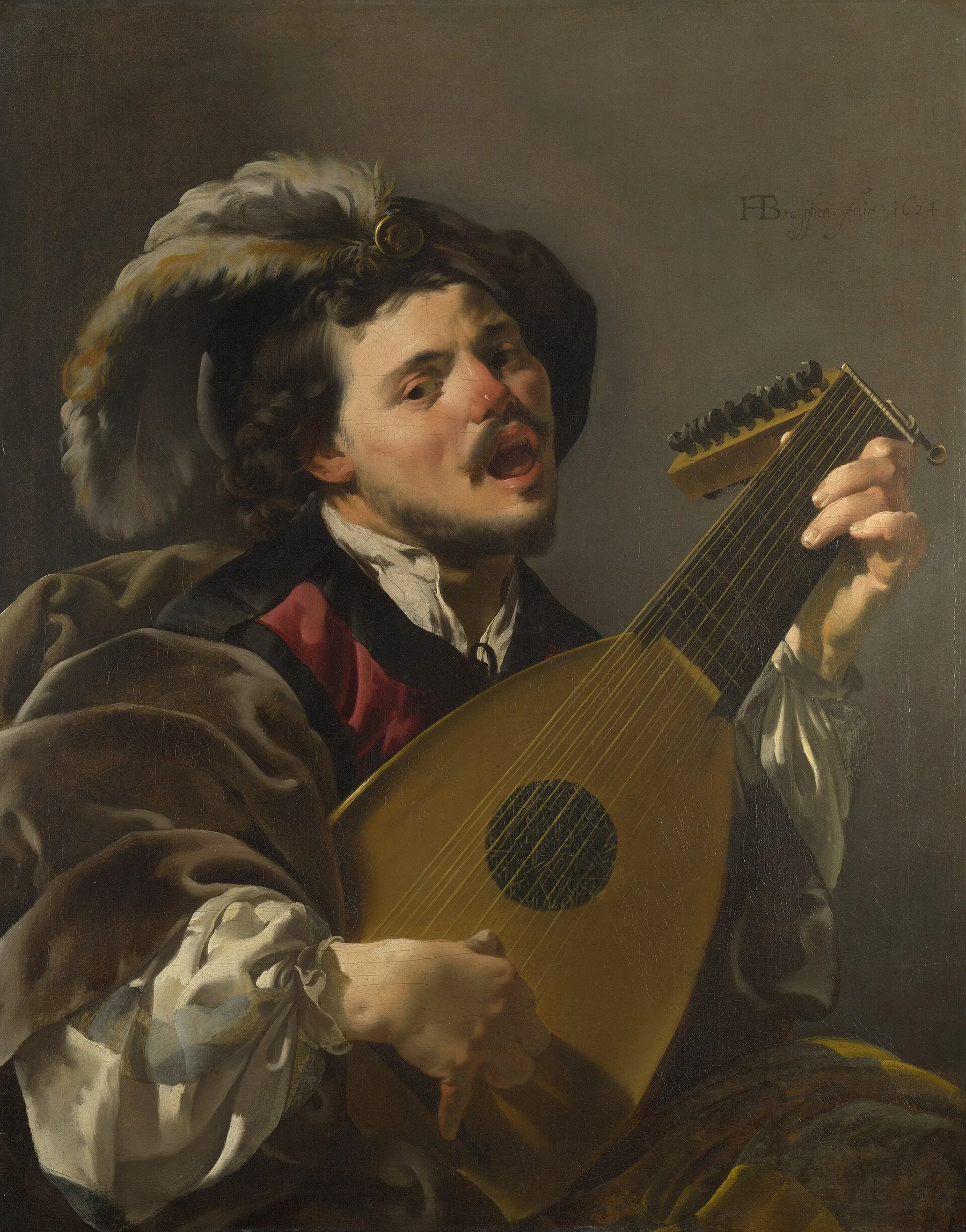
The difference between a string and a course: a string is a single strand; a course is a group of strings played as one musical line. On most historical models, a course consists of two strings tuned in unison.
Strings were predominantly made of gut. Gut gives a warm tone and gentle attack, but is very sensitive to humidity. Metal was sometimes used; it increases brightness and tension but remained less common in the tradition.
In the high and middle registers, courses are often tuned in unison to preserve clarity. In the bass, an octave is sometimes added to enrich the tone without greatly increasing tension.
| Period | Courses | Approximate number of strings | Sound |
|---|---|---|---|
| Renaissance | 6 to 8 | 12 to 15 | Clarity, polyphony |
| Pre-Baroque period | 9 to 10 | 17 to 19 | Range extending from middle to low registers |
| Baroque | 11 to 13 | 20 to 24 | Harmonic richness, extended bass range |
More courses do more than add volume: they provide extra registers and harmonic possibilities. The arrangement of courses also shapes tuning systems and stylistic choices in the 17th century, the subject of the next section.
Lute tuning: Renaissance practice, 17th-century variety and French “D minor” tuning
Lute tuning varies by period, place and repertoire. There is no single standard, which often surprises listeners and musicians.

Six-course Renaissance tuning
Common tuning uses fourths between most courses, with a central major third between the fourth and third courses. This arrangement helps with polyphony and fingering on a narrow neck.
Adding bass courses
Bass courses extend the range but place demands on the left hand. Bass notes are often played on open strings or follow a diatonic pattern to avoid difficult stretches.
17th-century France
The 17th century saw a great variety of tunings, followed by a shift towards the so-called “D minor” tuning for the French lute. These choices encourage resonances typical of the style.
Historical guide
| Name | Sequence | Use |
|---|---|---|
| Old tuning (16th century) | G – C – F – A – D – G | Earlier repertoires |
| New tuning (17th century) | A – D – F – A – D – F | French Baroque practice |
Tip: think in intervals (fourths and a third) rather than absolute pitches. The same written tuning can sound different depending on the pitch standard and instrument.
Pitch and intonation: why there is no universal standard
The reference pitch, often called the pitch standard, establishes the note used to tune an instrument. A above middle C is a common reference. It determines the actual pitch of the notes played and the tension of the strings.
Historically, reference pitch varied greatly: values between A = 392 Hz and 470 Hz have been observed. This range affects intonation, the perceived brightness or depth of the sound, and playing comfort.
There was no single standard in the 17th century or later. Choices depended on the country, repertoire, constraints of instrument making, and accompanying voices or wind instruments. The same piece can therefore sound different with different ensembles.
The position of gut frets also affects intonation: they are often adjustable and complement tuning to the chosen pitch standard.
Listening tip: a low pitch standard does not mean the instrument is out of tune. It is often a historical choice. When learning, first identify the intended reference pitch, whether playing solo or in an ensemble, before tuning.
Learning to play the lute: technique, the left hand and reading tablature
Playing the lute combines precise movements with a keen ear. The essential skill is fingerstyle playing: you must control the attack, angle and dynamics to shape the nuances.
For a clean sound, alternate the fingers of the right hand and pay attention to articulation. Control the resonance of the courses to balance the voices in polyphonic music.
Left-hand technique
The left hand needs precise placement on the fingerboard. The wide neck requires you to adjust finger positions to avoid buzzing.
Gut frets are tied on and adjustable. They provide the flexibility characteristic of historical instruments, but you must listen to the intonation and move them when necessary.
Ornamentation and style
Trills, mordents and glissandos form an expressive language. Their execution varies by school, especially the French school: rhythm and elegance matter more than sheer speed.
Reading tablature
Tablature shows finger positions rather than absolute pitches. Beginners often find this notation more visual, and it helps them begin playing the repertoire quickly.
| Aspect | Advice | Goal |
|---|---|---|
| Fingerstyle playing | Alternate fingers, control the angle | Nuance and clarity |
| Left hand | Place fingers accurately, adjust frets | Intonation and comfort |
| Tablature | Read positions, compare recordings | Understand fingering quickly |
To begin, work slowly on simple dances and listen to accomplished musicians. You will find a useful resource for developing your skills among these forums and exercises.
The Renaissance lute: golden age, musical roles and sound
The Renaissance marks the lute’s golden age, when it found a place in salons, private rooms and princely courts. Its sound remains intimate, inviting listeners to draw closer to hear its nuances.
An intimate instrument
Domestic gatherings favoured the lute for its soft, delicate tone. It also appears at local festivals where the acoustics allow close listening.
Polyphony and repertoire
The repertoire includes dances (pavans and galliards), fantasias and solo pieces. The lute can “make several voices heard”: counterpoint and broken chords build the musical texture.
Playing and development
Most models of this period had six courses; adding bass courses met the need for a wider range. Articulation, control of resonance and ornamentation all serve the music’s expression.
“Listen to a fantasia for the counterpoint; listen to a dance to feel the pulse.”
This style prepared the way for the following century, when an extended bass range would give rise to the theorbo and other accompanying instruments.
The Baroque lute and related instruments: theorbo, archlute and chitarrone
In the Baroque era, new demands for accompaniment changed the construction of plucked string instruments. The emergence of continuo called for a stronger bass foundation to support singers and ensembles.
Why add bass strings? Extra low strings make it possible to play bass notes without putting further demands on the left hand. These open strings sustain the harmony longer and improve bass projection.
How the theorbo, archlute and Baroque lute differ in use
The theorbo is often favoured for continuo: it provides deep bass notes and an attack suited to accompaniment. The archlute is versatile, combining a substantial bass range with polyphonic richness.
The Baroque lute remains above all a solo instrument. Its finer tone suits suites and pieces written for solo performance.
Which instrument suits the repertoire?
In a Baroque ensemble with basso continuo, choose the theorbo. For accompanying cantatas or opera, it supports the bass line better than the lute.
For French suites and solo repertoire, favour the Baroque lute. The archlute suits mixed ensembles that need flexibility and harmonic richness.
Practical tip: listen to the low register: deep, sustained notes often suggest a theorbo, while a more delicate texture suggests a Baroque lute.
Repertoire, composers and lutenists: essential listening guide
Follow this listening path to recognise styles, schools and performers. It helps you distinguish textures, ornamentation and registers across the centuries.
Renaissance
Listen for: polyphony, dances and fantasias.
Listen to John Dowland (England) and Francesco da Milano (Italy). The French and Central European schools also offer pieces rich in counterpoint.
Baroque
Expect suites, national styles and continuo. Key names include Gaultier, Charles Mouton, Sylvius Weiss and Kapsberger.
After the 18th century
The lute declined because of its limited sound projection and elite image. Its revival began in the late 19th century, followed by new works in the 20th and 21st centuries by lutenists such as Jozef van Wissem and Ronn McFarlane.
Where to see and hear lutes in France
To discover concerts and collections, start with the Musée de la musique and the Cité de la musique. The Société française de luth brings together events and resources.
- Listening path: a Dowland pavan → a French piece in style brisé → a Weiss suite.
- Listening tip: notice the texture, bass lines and ornaments.
- Useful resource: review and references.
Conclusion
Quick summary: its history, construction, tunings and playing techniques define the identity of this plucked string instrument.
The oud’s development into the Western lute explains the arrival of frets and the growth of polyphony. Forms vary by century, tuning and pitch standard.
Compared with the guitar, the lute stands out for its often double courses, friction pegs and carved rose. Tablature guides the instrument’s distinctive fingerings.
To get started, identify the strings and intended tuning, then work on finger attack and reading tablature. For listening, compare a Renaissance piece with a Baroque suite.
In France, museums, concerts and local associations offer ways to learn more. Despite its intimate character, the instrument retains remarkable richness of sound and craftsmanship.