
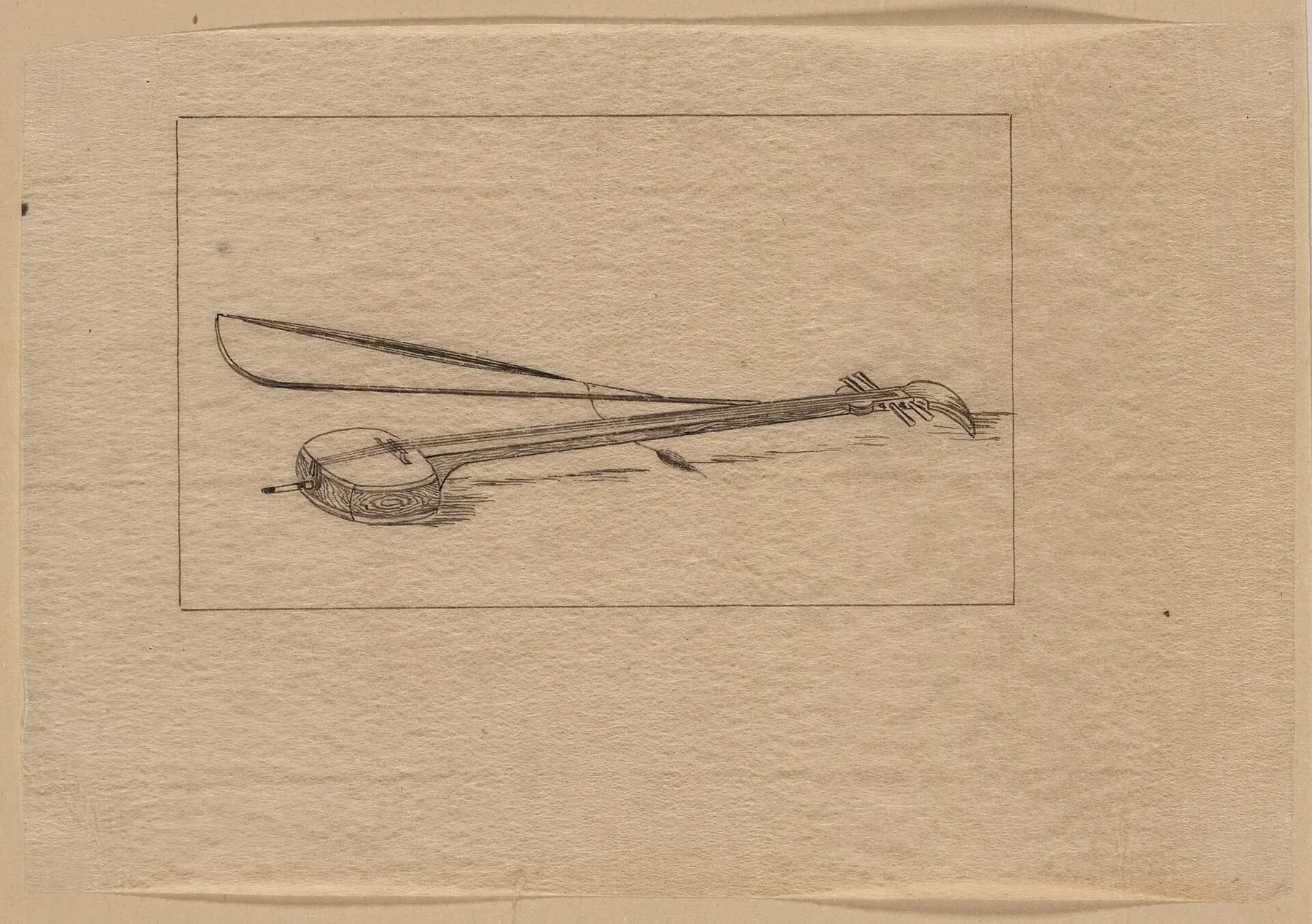
The term refers to traditional stringed instruments that accompany songs, theater and storytelling. We will mainly compare the shamisen and the biwa, while placing these families alongside other kinds of instruments.
This guide helps readers recognize the main families, understand their sounds and place each instrument in its musical and cultural setting. The distinction between court and popular music provides a thread throughout. It sheds light on differences in shape, tone and repertoire.
The shamisen is best known for its role in theater, among geishas and on modern stages. The biwa evokes an older world associated with storytelling and court music.
In this guide: straightforward terminology, historical landmarks from the seventh to the seventeenth century, and places to hear the instruments today. For a broader introduction, explore traditional music.
Understanding Japanese lutes in Japan’s musical culture
These instruments are easier to understand when we consider who plays them and for whom. Their place in music depends on their social functions: ritual, theater or entertainment.
Between court music and popular traditions
The distinction between court music and popular practices is central. Gagaku represents formalized court music, performed by specific ensembles in which stringed instruments such as the gakubiwa and koto play an accompanying role.
In popular traditions, stringed instruments accompany storytelling, dance or song. Repertoires travel and change with their audiences and eras.
Useful terms
- Strings: vibrating strands whose material and tension affect the tone.
- Body: the resonating chamber, often made of wood, that amplifies the sound.
- Neck: the support for the strings; its length and frets affect pitch.
- Plectrum: a tool used to strike or pluck the strings; its size changes the attack.
- Skin (or soundboard): the surface stretched across the body; it colors the projected sound.
Repertoire: pieces may be instrumental, accompany the voice, or serve dance, ritual or storytelling.
To learn more about the biwa’s history and court music, read a detailed account of gagaku and the biwa.
The biwa and shamisen remain distinct: their construction, materials and teaching traditions differ, even though they share ways of passing on their music.
Japanese lutes: the shamisen and other lutes of Japan
The contrasts are immediately visible when you compare each instrument’s neck, body and plectrum.
Biwa: a short neck, pear-shaped body, four or five strings and a large plectrum. Introduced in the late seventh century with gagaku, it was first associated with court music and epic storytelling.
Shamisen: three strings, a long fretless neck and a square body covered with skin. Derived from Okinawa’s sanshin, it spread from the sixteenth century onward and became central to theater and urban songs.
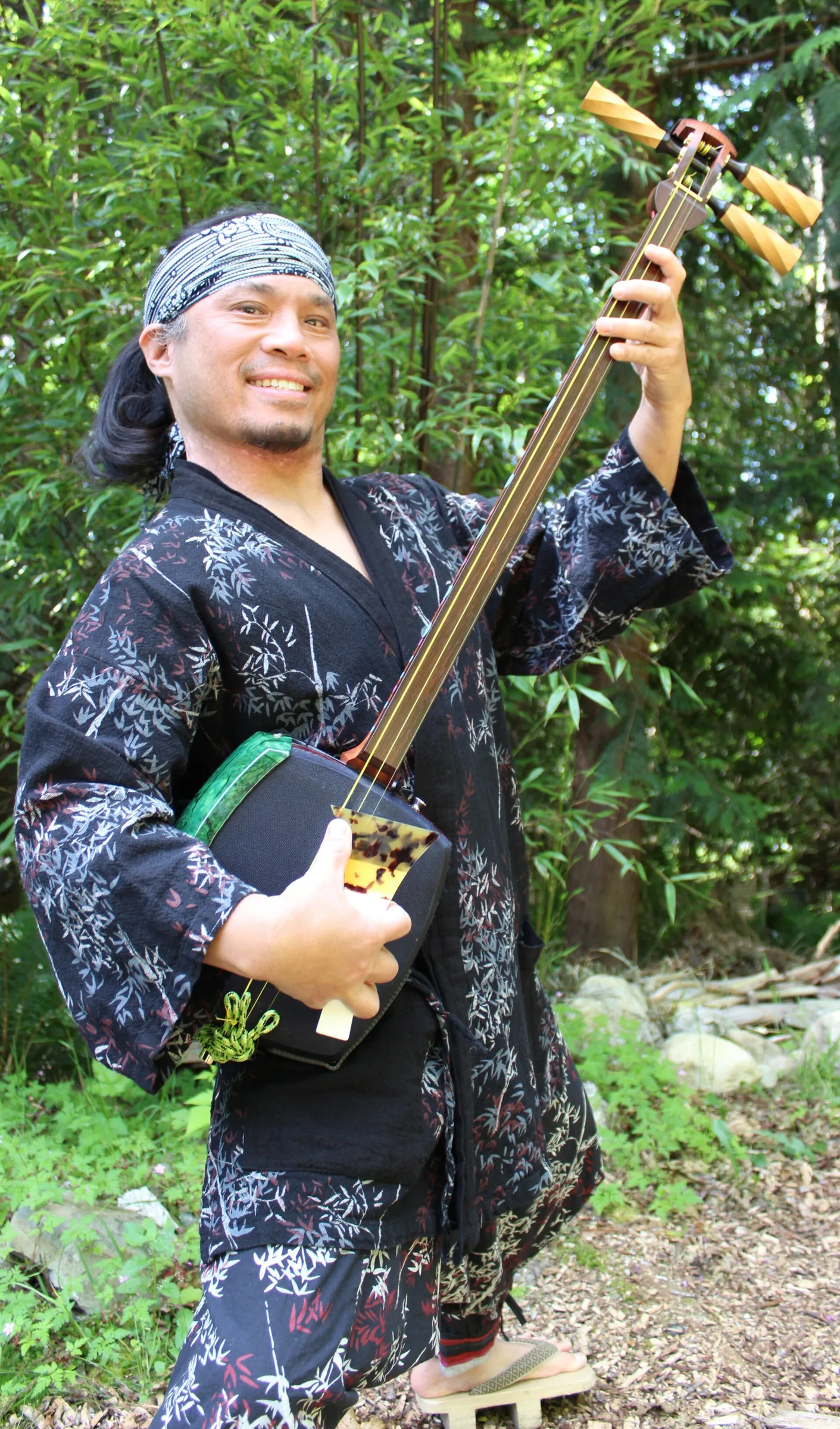
These differences in shape and playing technique change each instrument’s tone and role: the large plectrum produces an expressive attack for storytelling, while the taut skin gives the shamisen a dry sound suited to theater.
Where to listen today
- Kabuki and bunraku performances;
- Traditional music concerts and festivals;
- Conservatories, schools and chamber ensembles.
These traditions are passed on through schools, teachers and established repertoires. To place the instruments in a wider context, explore musical instruments.
The biwa, an emblematic lute: origins, forms and roles through the centuries
From palaces to temples, the biwa carries a musical memory told through its strings.
Arriving in Japan in the late seventh century with gagaku, the instrument became part of the centralization of the Asuka period.
A surviving example attests to this long history: the Hakuhō biwa, preserved at the museum in Sakura, Chiba Prefecture, and formerly associated with Kakurinji Temple in Hyōgo.
Its role in the Heian period
At the imperial court, the biwa became both a solo instrument and a form of intimate accompaniment. Its practice became formalized under Emperor Ninmyō.
FUJIWARA no Sadatoshi (Utaryō) illustrates its esoteric transmission: secret pieces, certificates and lineages from teacher to student, as described in the Nihon Sandai Jitsuroku.
Construction, transmission and varieties
Its short neck, pear-shaped body, four or five strings and large wooden plectrum give it a lively, expressive attack.
The biwa-hōshi, blind monks, kept alive the epic recitation of the Heike Monogatari and its storytelling tradition.
- Styles: gagakubiwa (court), mōsō biwa (ritual), heike biwa (epic), satsuma biwa (martial) and chikuzen biwa (lyrical).
- Historical path: aristocratic prestige followed by a decline relative to the shamisen in the Edo period, while remaining part of a living heritage.
To discover other strings and tones, explore the sounds of the koto.
The shamisen: a long-necked lute at the heart of song, geisha culture and theater
A central instrument of urban performance, the shamisen derives from Okinawa’s sanshin and reached Osaka around 1562. Its popularity grew in the seventeenth century as it spread through teahouses, theaters and homes.
Origins and spread
Its origins trace back to the sanxian through Okinawa; its adoption from 1562 onward helps explain the place it later gained. In the seventeenth century, it quickly entered kabuki and bunraku.
Recognizing the instrument
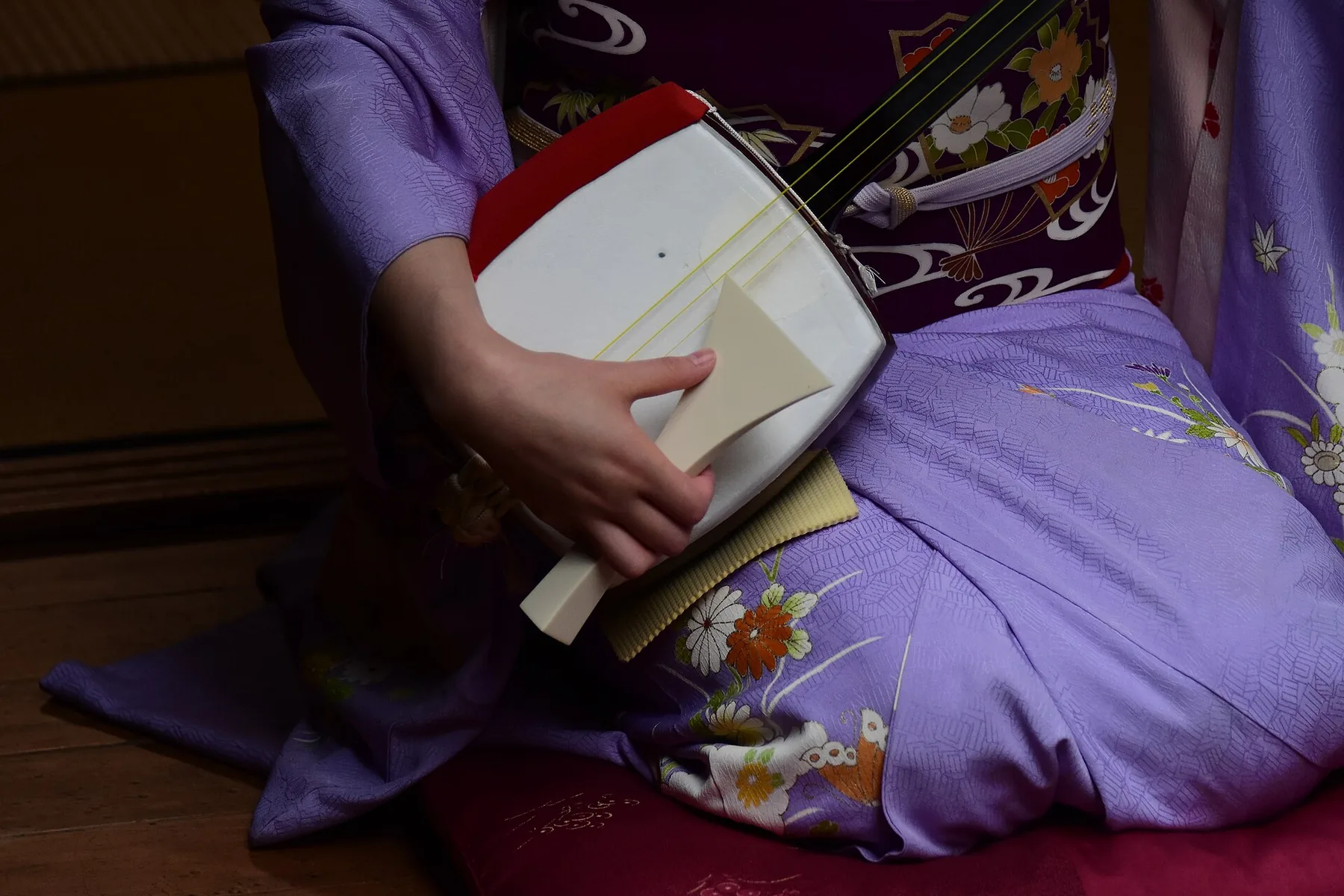
You can recognize it at a glance: three strings, a long fretless neck and a square body. Its soundboard was traditionally covered with cat or dog skin. Synthetic materials are often used today.
Playing, tone and repertoire
It is played with a large plectrum, whose attack produces a dry, sharp sound. Styles vary with the setting: accompanying songs, theater or virtuoso solo performance.
Two broad vocal families coexist: katarimono (narrative styles, such as gidayū) and utaimono (melodic styles, such as nagauta, jiuta and kouta). Kouta’s role in geisha culture makes it an enduring symbol of refinement.
A modern perspective
In northern Japan, tsugaru-shamisen emphasizes power, speed and improvisation. Musicians such as Takahashi Chikuzan, the Yoshida Brothers and Hiromitsu Agatsuma show its openness to rock and jazz.
The instrument remains versatile: its form and styles have adapted to different genres, helping to explain its lasting popularity. For more about three-stringed instruments, consult this guide.
Essential musical settings: gagaku, kabuki, bunraku and ensemble music
The same instrument can change function and intensity depending on the venue and audience. Context matters as much as construction: on different stages, an instrument may take a solo role, accompany another performer or support the rhythm.
Gagaku and court music
Institutionalized in 701 with the establishment of the gagaku office, this repertoire was reformed in the ninth century (the ryō and ritsu modes and a smaller instrumental ensemble). It includes kangen (instrumental ensemble music), bugaku (dance) and utamono (song).
Stringed instruments have a place in it through the gakubiwa and koto, which add color and sustain to its formalized musical textures.
Kabuki and bunraku: theater and storytelling
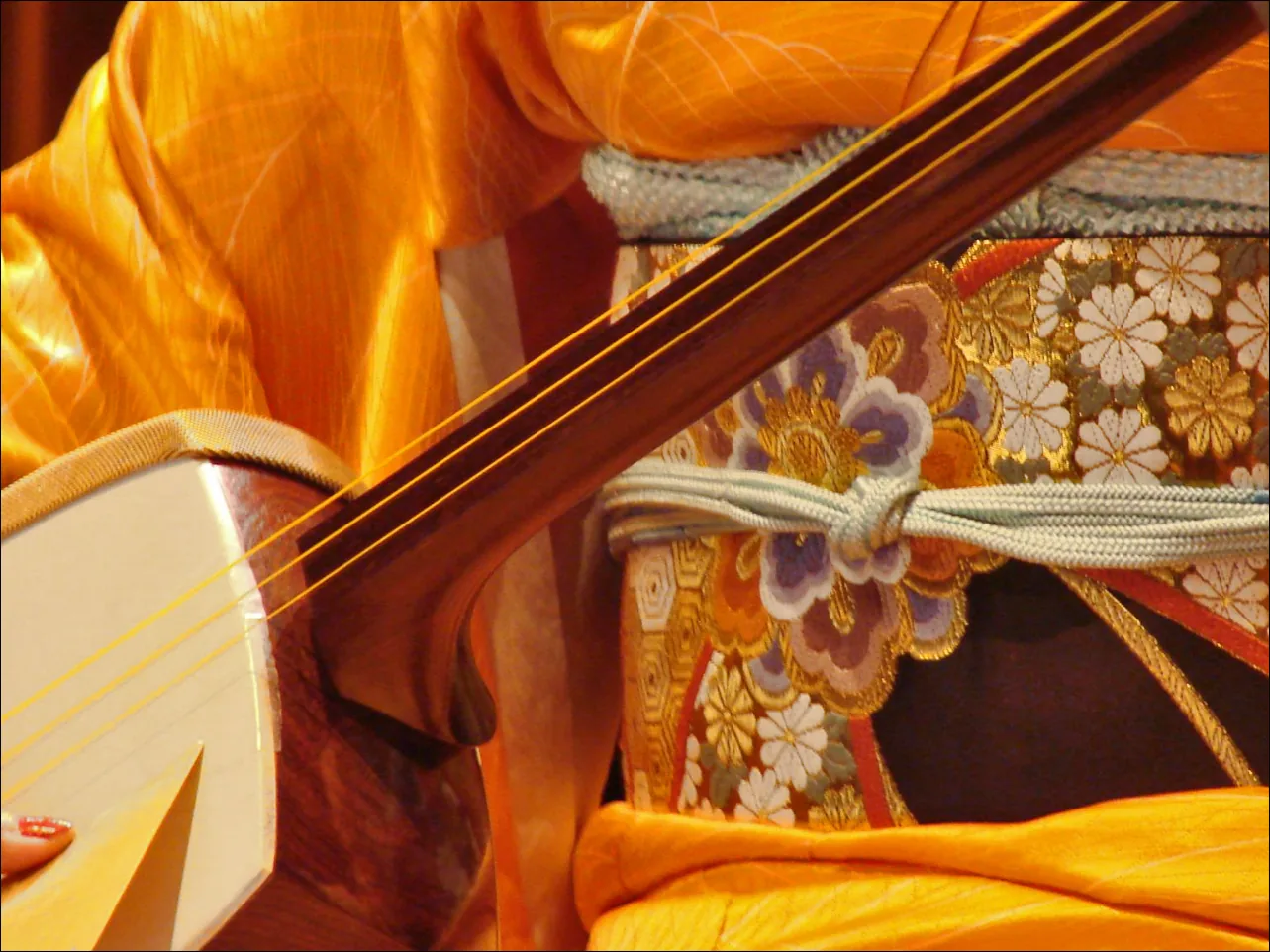
In kabuki, the shamisen joins the percussion to support nagauta (long songs). The plectrum’s attacks accent gestures, movements and rising tension.
In bunraku (ningyō jōruri), the instrument accompanies the narrator: it highlights the delivery, intensifies vocal inflections and shapes dramatic time.
Musical dialogue in sankyoku ensembles
In chamber music, a sankyoku ensemble brings together the shamisen, koto and shakuhachi. The trio draws on the contrast between attack, sustain and breath.
As you listen, notice the plectrum attacks, percussion patterns and pauses in the storytelling. These elements reveal the drama.
Today, these traditions continue: troupes, theaters and conservatories sustain the practice and offer concerts and recordings available to listeners in France.
Conclusion
The key is the relationship between form, sound and social use. With its short neck and expressive playing style, the biwa carries a heritage of court music and storytelling. With its dry attack and wide reach, the shamisen is associated with urban and theatrical stages.
Understanding these instruments means connecting their materials (strings, skin and plectrum), their construction and their settings (court, theater, city and ritual). For a guided listening journey, start with an excerpt of stringed gagaku, continue with a bunraku passage and a kabuki nagauta, then finish with a modern tsugaru piece to hear the contrasts.
Begin by listening to their tones, then explore the repertoires and schools that remain active. These pieces belong to a cultural heritage that continues to animate musical practice, conservatories and international stages. To discover sawari and its sonic effects, read an analysis of sawari.