
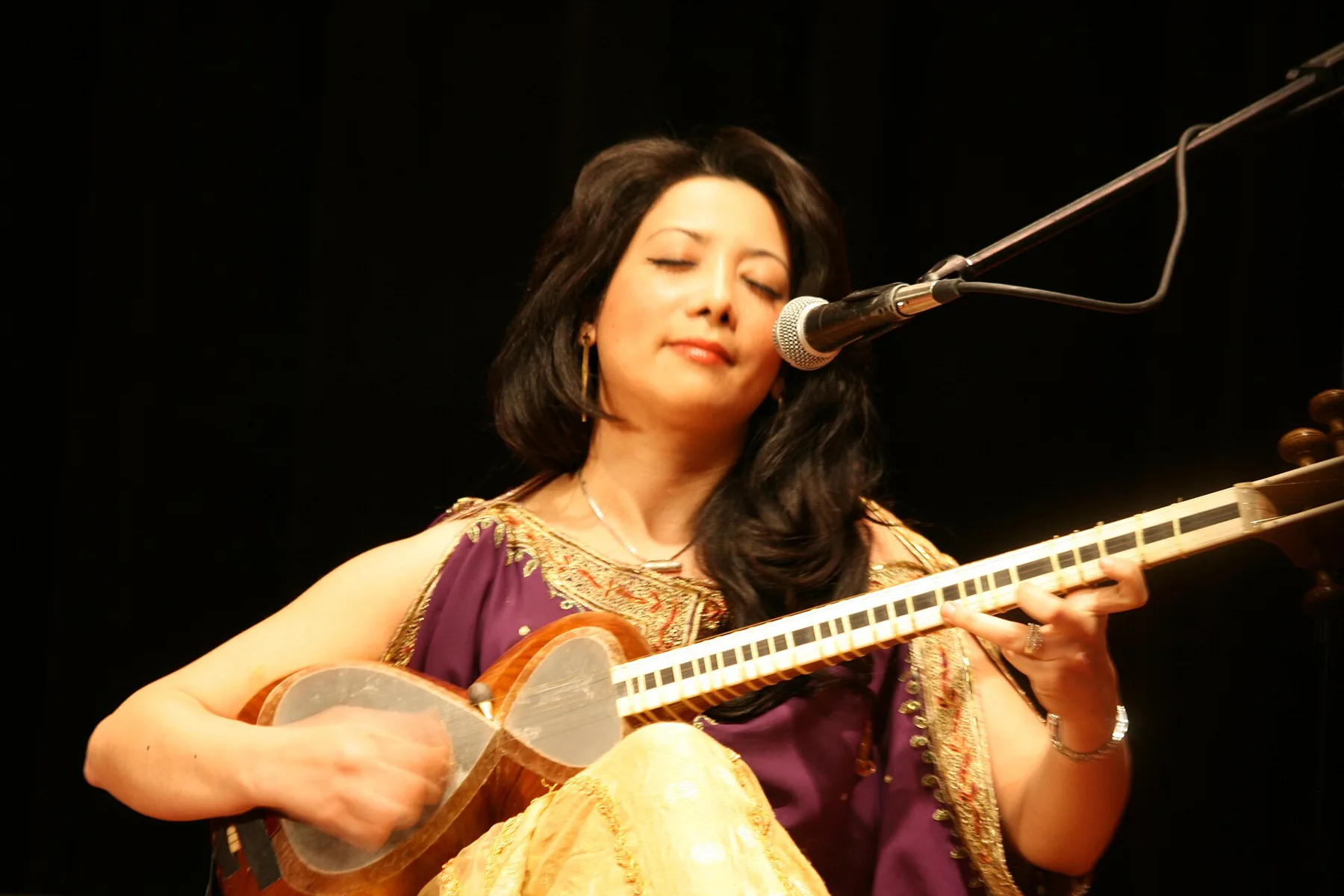
Goal: understand this instrumental heritage and place the tar among other string instruments (oud, saz, tanbur) so you can listen to and compare them more closely.
A practical approach designed for readers in France: straightforward cultural background, explained terminology and listening tips for identifying each timbre.
We will consider both the instrument—its construction, timbre, strings and playing techniques—and its musical settings: mugham, ensembles, improvisation and song.
Why read this article? These string instruments open up a world of modes and phrasing that speaks to musicians working on stage and in the studio today.
By the end, you will recognise the sound of the tar, understand its place in an ensemble and connect Azerbaijan with neighbouring musical worlds, including the Caucasus and the Persian heritage.
We will begin with its appeal today, then turn to the cultural setting of Baku, mugham and the instruments themselves, before offering practical guidance on listening, concerts and transmission.
Why the lutes of Azerbaijan fascinate musicians in France today
French stages are showing renewed interest in acoustic instruments from other traditions. This movement brings together curiosity about world music and the return of traditional styles to the stage.
“Virtuosity, clarity of articulation and expressive power”: that is why this timbre attracts listeners. The instrument remains rooted in a living tradition, far from being a museum piece.
The relationship between the instrumental line and the voice changes how we listen. The voice guides a phrase; the instrument answers with a longer breath. Musicians accustomed to Western chord progressions find a different sense of space here.
These repertoires offer a direct route into modal improvisation: the performer brings a mode, its path and its tension to life instead of stacking chords.
For a musician in France, exploring these traditions develops phrasing, ornamentation and an ear for microtones. On stage, duos, trios and quartets increasingly favour instrumental dialogue over dense arrangements.
“This dialogue between voice and instrument invites a more spacious way of listening, attentive to the nuances of timbre.”
Key points
- A revival of traditional music in contemporary formats.
- Learning phrasing and ornamentation.
- A meaningful place for the voice in the melodic line.
Cultural background: Azerbaijan between the Caspian Sea and the Persian heritage
At a crossroads of seas, mountains and languages, Azerbaijan has a distinctive musical geography.
Geography and history: the country lies between the Caspian Sea and the Caucasus. According to Marc Loopuyt, it was once the northern part of a great Persian empire. This history helps explain its modal affinities with the Persian radif.
Languages and poetry: the Turkic language shapes local poetry. The Turkic world contributes particular rhythmic energies. The same modes can therefore create different aesthetic worlds depending on the language and tradition.
Baku, a creative hub: Baku is central to the transmission of this music. Artist residencies, conservatories and circles of masters encourage meetings and exchanges there. Marc Loopuyt has collaborated on mugham-related projects in the city.
These encounters help explain the common combination of string instruments, kamancha and frame drums. Each has found a place because it serves the sequence of movements, ornamentation and musical tension.
“Azerbaijan, between the Caspian Sea and the Black Sea, was once the north of the Persian Empire.”
| Element | Main influence | Musical impact |
|---|---|---|
| Geographical position | Caucasus / Caspian Sea | Crossroads of styles and exchanges of instruments |
| Persian heritage | Persian Empire (formerly its northern region) | Modes related to the radif and a taste for extended sequences |
| Turkic world | Turkic poetry | Distinctive rhythms and phrasing |
Mugham, the beating heart of Azerbaijani music
Mugham holds a central place in a tradition where the logic of the mode governs every musical breath.
An art music in which improvisation shapes a sequence of movements
Both learned and popular, this music is grounded in a particular mode. Improvisation is no mere embellishment: it builds the sequence, step by step.
The music progresses through stages: entering the mode, building intensity, pausing, accelerating and then returning to stability.
A living tradition recognised by UNESCO
Recognition as intangible cultural heritage confirms the vitality of this tradition. It supports schools, performances and transmission without freezing the practice.
Modes and links with the Persian radif
Marc Loopuyt notes modal affinities with the Persian radif. The traditions share some structures, but their energy, poetic language and interpretation differ.
Why are certain instruments essential? The tar carries the melodic line, the kamancha adds a gliding voice, and frame drums provide the rhythmic breath.
“An art music in which improvisation organises a sequence of movements linked to a particular mode.”
- Listening guide: notice how the performers enter the mode.
- Follow the rise in intensity and the return to stability.
- Listen for the spontaneous element in each movement.
The lutes of Azerbaijan: discovering the tar and its relatives
In the Caucasus, the term “lute” covers a wide variety of forms, each suited to a particular musical role.
What “lute” really means in the region
In organological terms, a lute combines a body, a neck and plucked strings. Its varieties differ in neck length, single or paired strings, and tuning.
Function matters as much as form: some instruments serve learned solo music, while others accompany singing or support an improvised sequence.
Tar, oud, saz and tanbur: families and uses
Three broad groups can be distinguished by their necks, attacks and timbres.
- Short neck and precise attack: a melodic instrument that carries the line.
- Short neck and rounded body: a deeper sound and a broader harmonic space.
- Long neck: a gliding attack and more pronounced sustain for popular accompaniment.
These “relatives” are not copies. They offer different cultural responses to the same needs: carrying a mode, conversing with the voice or colouring the background.
“At a concert, expect to see an instrument leading the melody, a rhythmic foundation and another instrument colouring the atmosphere.”
Practical guide: generally, one instrument leads the melody, another provides the foundation and a third colours the sound. The following sections introduce the tar, the emblematic trio and some listening cues.
The Azerbaijani tar: a profile of an eleven-string lute
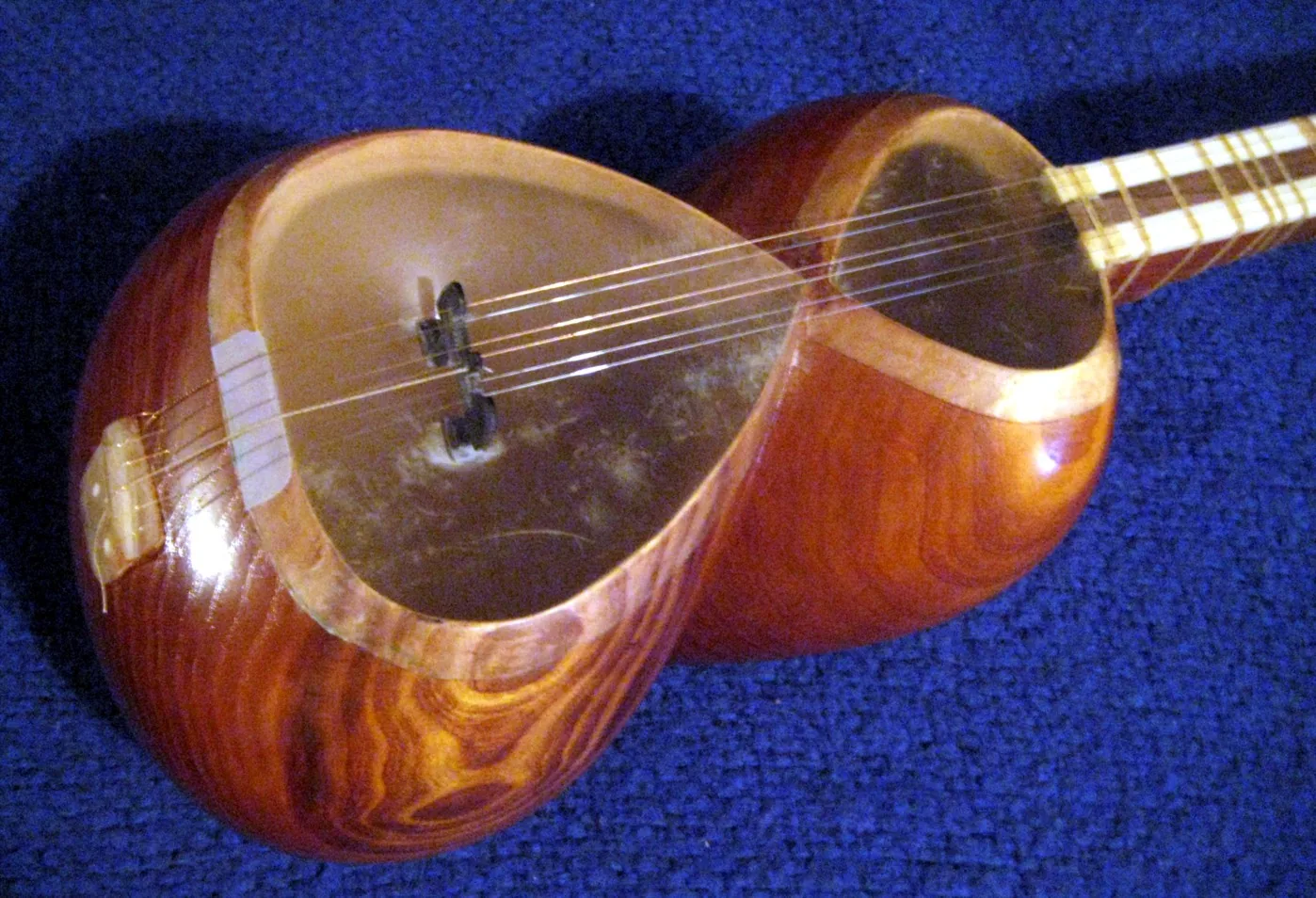
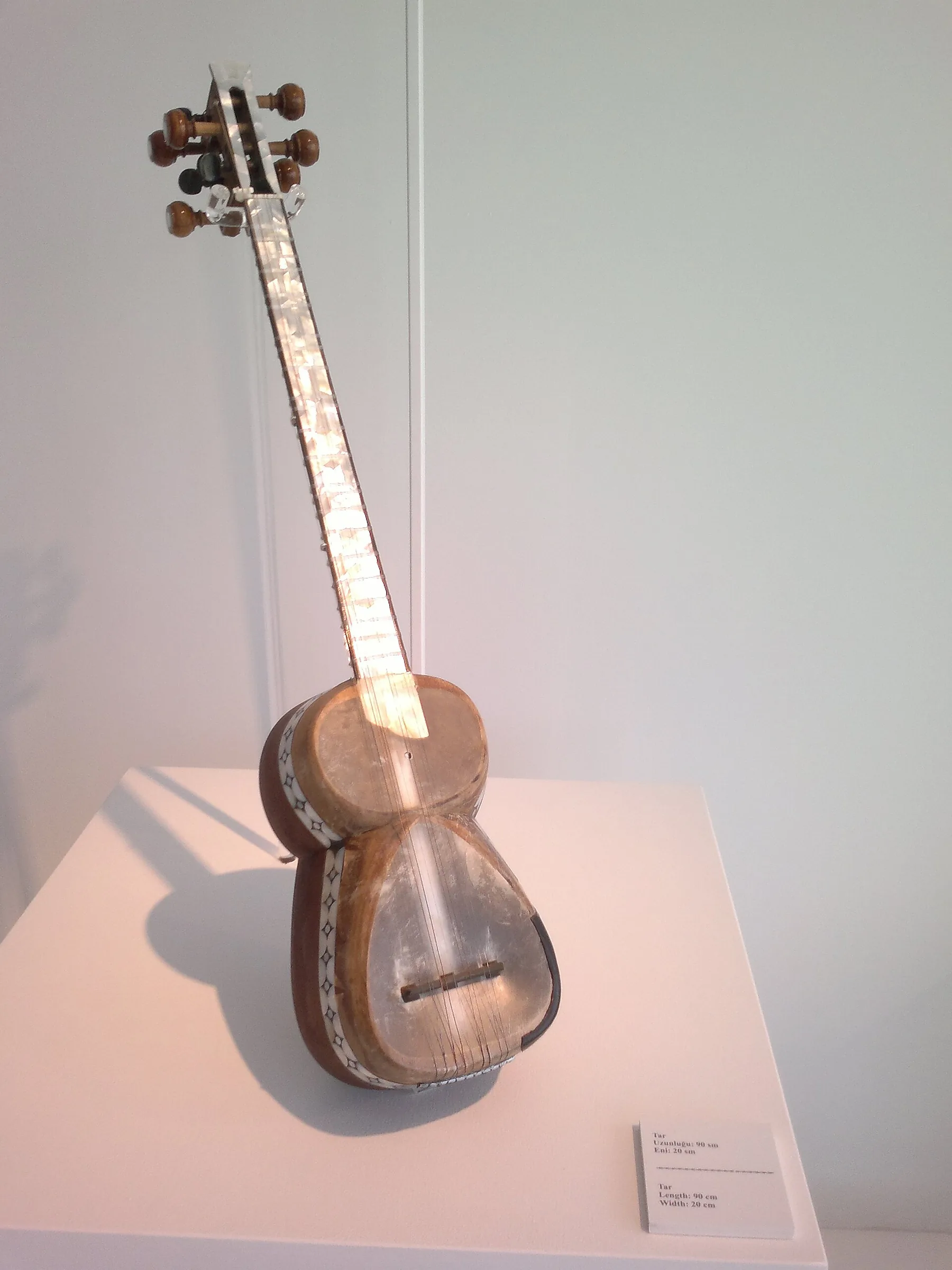
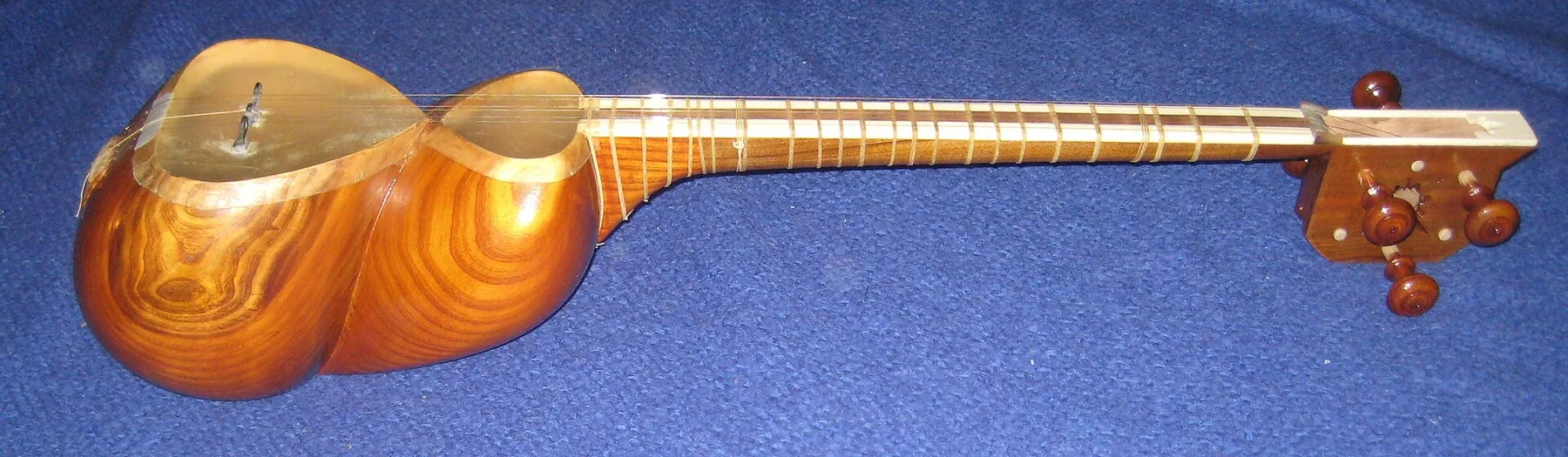
Here are the essentials of the Azerbaijani tar: an eleven-string lute designed to carry a clearly articulated line. Saigon, January 2019 describes it in these terms.
Sound: bright, with a clean attack. The tar articulates ornaments precisely and projects strongly enough to converse with the bowed fiddle and the voice.
In an ensemble, it occupies a central position. It introduces the mode, answers the singing and drives the sequence forward.
Inseparable from mugham, it forms its modal backbone. Other instruments may provide a more enveloping sound; the tar takes the lead.
Azerbaijani and Persian tar: similarities and differences
They belong to a closely related family, but their playing styles and aesthetics differ. The Persian instrument often favours a rounder timbre; the Azerbaijani version emphasises articulation.
“When the tar speaks, its crisp articulation makes the mode immediately clear.”
| Feature | Azerbaijan | Persia |
|---|---|---|
| Number of strings | 11 | Varies (often 6 to 7 courses) |
| Role in the ensemble | Melodic centre and driving force of mugham | Melodic accompaniment with a more harmonic colour |
| Sound | Bright, with precise articulation | Rounder, with long sustain |
For a fuller technical profile, consult this technical profile.
The emblematic trio: tar, kamancha and daf/qaval
Three instrumental voices often form the core of a mugham performance. Together, they provide modal structure, expressive colour and rhythmic breath.
Kamancha: the four-string bowed fiddle in conversation
Saigon, January 2019 describes the kamancha as a four-string bowed fiddle. Its slides and long sustain give it a singing quality. In concert, the fiddle comments on the phrase introduced by the lute. It imitates, extends or answers it, adding a vocal quality to the instrumental conversation.
Daf, doyre and qaval: frame drums and the pulse of song
Large frame drums establish a flexible pulse. They mark accents, maintain the beat and leave space when improvisation becomes freer. Their role is often discreet but essential in supporting the voice.
How the trio supports collective improvisation
In an ensemble, the lute lays out the modal framework. The fiddle comments. The percussion renews the momentum. The group listens, picks up motifs and builds intensity.
- A typical cycle: introduction, response, renewed momentum and return to calm.
- In concert, this sequence may recur several times to build tension.
- Listening cue: a sustained line with slides and long sustain? That is often the fiddle.
For background on how these practices are passed on and documented, consult these records.
The tar in performance: singing, melismas and the energy of mugham
On stage, the voice often charts the emotional course of a mugham before the instruments add their contours.
Solo singing and accompaniment: listening with the breath
The voice enters, establishes a mode and then unfolds melismas that need time. It stretches, breathes and changes intensity.
The accompaniment follows rather than filling every gap. The instrument anticipates, punctuates and sometimes carries the singer’s breath.
Ornaments, tension and returns: shaping musical time
Melismas and ornaments consist of small variations: grace notes, slides and trills. The instrumental part echoes these details or creates a contrast with them.
Tension emerges through a gradual rise: greater density, repetitions and changes of register leading to a perceptible peak of energy.
“A free passage can stretch the phrase; the return brings back the pulse and gives the singing a firmer presence.”
Listening cues:
- Follow the entrance of the voice to locate the central section.
- Notice the pauses and returns that structure the music.
- Observe how each part leads into the next to form an overall path.
| Element | Role | Listening cue |
|---|---|---|
| Solo voice | Narrative direction | Entrance into the mode, melismas |
| Accompaniment | Support for the singer’s breath | Punctuation, anticipation |
| Tension | Gradual development | Repetitions, changes of register |
Modes and improvisation: from tradition to the present
Modes shape every phrase: they provide a scale, pivotal notes and melodic paths that guide the ear.
Understanding a mode requires no advanced knowledge of music theory. A mode is a scale enriched with reference points: notes of repose, characteristic phrases and preferred directions in which a melody comes to rest.
Maqam and makam name modal families found across the eastern Mediterranean. Through melodic contours and ornamentation, they connect Azerbaijan with the Ottoman world and its Persian neighbours.
Waqt: Marc Loopuyt describes how tradition “crystallises in the intensity of the present moment”. Here, improvisation becomes lived time: a stage presence in which artists and audience shape the moment together.
Improvising in the moment
Two forms can be distinguished. Free taqsim breathes through long phrases and open silences, without a regular metric accent.
Rhythmic taqsim rests on a pulse or an ostinato. Percussion or a repeated motif organises the space and directs the tension.
Listening cues
- Recognise free improvisation by its few regular accents and extended phrases.
- Feel the rhythm arrive: when the pulse settles, the space becomes more measured.
- Why does it matter today? This approach to time attracts jazz and contemporary improvising musicians.
“Tradition crystallises in the intensity of the present moment.”
Transmission and schools: the master–disciple “chain”
Musical transmission can be seen in the gestures, pauses and phrases that a master passes on to a student.
Silsila names this living chain: a flow through which people pass on not only the material—pieces, modes and phrasing—but also a way of listening to and breathing with sound.
Silsila: the living flow of a musical legacy
Marc Loopuyt describes silsila as musical knowledge carried from master to disciple.
“SILSILA, ‘the chain’, refers to lines of transmission.”
Learning through imitation, repertoire and memory
A school grows around masters, disciples and memorised repertoires. After a few years, its style of phrasing becomes recognisable.
Learning begins with attentive listening, imitation and then nuance. Theory comes later.
Memory plays a central role: retaining sequences, phrases and cadences, then learning to transform them while remaining true to their history.
A telling example is the father-and-son duo Marc and Thomas Loopuyt, who illustrate transmission over many years, as gesture and aesthetic sensibility are refined over time.
- Choose a school for its sound and artistic intent.
- Seek out workshops, visiting masters and ensembles to progress over the years.
- Practise remembering extended sequences to absorb the repertoire.
| Element | Role | Listening cue |
|---|---|---|
| Silsila | Chain of transmission | Phrases, breath, gestures |
| School | Shared style | Recognisable phrasing after a few years |
| Memory | Faithful transformation | Remembered sequences, controlled variations |
Relatives of the tar: the oud as a point of comparison for Middle Eastern lutes
The oud is often a useful reference when learning to hear differences between the timbres of Middle Eastern instruments.
In brief: a short neck, rounded body and deeper, more enveloping sound. In Les Orients du Luth, Marc Loopuyt emphasises the rosette as both an aesthetic and a cosmological sign. Gut or natural-silk strings and plectrums made of shell or feather shape a gentle attack.
The oud in the “Orients”: timbres, rosette and aesthetics
The rosette is more than decoration: it symbolises an instrument’s sonic “orient”, or the mode that reveals its character.
A dialogue of lutes and the art of taqsim
In a duo, one instrument provides the dam—a sustained modal foundation—while the other improvises a free or rhythmic taqsim. This exchange builds a shared narrative.
- A useful comparison: the oud offers greater density and sustain than many other instruments.
- A connection with the guitar: French guitarists appreciate the oud’s plectrum attack and single-line phrasing, without treating it as simply an “Eastern guitar”.
- Listening tip: hear the same mode first on the tar, then on the oud, to notice the difference in brightness and sonic weight.
| Feature | Oud | Another short-necked lute |
|---|---|---|
| Neck | Short | Varies |
| Sound | Round, deep, enveloping | Brighter or more articulated |
| Plectrum / attack | Shell or feather, gentle attack | Often sharper |
Other relatives to know: the saz, tanbur and long-necked lutes
A longer neck changes how a modal phrase extends and pulses.
What the long neck changes: more resonance, a gentler or more flowing attack, and a different way of moving between positions on the fingerboard. The rhythmic feel may become more pronounced, as though the instrument were underlining the pulse.
Saz and tanbur: attack, resonance and performance settings
In traditions inherited from the Ottoman Empire, some pieces belonged to the court or palace, others were played in a tekke within a spiritual setting, and still others travelled with troubadours.
Connections between repertoires
The same mode often moves between art music and popular music. The instrumentation changes its colour: a saz can make a line more flowing, while a tanbur can bring an almost percussive pulse.
“Marc Loopuyt notes these exchanges between makam and ussul rhythms, extending well beyond the palace.”
| Feature | Saz | Tanbur |
|---|---|---|
| Neck | Long, with widely spaced positions | Very long, with strong resonance |
| Attack | Flowing, sometimes percussive | Often singing, with long sustain |
| Settings | Troubadours, palaces, popular music | Tekkes, art music, ritual transmission |
Understanding these instruments helps place the tar within the wider Turkic-Persian family. For a technical description of the tanbur, see tanbur.
Coming next: the following section looks at materials, strings and plectrums, and shows how these construction choices shape timbre.
Materials, strings and plectrums: what changes the sound
Under the fingers, string materials shape an instrument’s personality. The choice of fibres matters as much as the shape of the body.
Types of string: Marc Loopuyt mentions sets made of gut, natural silk, horsehair and sometimes soft iron. Gut strings give a warm roundness. Silk and horsehair offer flexibility and texture. Metal makes the sound brighter and helps it project.
The plectrum matters too: a feather produces a gentle attack and a lively texture. Shell brings precision and density to rapid ornaments. The choice shapes the articulation of motifs and the length of the sustain.
- Two similar instruments can sound very different depending on their strings and setup.
- For a bright mugham sound, favour metal strings and a firm plectrum.
- For a velvety taqsim, choose gut or silk and a flexible feather.
“The material determines the soul of the sound.”
The setup, string height and plectrum hardness affect tuning stability and player fatigue. For a practical perspective on instruments, consult this useful resource.
Listening to the tar and its relatives: simple ways to recognise each instrument
Learning to distinguish instrumental voices is an exercise in listening for attack, sustain, register and function. Start with these four cues and take them one at a time.
Recognising the tar: brightness, articulation and melodic role
Attack: a clear pluck with a marked initial sound.
Sustain: short to medium, with clearly separated phrases.
Function: it leads the melody and outlines the mode precisely.
Recognising the kamancha: sustain, slides and expression
The fiddle stands out for its long sustain and slides. Its sound seems to sing without interruption.
With its audible vibrato and vocal inflections, it comments on a phrase rather than sharply defining it.
Recognising the oud: roundness, depth and harmonic space
The oud has a deeper, more enveloping sound.
You can hear an implied harmonic space: sustained notes, subtle support and sonic density.
Recognising frame drums: cycles, accents and breath
Listen for the struck attack, regular cycles and accents that renew the music’s momentum.
Frame drums breathe: sometimes discreet, they can also provide a strong lift as the intensity grows.
“Start with the attack, then let your ears follow the sustain and the function of each part.”
| Cue | Tar | Fiddle | Oud |
|---|---|---|---|
| Attack | Precise, incisive plectrum | Bowed, gentle at the start | Plucked, softer |
| Sustain | Short to medium | Long | Medium to long |
| Role | Melodic direction | Expressive response | Harmonic support |
Listening exercise: play a mugham and note who takes the lead whenever the texture changes. Identify the attack and sustain, then the function: melody, response or pulse.
Where to experience this music today: concerts, ensembles and stages
Seeing an ensemble on stage helps you read mugham’s unwritten score: who introduces a phrase, who responds and who restores momentum.
For audiences in France, begin by looking for concerts in major cities and in seasons devoted to “world music”. Opera and theatre programmes often feature hybrid projects that connect classical and popular worlds.
The SILSILA ensemble/quartet illustrates this bridge: it crosses boundaries between repertoires and tours cities such as Paris (Théâtre de la Ville), Lille (Opéra), Lyon (Opéra), Geneva, Basel and Toulouse.
Musicians travel from the Caucasus to Europe. They adapt the group—trio or quartet—to the venue’s acoustics and local needs.
Practical tip: favour programmes that mention a melodic instrument, a mugham singer and a frame drum. These are reliable signs of a concert centred on the tradition.
“Going to a concert transforms how you listen and reveals the modal logic carried by the ensemble.”
Travel, encounters and childhood: music as a life story
The personal journeys often hidden behind a performance can reveal as much as the music itself. A played phrase carries a name, a memory and sometimes the recollection of several homes left behind.
Exile, transmission and teaching: when music crosses borders
The story of Lala, a teacher in Saigon, illustrates such a journey. Trained in a Russian piano school, she taught in Iraq and then Vietnam.
She raised her children alone, packed her bags again later and looked for a place where she could continue teaching. These stages show both the fragility of familiar landmarks and the strength of human encounters.
Why these stories matter to the emotion of mugham
Mugham is more than a modal system: it carries a life story. When we listen, we hear names, losses and returns.
Understanding these biographies helps us grasp musical time: the silences, the rising intensity and the way a voice turns “childhood” into a shared melody.
“Music travels with the person who teaches it: every lesson contains an encounter and a piece of home.”
- Listening cues: hear timbre as a form of memory.
- Think of the human journey behind each performer.
- Encounters shape teaching and transmission.
Conclusion
To conclude, remember what gives meaning to listening to mugham today. The tar has a central place: it introduces the mode, converses with the voice and structures musical time.
The other instruments—oud, saz and tanbur—each tell a story through their timbre, attack and role in the ensemble. Listen for the tar’s brightness and articulation, the fiddle’s sustain, the oud’s roundness and the breathing pulse of the frame drums.
These forms live on through transmission from master to disciple and through performances in France, where tradition is renewed each time it is played. Behind every sound lie a home, years of learning and sometimes a love of the mode.
To explore further, discover the Baku context of a poem from Abbas-Kuli’s Divan, then compare a recording with a concert to hear how the space changes your perception.