
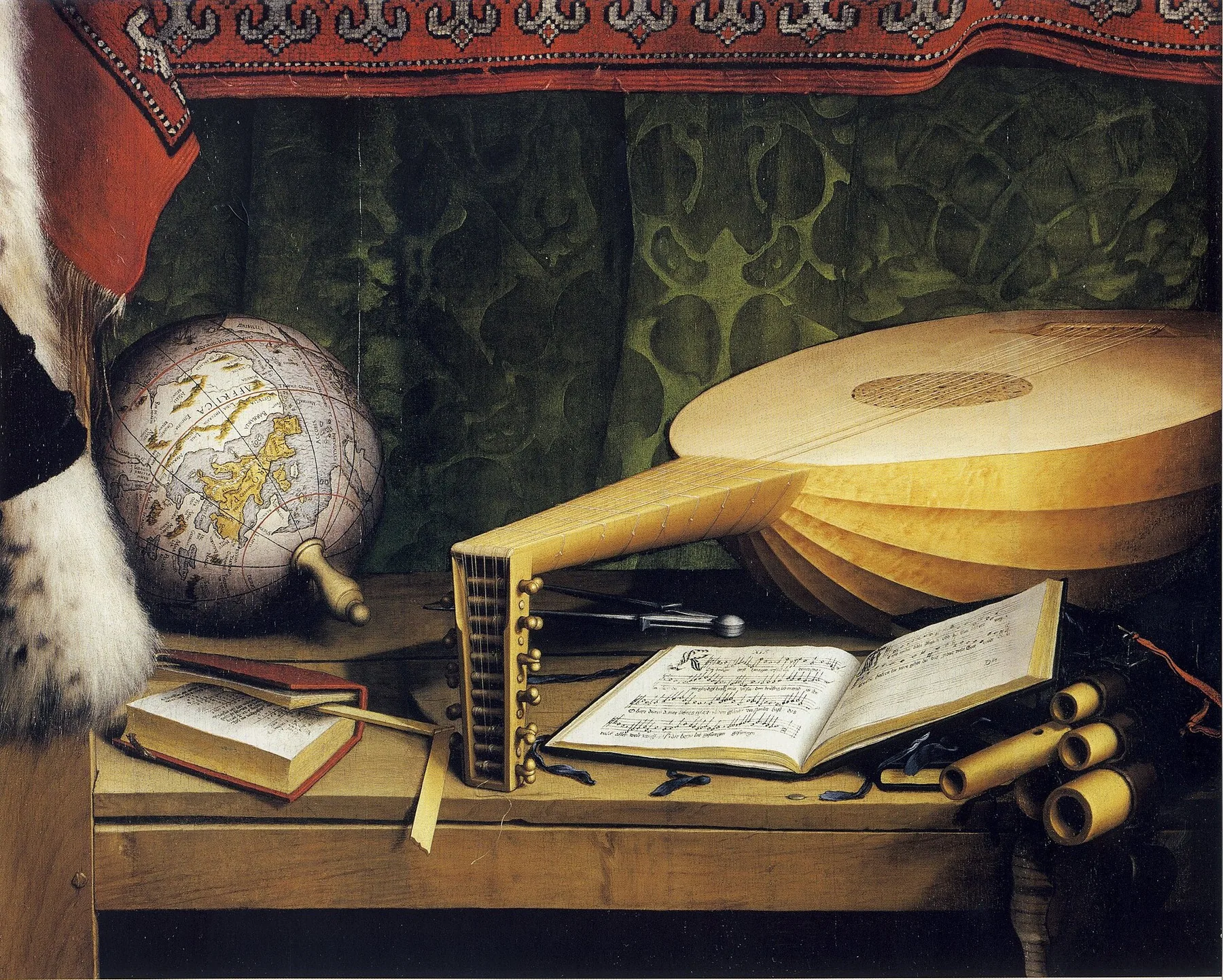
The ultimate guide to tracing the journey of an instrument from the East to Europe. This article follows its origins, changes in its construction, and the social uses that gave it a central place in Western music.
The medieval lute was an instrument in transition: imported, adapted, and then developed differently in different regions. It was played both at princely courts and at village celebrations. We will describe its spread, the evolution of playing techniques from plectrum to fingers, and the introduction of frets, which prepared the way for polyphony.
The guide follows clear themes: the oud’s origins, its spread through Europe, instrument-making techniques, sound-producing structure, tuning, and repertoire. A practical approach: materials, pitch standards, and tuning methods will be presented using factual sources concerning France and Europe.
The account follows a logical path: where the instrument came from, how it sounds, who played it, and why. This introduction sets the stage for a clear and complete exploration.
Origins of the lute: from the Persian and Arab oud to the Western lute
A cultural journey connects the Western instrument to its Middle Eastern ancestors. The name comes from al-ʿūd, literally “piece of wood,” linking the word to the instrument’s movement between Persian, Arab, and European cultures.
In organological terms, it is a plucked string instrument. In the Hornbostel–Sachs system, it belongs to the category of instruments whose strings run parallel to a neck, distinguishing it from other instrument families.
The primarily melodic oud differs from the Western lute, which developed distinctive features around the fourteenth century. Europeans did more than copy it: they changed its construction, added frets and courses of strings, and expanded its polyphonic possibilities.
Fundamental differences
- Construction: a flatter body in Europe and a fretted neck.
- Musical role: the oud focuses on melody, while the Western version lends itself to accompaniment and polyphony.
- Development: it coexisted with the guitar, but followed a distinct technical path.
| Feature | Oud | Western lute |
|---|---|---|
| Neck | Short, without frets | Longer, with frets |
| Use | Melody and improvisation | Accompaniment and polyphony |
| Construction | Deep, rounded body | Flatter body, with strings arranged in courses |
This background helps explain how the instrument spread from Spain and how quickly it changed. To learn more about regional lines of development, see this overview of the transmission of string instruments.
The lute’s arrival and spread through medieval Europe
The instrument reached the rest of Europe from the Iberian Peninsula. The Moorish presence in Spain played a central role, encouraging exchanges of instruments, repertoire, and playing techniques.
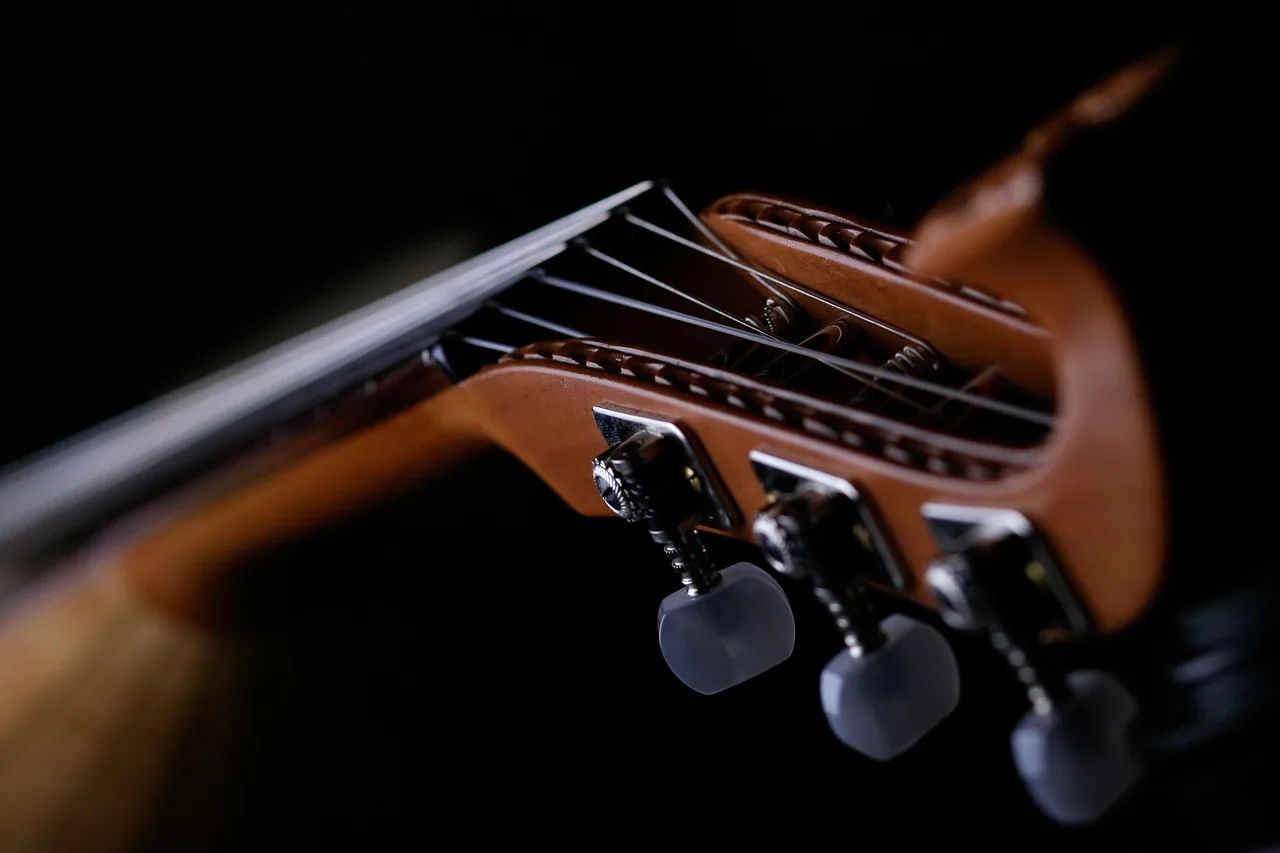
The instrument soon became more than a source of sound: it became a visual symbol of Western music. It appears in illuminated manuscripts and altarpieces, often held by musical angels or King David.
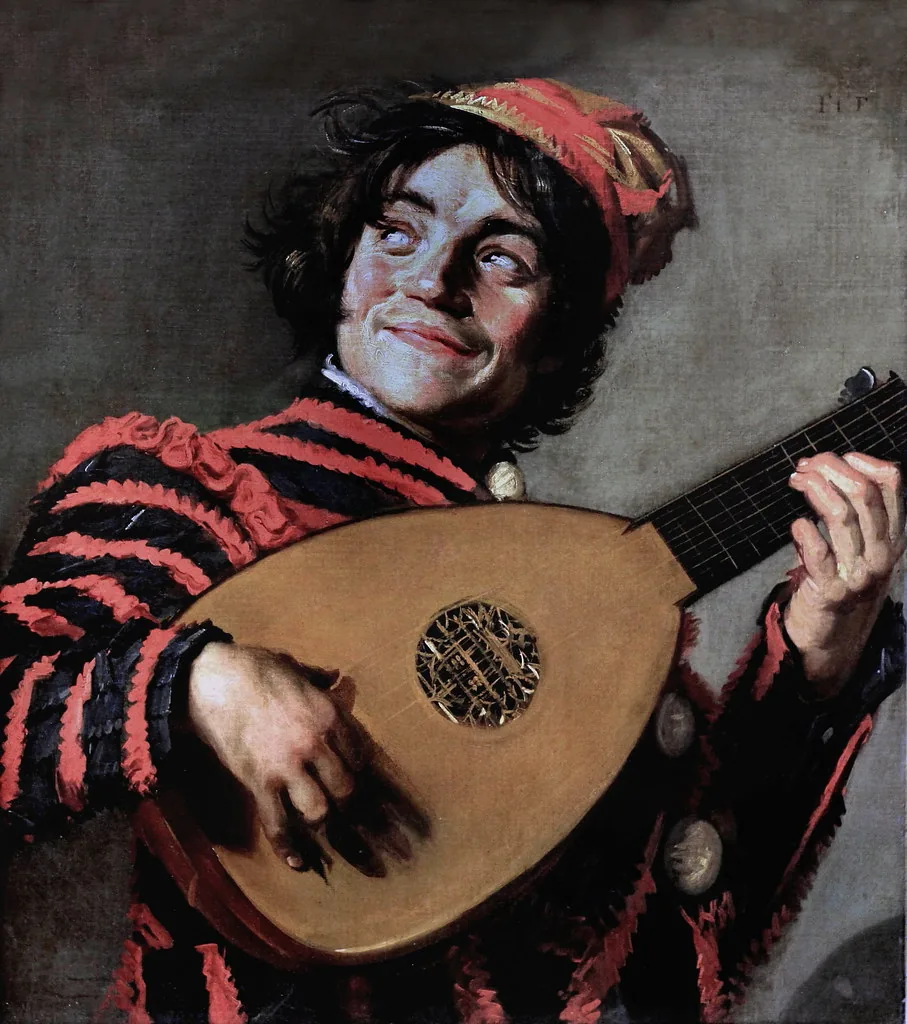
This sacred imagery existed alongside more popular uses. Jugglers and minstrels played it to accompany songs and dances at celebrations and fairs.
- Court and prestige: the instrument became a sign of education and refinement in princely households.
- Travel: musicians moved between courts, spreading techniques and repertoire.
- Informal standardization: aristocratic demand encouraged improvements in construction, particularly the neck, frets, and courses.
For more on its technical development and the historical sources, see this page on the lute.
The lute in the Middle Ages: history and evolution of the instrument
Playing with a plectrum shaped the tone and musical language of the Middle Ages. A pick made of tortoiseshell, bone, feather, or metal produced a precise attack. This favored clear phrases and simple accompaniment, with a predominantly single melodic line.
Plectrum playing and its effects
This technique produced a distinct attack and a percussive sound. Melodies remained in the foreground, while the harmony was rudimentary.
By the fourteenth century: a distinct Western instrument
By the fourteenth century, the Western form stood apart through changes in construction and use. Makers adapted it to local aesthetic preferences. This period marked a cultural transition that went beyond simply copying an existing instrument.
Frets on the neck: a decisive step
Adding frets stabilized pitches and made finger positions easier to find. It allowed players to perform counterpoint and more closely spaced chords. Technique and repertoire developed together: the new instrument opened the way to new harmonic textures.
For more on these changes, see the specialist overview in the Universalis encyclopedia. The next section looks at instrument making and the lute’s sound-producing structure.
Medieval lute making and materials: wood, body, neck, and rosettes
In the workshop, choosing the wood came first because it shaped the instrument’s entire response. The soundboard was most often made of spruce, a light, resonant wood that helped the sound project clearly.
Construction almost entirely in wood
Its typical shape is pear-like, designed to balance against the player’s body and project sound toward listeners. This outline is immediately recognizable in images from the period.
A rounded body assembled from ribs
The back formed a deeply rounded body, made by gluing thin ribs edge to edge. Strips of parchment glued inside reinforced the structure and limited distortion.
Neck, fingerboard, and peghead
The neck was light. The fingerboard, often made of ebony, sat flush with the soundboard, affecting how the instrument felt to play and the precision of finger placement.
The peghead bent back at nearly 90° to hold the low-tension strings. Tapered pegs stayed in place through friction; tuning required frequent adjustments and a careful hand.
Carved rosettes
The rosettes were carved into the soundboard as small decorative grilles. They gave the lute a distinctive visual and social identity.
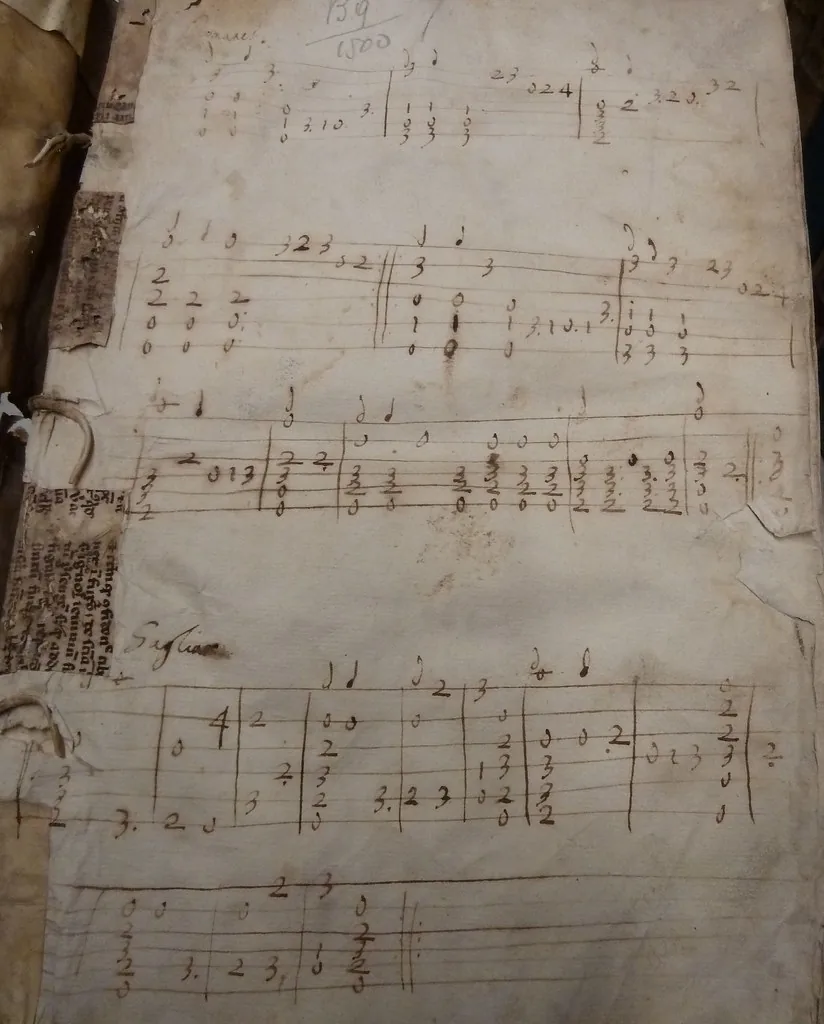
Strings, courses, and frets: the lute’s sound-producing structure
The instrument’s tone depends first on its strings and how they are arranged in courses. A course is a small group of strings plucked together. This arrangement enriches the tone without changing the basic fingering.
Materials: strings were mainly made of gut, with metal sometimes used for certain bass strings. Gut produces lower tension and a warm tone, but needs regular maintenance.
Chanterelle, unisons, and octaves
The chanterelle is the highest course and often consists of a single string. Upper and middle courses are tuned in unison to preserve clarity.
In the bass, one string in a course could be tuned an octave above the other. This strengthened the bass without making the accompaniment heavy.
Practical arrangement and frets
A typical Renaissance lute may have eight courses, often totaling 15 or 16 strings depending on the chanterelle. This arrangement gives fuller chords and a stronger bass, well suited to polyphony.
Frets were made of gut, tied around the neck, and adjustable. Where tying them was impossible, additional frets were glued to the soundboard: a simple, effective solution.
For more detail, see this guide to the lute.
Playing techniques: from plectrum to fingers, and the birth of a new expressiveness
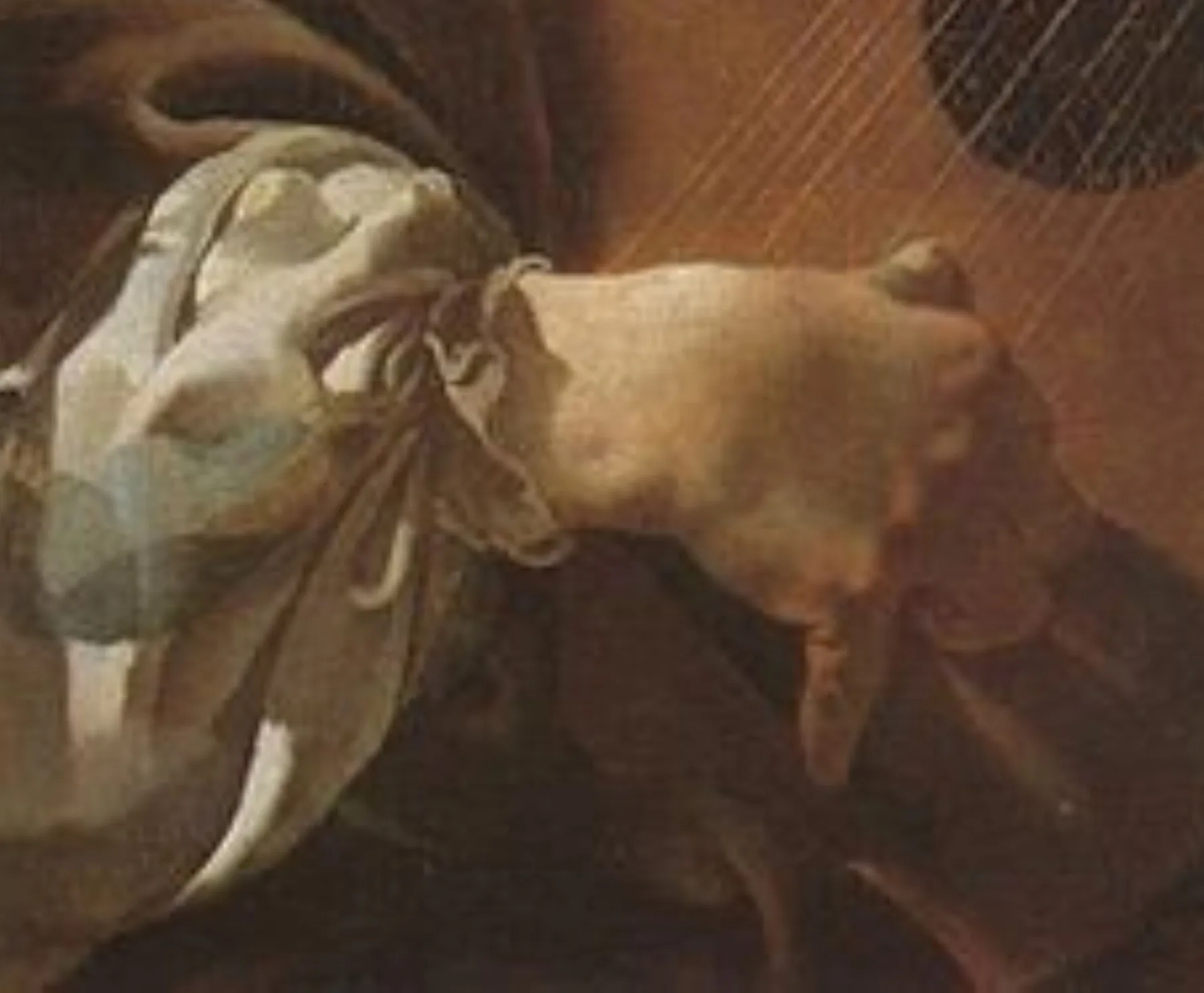
The transition in the fifteenth century marked a technical and aesthetic turning point. Replacing the plectrum with the fingers made it possible to play more independent voices. This change encouraged instrumental polyphony and enriched the harmony.
In the early seventeenth century, the right hand moved away from the line of the strings and began to pluck them at a more perpendicular angle. The thumb became more effective at playing the bass courses.
Lutenists developed ways to compensate for the sound’s short duration. Rapid trills and sideways vibrato extended the listener’s perception of notes. These ornaments served expression as well as the clarity of contrapuntal lines.
Sustaining the sound required precise movements. Musicians alternated renewed attacks, supported plucks, and thumb strokes to keep the strings vibrating without blurring the articulation.
These refinements turned performers into true virtuosos. Mastery of fingering and right-hand technique became a mark of a musician’s prestige.
| Period | Leading technique | Musical effect |
|---|---|---|
| Fifteenth century | Shift to finger playing | Greater polyphony and richer harmony |
| Early seventeenth century | More perpendicular right-hand attack | Better access to bass notes and greater rhythmic precision |
| Late period | Ornaments: trills and vibrato | Longer perceived sustain and greater expressiveness |
For more on playing techniques, see this comparison of the lute and the mandolin.
Tuning, tablature, and pitch: how the lute was actually played
Tuning a string instrument in the sixteenth century often meant making a local compromise. Instrument sizes, workshop practices, and repertoire called for choices suited to each setting.
Little standardization in tuning
The diversity of instruments explains the absence of a stable standard. Tuning changed according to the town, ensemble, or piece being played.
A reference point: a “typical” tuning
A common Renaissance lute tuning was based on fourths, with a major third between the fourth and third courses. This pattern served as a reference rather than an absolute rule.
Tablature as a guide
Tablature showed positions and fingerings, but not exact pitches. As a result, the same manuscript could sound different depending on the tuning and pitch standard chosen.
Adding bass courses and the resulting constraints
Adding bass courses expanded the instrument’s range but required wider necks. Bass strings were often used diatonically and played open.
Pitch and the lute’s place in an ensemble
Pitch standards varied between countries and groups: values for A3 ranged from about 392 Hz to 470 Hz. This range affected string tension and tone, as well as the need to transpose when string instruments played together.
Repertoire and uses: from ensemble playing to solo instrument
The sixteenth-century repertoire reveals two roles: accompanying the voice and shining as a solo instrument. At court celebrations, the lute delicately accompanied airs and songs. Its sound blended well with voices and small ensembles.
Song accompaniment and court music
Accompaniment included airs, dances, and pieces played at banquets. A broken consort brought different instruments together; the lute’s delicate sound suited refined settings.
A golden age of solo music
A large solo repertoire flourished: preludes, fantasias, toccatas, dances, and transcriptions of vocal music. These forms offered opportunities for virtuosity and musical introspection alike.
Musicians, publishing, and circulation
- Francesco da Milano: an exemplar of the Italian style.
- Hans Neusidler: a figure in the German tablature tradition.
- John Dowland: a leading representative of English music across Europe.
Pieces circulated through printed tablatures. Pierre Attaingnant and Jacques Moderne helped spread them more widely. Gradually, competition from the guitar, theorbo, and harpsichord reshaped musical practice in the sixteenth and seventeenth centuries.
Seventeenth-century France: the lute’s peak, the French school, and a changing musical balance
In seventeenth-century France, the instrument acquired remarkable social standing: learning it formed part of an elite education. Playing it signaled refinement, and some virtuosos carefully guarded the technical “secrets” they passed on.
Masters and rivalries: celebrated lutenists attracted students and patrons. Guild culture and professional musicians’ associations controlled access to methods, creating an almost initiatory atmosphere.
Tuning became more standardized in France. Toward the end of the century, D-minor tuning became a common reference point. This convergence made pieces easier to circulate and teach.
The French school included notable figures such as Ennemond and Denis Gaultier, François Dufaut, Jacques Gallot, and Charles Mouton. Their style is known for elegant phrasing and technical demands.
Court ballet encouraged more theatrical writing, with evocative titles accompanying descriptive music. At the same time, the rise of the theorbo and archlute, followed by the harpsichord’s dominance late in the period, changed the musical balance.
The end of the century shows how prestige and vulnerability could coexist: the instrument stood at the height of its social standing, yet changing tastes and a preference for greater volume left it exposed.
For a closer look, see this specialist study.
Conclusion
In short: introduction, adaptation, prestige, then decline and a late revival. The instrument’s journey began with an Eastern ancestor and continued in Europe, where added courses, frets, and new construction techniques transformed it.
This history explains why the plucked string instrument became a symbol of court life and a companion to traveling singers. Changes in materials and techniques shaped its tone and uses.
In the eighteenth century, competition from other instruments and the need for greater sound projection reduced its place in music. Its rediscovery in the late nineteenth century through the early music movement renewed interest in it, particularly through faithful reproductions.
To listen and compare, explore this comprehensive introduction to the lute and its characteristics. It helps distinguish the Renaissance lute, the Baroque lute, and related instruments.