
In the Middle Ages, this instrument became a major symbol of Western music. It often appears in religious imagery alongside musical angels or King David.
The shift from plectrum to finger playing in the 15th century opened the way to instrumental polyphony. It also strengthened the instrument’s noble status at court.
In this article, we explain its distinctive features: shape, choice of woods, string courses, right-hand techniques and repertoire. We trace the main stages of its history: the Renaissance (16th century), the Baroque (17th century), its decline from the late 17th to the early 18th century, and its modern revival.
In France: audiences and ensembles today engage with historically informed performance. We answer common questions about construction, the number of strings, tuning and comparisons with the guitar.
Understanding the Italian lute and its place among plucked-string instruments
Long associated with educated circles, the liuto served both to accompany singers and for virtuoso solo playing. This role gave it a privileged place in European courts, where lutenists served rulers.
In Italy, the term “liuto” remains broad. It covers models and uses from the Renaissance through the 17th century, including variants suited to solo playing, accompaniment and continuo.
Among string instruments, the lute stands out for its rounded body, courses and short fingerboard. Its construction and use differ from those of the guitar, theorbo and oud.
“A noble and intimate instrument, it shaped a refined repertoire for solo playing and song.”
- Uses: solo playing, vocal accompaniment and ensemble playing.
- Useful terms: strings, courses, chanterelle and tablature.
- Influence: the instrument’s noble status encouraged the pursuit of a subtle sound and elaborate pieces.
This context places the instrument before we turn to its history, construction and technique.
From Eastern origins to Europe: from oud to lute
The shapes and uses of the barbat and oud laid the foundations for an instrument adopted by Western courts.
Organological lineage: the Persian barbat and Arab oud share a pear-shaped body, rounded back and plucked strings. These traits endured over centuries and led to the European form common in the 16th and 17th centuries.
Several technical connections are clear. The use of courses, the curved back and the plectrum attack (risha) show continuity in sound and use.
Spread and adoption: exchanges, merchants, travelling musicians and the curiosity of courts encouraged its integration. Rulers valued the prestige of this type of instrument.
- Standardisation in Europe: the neck and pegbox were adapted to the needs of polyphony.
- Repertoire: playing developed towards polyphony, dances and transcriptions, influencing European classical music.
This history explains the distinctive bodies, necks and pegboxes of later models.
Italian lute construction: body, soundboard, neck and pegbox
The half-pear silhouette and ribbed back largely determine its acoustic response. The pear-shaped body, with thin ribs and a rounded back, concentrates vibrations and encourages a quick resonance.
The rounded, ribbed, pear-shaped body
The ribs and ribbed back shape the attack and tone colour. This construction gives the high notes a lively response while keeping the bass clear.
The angled-back pegbox
The angled pegbox makes the pegs easier to reach. It changes the strings’ break angle and tension, affecting intonation and the sustain of harmonics.
Rosette, bracing and projection
The soundboard, its bracing and the rosette determine projection and tonal balance. Light bracing favours clarity, while targeted reinforcement improves bass definition.
Choice of woods and neck
Woods such as maple, rosewood and yew serve both appearance and acoustics. The length of the neck affects comfort, intonation and the instrument’s capacity to accommodate its courses.
Comparison: the lute’s resonating body may seem more effective than a guitar’s at conveying delicate harmonics, although it does not produce greater volume.
Strings and courses: the evolution that transformed the instrument
A course is a pair of strings tuned together. Doubling thickens the attack, lengthens the sound’s sustain and broadens its spectrum. It gives the melodic line more presence.
From doubled strings to courses
Initially, the instrument had five doubled strings and a chanterelle. Each pair forms a course. This arrangement enriches the harmonics without sacrificing a precise attack.
From Renaissance lutes to Baroque models
The Renaissance lute then gained six courses, while 17th-century models could have as many as thirteen courses, sometimes totalling twenty-five strings. This required greater tension, a longer pegbox and more care from the player’s fingers.
Chanterelle, octaves and unisons
High strings are often tuned in unison to preserve clarity; bass strings may be tuned an octave apart for a fuller sound. This balance allows dense polyphony while keeping individual voices distinct.
“More courses offer more harmonic possibilities, but also make tuning harder.”
| Period | Number of courses | Practical effect |
|---|---|---|
| Early period (Middle Ages) | 5 doubled strings and a chanterelle | Clear sound, easy tuning |
| Renaissance | 6 courses | Greater polyphony, moderate tension |
| Baroque (17th century) | Up to 13 courses | Stronger bass, complex tuning |
As a practical rule, remember that more strings offer more chord possibilities but also require more maintenance. For historical and comparative context, see the article on the spread of instruments.
Historical tunings: from “old tuning” to “new tuning”
The choice of tuning changes finger positions and the colour of the harmonics. It shaped the repertoire between the 16th and 17th centuries.
Old tuning in the 16th century
Old tuning refers to a tuning largely based on fourths, common in the 16th century.
This pattern helps guitarists find their bearings: the intervals remain regular and some positions overlap.
Its limitation is that it becomes restrictive when the repertoire calls for more sombre keys.
New tuning in the 17th century
New tuning changes some intervals to make playing in D minor easier.
Open strings then provide resonances suited to minor cadences and simplify some fingerings.
Why tuning was considered demanding
- The many courses make tuning slow and unstable.
- Balancing range and resonance requires unusual fingerings.
- Movable frets on some instruments require adjustments to intonation.
“The tuning system places demands on the left hand; it also affects right-hand articulation.”
Today, musicians choose a tuning to suit the repertoire—old tuning for Renaissance music and new tuning for Baroque music—before addressing technique.
Playing technique: from the medieval plectrum to the fingers
In medieval practice, the plectrum gave a crisp touch and linear articulation.
The plectrum era: the attack is firm and the phrase unfolds as a single melodic line. A plectrum made of tortoiseshell, bone, quill or metal encourages even articulation and a slight percussive effect. This approach suits monophonic music and rapid ornaments.
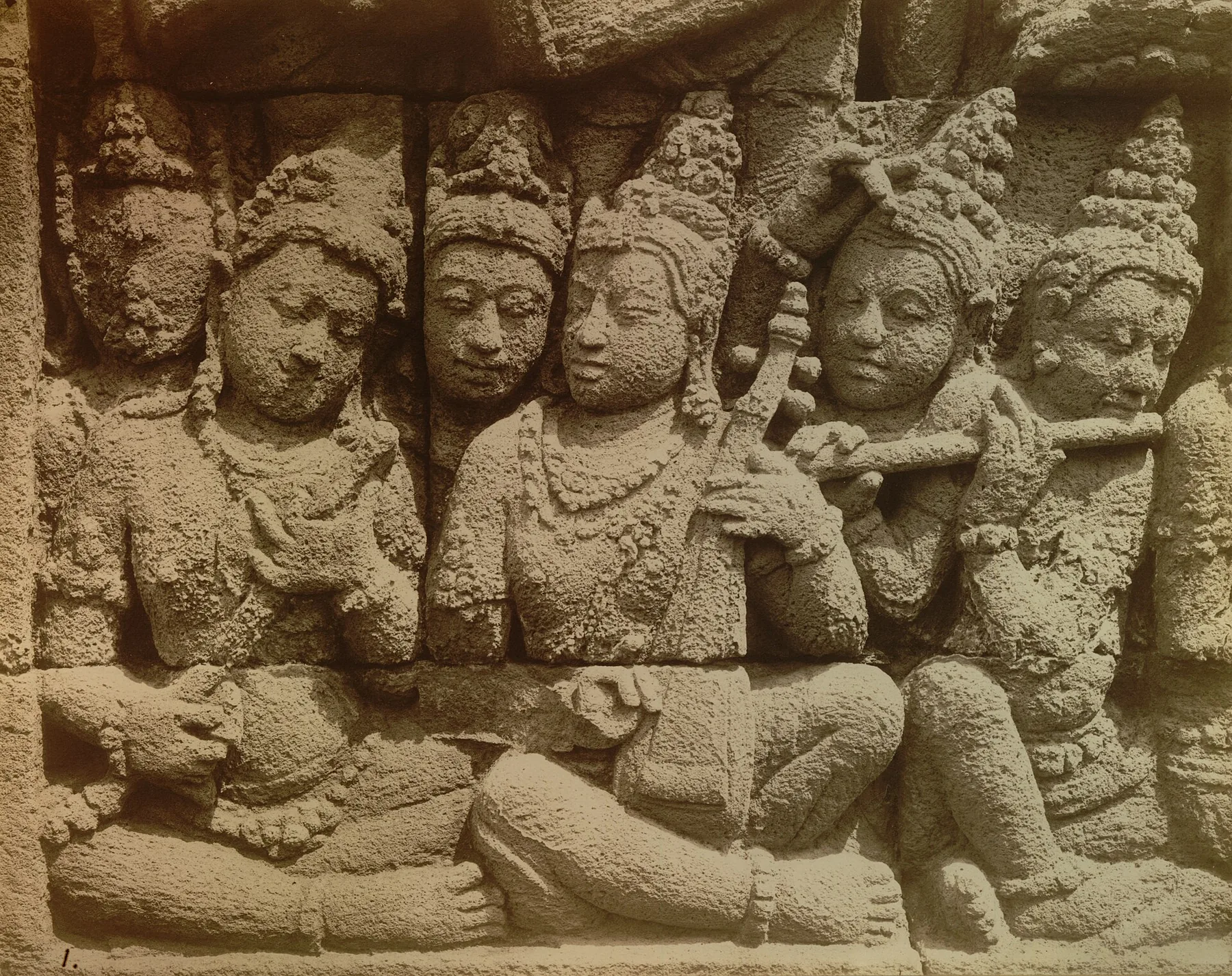
What finger playing brought in the 15th century
The shift to finger playing changed musical practice. The fingers give the voices greater independence. They allow simultaneous lines, balanced courses and control over each string’s resonance.
Right hand: attack, dynamics and clarity of voices
The right hand controls the alternation and direction of attacks. Contact with the fingertip produces a rounded attack; the nail gives it greater definition.
- Balance: distribute the attack between the chanterelle and bass strings to preserve clarity.
- Doubling: control the courses so the lines do not become tangled.
- Listening: assess the start and decay of notes and the balance between voices for a clean result.
“Tablatures and treatises often clarify the musical intention; their signs must be translated into precise movements.”
Mastery of this technique is essential to the instrument’s intimate tone and precision. For an overview of changes in technique and aesthetics, see the evolution of technique and playing style.
The lute’s sound: incisiveness, intimacy and fine detail
Its tone is often described as incisive, intimate and rich in subtle nuances. Its clear attack reveals fine details that can sometimes be lost on a modern guitar.
Comparison with the guitar: projection, brightness and range
The guitar projects more easily in large spaces because its notes sustain longer and sound brighter. The difference can be heard in the way chords fill a room: the guitar produces a larger body of sound, while the lute remains direct and precise.
Why it sounds especially good in small spaces
In a drawing room or chapel, its modest volume becomes an advantage. Its resonance is not lost; instead, it reveals the balance of the courses, the bass presence and the transparency of the chords.
“More incisive than the guitar, it favours polyphonic clarity over sheer volume.”
| Criterion | Higher-pitched instrument | Guitar |
|---|---|---|
| Projection | Modest—ideal for small spaces | Strong—suited to larger rooms |
| Brightness | Incisive sound, fine detail | Brighter sound, longer sustain |
| Size | The lute’s size changes its range | Less variation in standard size |
As you listen, notice the balance of the courses, the clarity of the voices, the bass presence and dynamics free from saturation. The Italian approach favours close attention to detail, restrained virtuosity and an inward singing quality.
Italian lute: distinctive features of its construction and playing technique
The Italian approach combines exacting construction with a virtuoso compositional style. Workshops seek a responsive soundboard and a clear attack. Composers favour the toccata, fantasia and diminutions.
Virtuosity and inward song
The virtuosity is not showy. It serves ornamentation, flexible timing and the shaping of voices. The aim is to bring out a singing line within a polyphonic texture.
Italian-style accompaniment
Using the lute for accompaniment requires careful balance. Chords support the voice without covering it. Arpeggios and countermelodies must breathe and follow the singer’s diction.
Context: courts, chapels and drawing rooms encouraged a mobile musical practice. Travelling musicians spread a rich repertoire associated with figures such as Francesco Canova da Milano.
“Transparency, a delicate attack and breathing room in each phrase define the desired aesthetic.”
| Aspect | Characteristic | Musical effect |
|---|---|---|
| Construction | Responsiveness and a clear soundboard | Quick shifts of nuance, precise attack |
| Composition | Toccata, fantasia, diminutions | Freedom of ornament and movement |
| Use | Solo playing and accompaniment | Dialogue with voice and ensemble |
Italian solo lute repertoire: forms, styles and functions
Instrumental forms developed in Italy offer a remarkably rich range for solo playing. The repertoire includes preludes, fantasias, toccatas, dances and transcriptions of secular or sacred vocal works.
Preludes, fantasias, toccatas and dances
Preludes: short, free pieces useful for warming up and checking the tuning.
Fantasias: contrapuntal pieces in which harmonic imagination leads.
Toccatas: rapid contrasts, virtuoso gestures and sudden changes of pace.
Dances: pieces with clear rhythmic patterns, often intended for social use.
Vocal transcriptions and major figures
Transcriptions adapt vocal polyphony for a solo instrument. They seek to preserve the distinct voices and the expressiveness of song.
- Francesco Canova da Milano: a clear style balancing virtuosity with intelligibility.
- Melchiore De Barberiis: his work points to a network of varied sources and practices.
“The voice remains the model; the instrument translates and enhances it.”
Performance, listening and circulation
Practical points: manage diminutions, adapt fingerings to the chosen tuning and control resonance so each voice remains clear.
| Form | Function | Performance advice |
|---|---|---|
| Prelude | Warm-up and freedom | Flexible tempo; check the tuning |
| Fantasia | Counterpoint and exploration | Clear voices and balanced courses |
| Toccata and dances | Contrast and rhythmic structure | Lively articulation and steady rhythm |
European circulation and shared repertoires in the 16th and 17th centuries
In the 16th century, printed music, travel and correspondence networks carried styles and pieces across borders. Practices in Italy, England and Germany influenced one another, turning a local instrument into a shared musical language.
England: John Dowland and international renown
John Dowland composed celebrated works—Flow My Tears, Lachrimae Antiquae and The King of Denmark’s Galliard—that travelled throughout Europe. Their success shows that the repertoire crossed boundaries: these works were read, adapted and performed widely.
Germany: practices and composers named in the sources
German treatises mention Hans Judenkünig and Sebastian Ochsenkun. Their sources describe teaching pieces, ornaments and adjustments that illuminate regional practice.
Broken consort: combining voices and other instruments
The broken consort brings together voices, string instruments and flutes. The lute helps bind the harmony and adds its own colour. Players must adjust their attack and balance to keep the lines distinct.
- Settings: court festivities, chamber music and early continuo use in opera.
- What this demands of the player: a precise attack, control of the courses and attentive listening to partners.
“The circulation of pieces brought varied practices together in a shared repertoire.”
The lute in an ensemble: accompaniment, voice and basso continuo
In an ensemble, this plucked-string instrument must combine harmonic presence with melodic restraint.
Accompanying song calls for chords that support the voice without smothering it. Open voicings, light arpeggios and a discreet countermelody complement the main line.
To play its part in a continuo group, the lute must provide rhythmic steadiness and harmonic clarity. Chords should be realised evenly so the bass and other voices can articulate easily.
Competition in the bass
In the 17th century, the theorbo and chitarrone gained favour because their stronger bass changed the balance. Adding a cello or viola da gamba made the texture denser, sometimes at the expense of clarity in the plucked part.
Practical advice
- Play the lower courses more softly so they do not cover the voice.
- Choose strings and tuning pitch that preserve a clear attack.
- Positioning: sit near the singers or bass instruments to balance the sound more effectively.
In a small group, such as a voice and plucked-string duo, the balance comes naturally. In a larger ensemble, articulation must be adapted; sometimes an instrument with a wider range is needed.
“Flexible playing and attentive listening remain essential if every part is to find its place.”
To understand why some musicians chose the theorbo or chitarrone later, it helps to distinguish these instruments in the next section. To learn more about how they interact with string instruments, also read the secrets of string instruments.
Theorbo, chitarrone and archlute: understanding the lute family
This family of instruments diversified to meet the needs of continuo and solo playing. Three types stand out: the theorbo, chitarrone and archlute. Each retains plucked strings while serving a particular purpose.

The theorbo
Identification: a visible double pegbox and long, unfretted bass strings extending beyond the neck.
Re-entrant tuning allows open bass notes without left-hand stopping. The practical advantage is simpler transitions. The result is deep bass and a less “natural” treble because of the string tension.
The chitarrone
Sometimes called a “large guitar”, this Italian instrument favours a powerful middle and low register. Its neck is longer, and its projection suits accompaniment in a hall.
The archlute
A manageable compromise, it has a double pegbox but no re-entrant tuning. It extends the range while remaining suited to solo playing.
Repertoires and uses
In ensembles, the theorbo and chitarrone provide basso continuo. For solo music, the archlute or lute is preferred, depending on the repertoire.
“Related instruments, shared principles, different functions.”
Peak and decline: why the lute lost ground in the late 17th century
In the 17th century, court preferences changed: accompaniment increasingly called for deeper bass and greater projection.
Eclipsed by the theorbo, then overtaken by the harpsichord
The theorbo and chitarrone offered stronger bass for continuo. They better met the needs of ensembles and new performance spaces.
The harpsichord eventually prevailed because it provided a constant harmonic foundation and reliable projection. It was also easier to coordinate in accompaniment.
From aristocratic success to obscurity in the early 18th century
In the 16th and 17th centuries, the instrument enjoyed aristocratic prestige and a rich repertoire. Its use declined in favour of other instruments around 1650 in Italy and around 1680 in France.
Practical causes included insufficient volume, the difficulty of balancing many courses and the standardisation of continuo. The consequences were fewer lutenists, a changing repertoire and a move towards keyboards or bowed instruments.
“An instrument can lose its social place without ceasing to interest enthusiasts and makers.”
| Period | Development | Effect |
|---|---|---|
| Mid-17th century | Rise of the theorbo and chitarrone | Deeper bass for continuo |
| Late 17th century | Rise of the harpsichord | Projection and harmonic foundation |
| Early 18th century | Widespread obscurity | Fewer players |
Despite this decline, regional traditions survived, especially in Germany. Its disappearance from social life was not permanent: rediscovery and reconstruction followed.
The modern revival: from the historical lute to the Liuto forte
A modern movement combines faithful restorations with innovations for today’s stage. Workshops now offer two approaches: preserving historically informed practice or providing an instrument adapted to current demands.

The “21st-century lute”: greater power and brightness
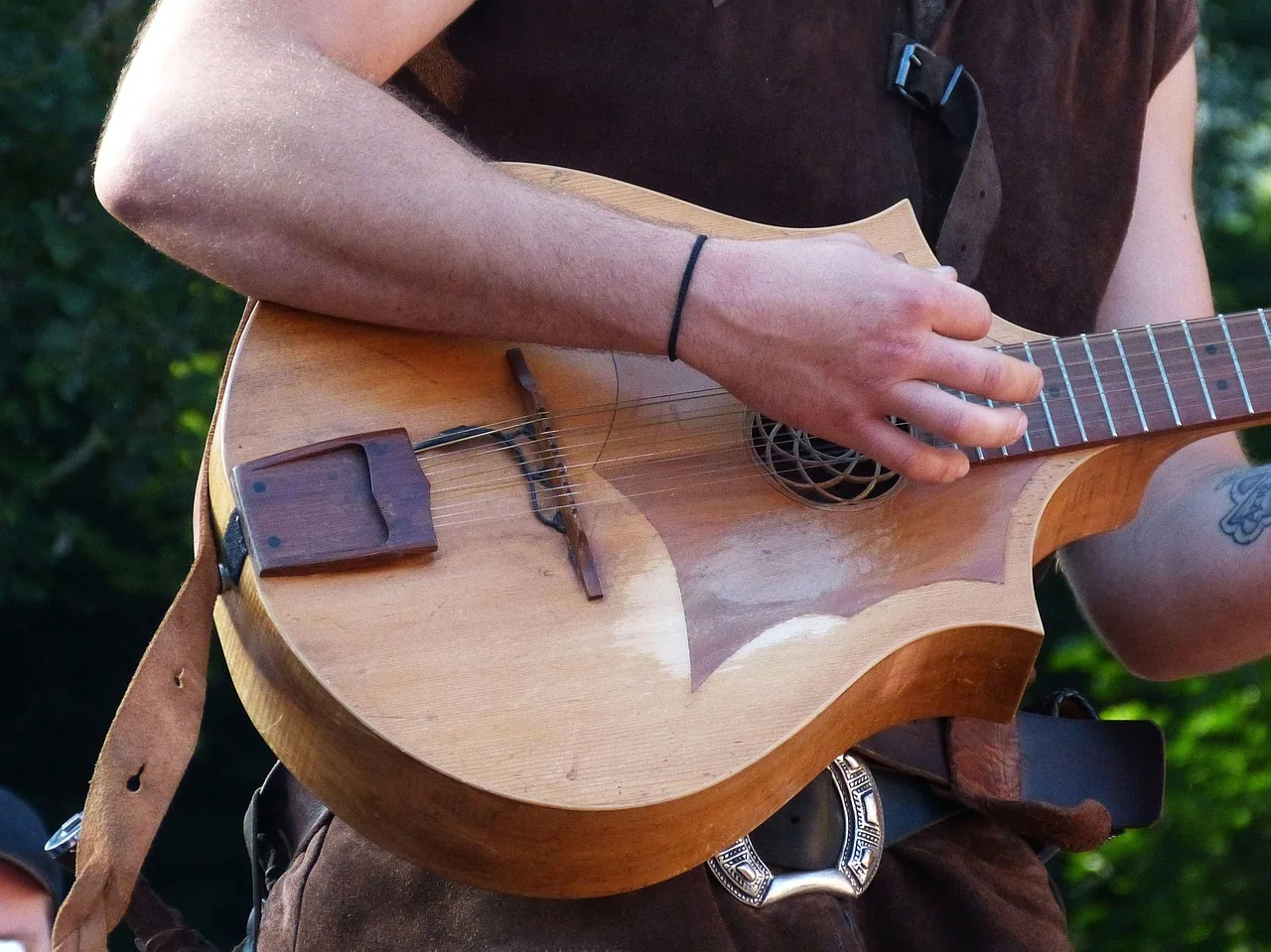
The Liuto forte is an adaptation intended to improve projection while respecting the older sound. The goal is enough volume and brightness to be heard in an ensemble without turning it into a guitar.
Stronger single strings: playing with fingertips or nails
Models fitted with single strings hold their tuning better and respond more consistently. They can be played with fingertips or nails to achieve the desired effect.
Movable frets and tuning demands: proposed solutions
Historical movable frets help with intonation but complicate playing on stage. Offered as an option today, they make tuning easier for some players without excluding older practices.
A wider repertoire: from the 16th to the 21st century, including guitar music
The Liuto forte opens up a broad repertoire: early works, transcriptions and contemporary pieces. It may also appeal to guitarists: works for guitar can be adapted for it, encouraging stylistic exchange.
“Innovation seeks a balance: honour tradition while meeting the needs of today’s stages.”
- Context: historical reconstructions and instruments better adapted to performance.
- Strengths: stable tuning, better projection and suitability for ensembles.
- Limitations: the aesthetic choice must be made for each project.
Choosing and playing: useful criteria for today’s lutenist
Today’s musician must balance ergonomics, range and the demands of the repertoire. Concrete criteria affect both comfort and musical expression.
Number of courses, neck length and comfort
Number of courses: six often suffice for Renaissance repertoire; for Baroque music, more courses offer a wider palette but make tuning harder.
Neck length: a short neck brings positions closer together; a long neck increases the spacing and string tension, which may cause more fatigue.
Physical effort, posture and use
Comfort depends on how the instrument is held, posture and setup. The Liuto forte may feel less physically demanding than a classical guitar while producing more sound.
Tablature or notation: reading and interpretation
Tablature helps players find fingerings: it is tailored to the instrument and can be learned quickly. Staff notation supports reading polyphony and transposition. Modern editions often offer both formats.
“A comfortable instrument played regularly is better than a prestigious model that is too demanding.”
| Criterion | Recommended option | Practical effect |
|---|---|---|
| Repertoire | Renaissance: 6 courses; Baroque: 8 or more | Balance between sound and tuning complexity |
| Neck | Short or long | Comfort of positions and string tension |
| Reading | Tablature and staff notation | Suggested fingerings and a clearer view of the polyphony |
Suggested approach: define your goals—solo playing, accompaniment or versatility—then choose an instrument accordingly. For practical help with technique and posture, see suitable teaching advice.
Conclusion
The lute’s history connects construction with playing practice. It shows how an instrument changes to meet the demands of successive centuries.
Origins, spread, body, neck and courses form the framework of that history: tunings, the move from plectrum to fingers and polyphonic clarity explain its intimate sound.
In Italy, the solo repertoire favours expressive virtuosity in the service of song. The family—lute, theorbo, chitarrone and archlute—shows different responses to the needs of each era.
The decline was historical, not a matter of quality. The modern revival, including developments such as the Liuto forte, reaffirms the lute’s place in music today. For a closer look at woods and historical sources, also consult this study.