
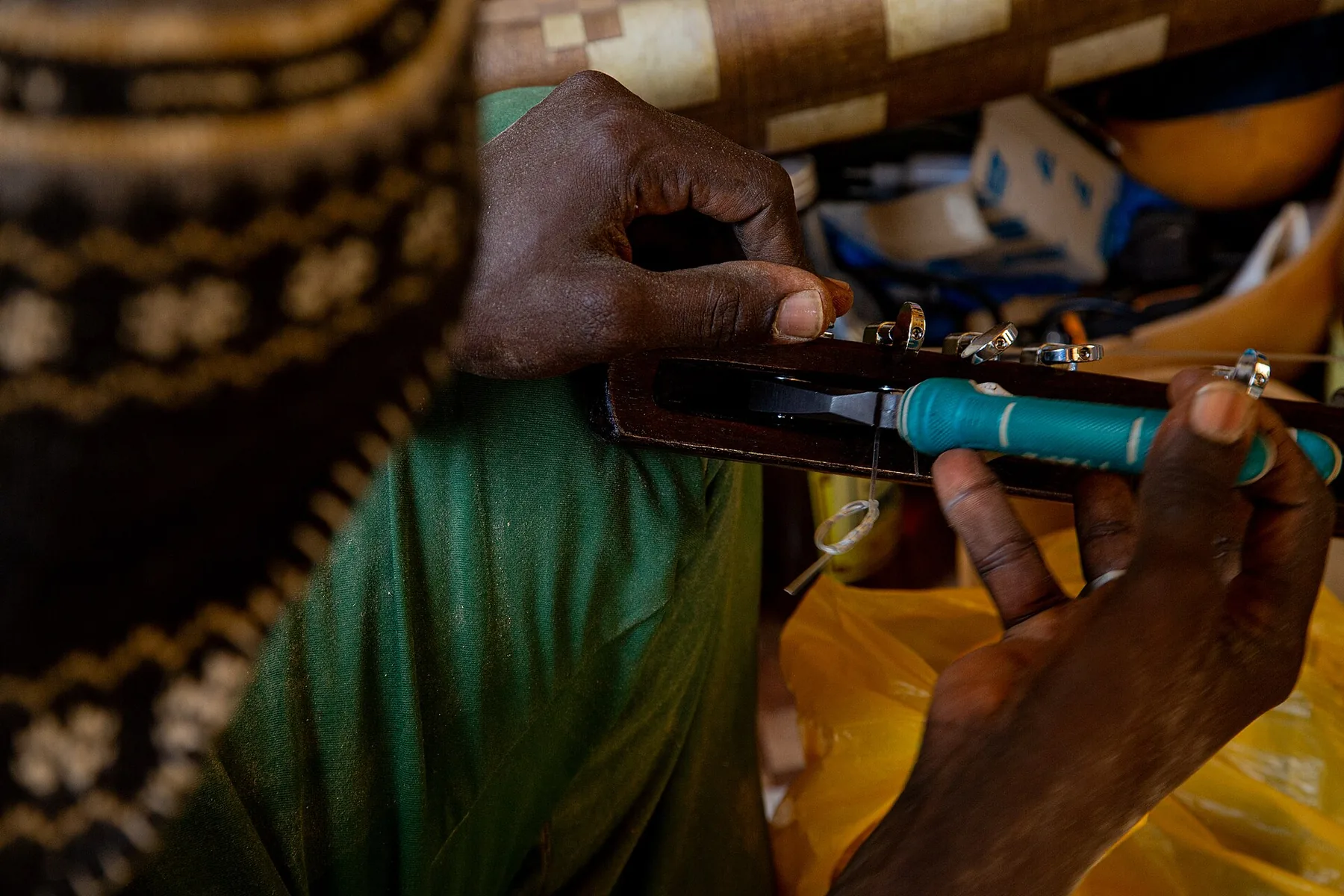
African musical instruments hold a central place in the continent’s culture and musical traditions. They are used in many settings, from religious ceremonies to performances. African string instruments, such as the African lute, the kora and the ngoni, are especially important. They produce distinctive sounds and carry deep cultural significance.
Explore the world of African string instruments and discover the sounds and stories that shape the soul of African culture. Traditional African music is steeped in customs and rituals, and musical instruments play an essential role in passing them on. They are often associated with griots, musicians and poets who preserve and share their communities’ history and values.
Griots are guardians of tradition and often use string instruments such as the kora to accompany their stories. The kora, a plucked-string African lute, is an iconic West African instrument. Traditionally played by griots, it is known for its captivating melodies.
The ngoni, another African string instrument, originated in West Africa and is valued by griots in Mali and Burkina Faso. This plucked-string instrument produces rhythmic sounds and has accompanied singing and dancing for centuries.
Explore the world of African string instruments and immerse yourself in the captivating sounds of the kora, the African lute and the ngoni. Discover the stories and African musical traditions passed down through generations, and experience the richness and diversity of African culture.
African percussion instruments (idiophones)
African percussion instruments, also called idiophones, have an important place in African music. They include instruments such as drums, rattles, bells and scrapers. These instruments are easy to make and play, and produce a variety of rhythmic sounds.
Drums are particularly widespread in Africa and are used in many musical traditions. They are made from various materials, including wood and animal skin stretched over a wooden or metal frame. Drums are played with the hands or sticks and produce lively rhythms.
Rattles are also common among African percussion instruments. They are often made from natural materials such as gourds, animal gallbladders, leather and baobab fruit. Rattles are shaken to produce rhythmic sounds that enrich African music.
Bells are percussion instruments that produce distinct sounds when shaken or struck. They are often attached to ankles, wrists or the instruments themselves to add rhythmic elements to music and dance.
Scrapers are percussion instruments that produce sounds when their textured surfaces are scraped or rubbed. They can be made from bone, shells or metal and offer a range of distinctive sounds.
African percussion instruments are essential to the rhythmic, captivating atmosphere that characterizes African music. At religious ceremonies, community gatherings or performances, these idiophones bring a powerful rhythmic dimension to African music.
| African percussion instruments | Materials |
|---|---|
| Drums | Wood, stretched animal skins |
| Rattles | Gourds, animal gallbladders, leather, baobab fruit |
| Bells | Metal, ankle and wrist fastenings |
| Scrapers | Bone, shells, metal |
African string instruments (chordophones)
African string instruments, known as chordophones, have an important place in traditional African music. They produce melodious sounds and are used in a variety of musical settings. Among the most iconic African string instruments are the kora, oud, bolon, harps and lyres. Each has a rich history and deep cultural significance. Discover these fascinating instruments and their sounds below.
- Kora: The kora is a string instrument from West Africa, particularly Senegal and Mali. It is often played by griots, the traditional poets and musicians of West Africa. The kora has 21 nylon or sheep-gut strings attached to a gourd. It is played with four fingers and produces a rich, melodious sound.
- Oud: The oud is a plucked-string instrument popular in the Arab world and North Africa. It is also played in some parts of sub-Saharan Africa. The oud is a versatile instrument that can be played solo or in an ensemble. Its warm, expressive sound gives it an important place in African music.
- Bolon: The bolon is a West African string instrument from Burkina Faso. It consists of a long wooden neck fitted with three sheep-gut strings. The bolon produces deep, resonant sounds and is often used in ceremonies and musical performances.
- Harps: Harps are widely used across Africa and come in many forms. Their strings may be made of sheep gut or synthetic fiber, and the number of strings varies. African harps are often decorated with colorful patterns and elaborate carvings that add a visual dimension to a performance.
- Lyres: Lyres are plucked-string instruments commonly used in Africa. They resemble the kora, but their structure and sound are different. Lyres are made from materials such as wood and animal sinew. Their strings are plucked with the fingers or a plectrum to produce melodious, captivating sounds.
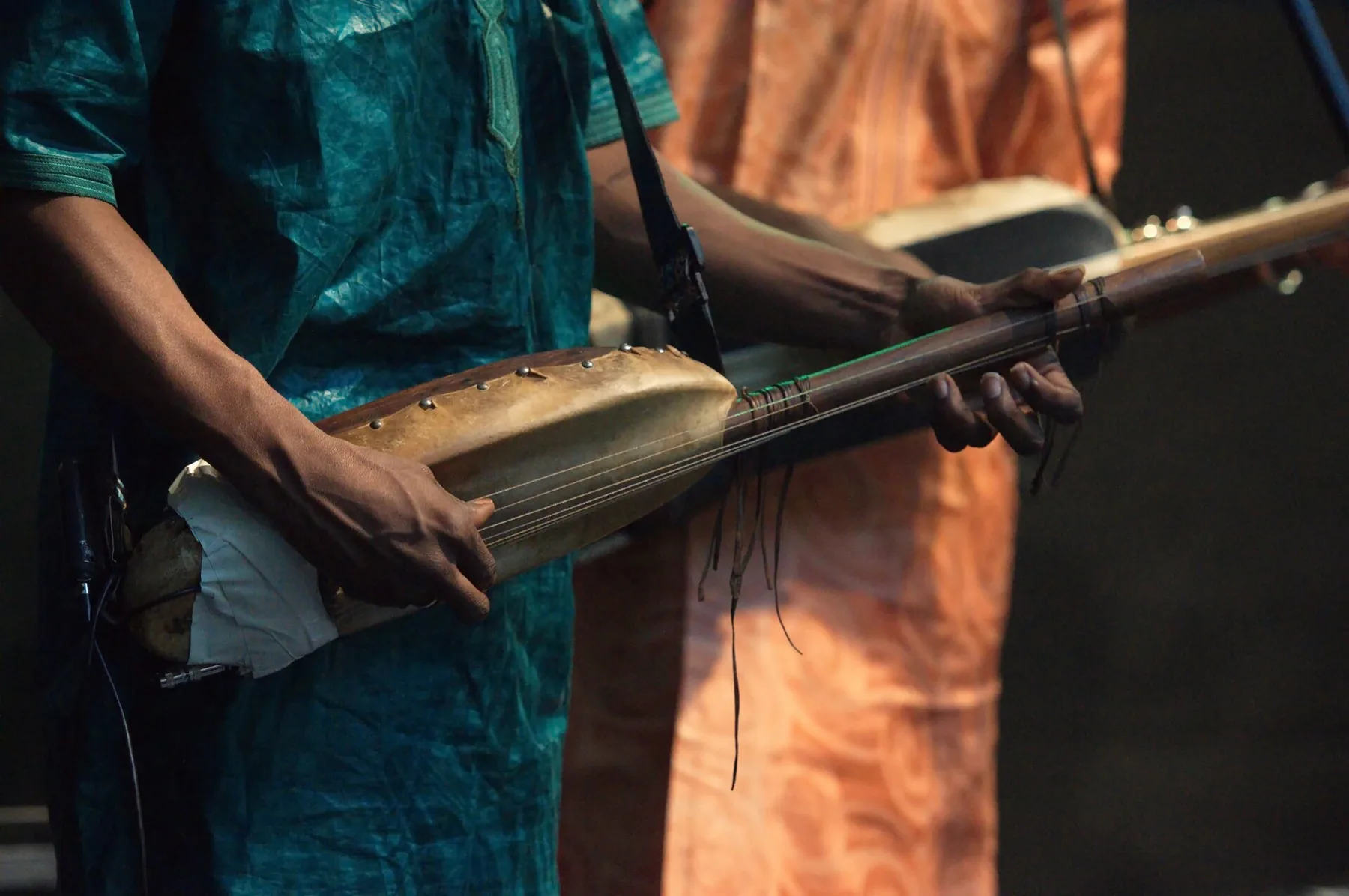
These string instruments—the kora, oud, bolon, harps and lyres—are essential to African music. They bring melody and harmony to musical performances and are appreciated both in Africa and around the world. Their distinctive sounds and appearance make them treasured instruments in African culture.
African wind instruments (aerophones)
African wind instruments, also called aerophones, play an important role in African music. They include flutes, trumpets, horns and whistles. Flutes are often made from bamboo, gourds or wood, and many varieties are found across the continent.
Trumpets and horns are generally made from animal horns or tusks, while whistles may be made from reeds or metal tubes. These instruments are often associated with dance and add a rhythmic dimension to African musical performances.
African wind instruments offer a variety of distinctive sounds and timbres that bring African compositions and melodies to life. African flutes, such as the Fulani flute and bamboo flute, produce flowing, melodious notes with a natural beauty.
African trumpets and horns, made from natural materials, produce powerful, striking sounds that often announce special events or traditional ceremonies. For example, the horn trumpet called the “kudu” is used by herders to communicate over long distances in rural parts of Africa.
African whistles also bring a lively rhythm to musical performances. They can mark the tempo, direct ensembles or add interesting sound effects. Some traditional African whistles feature intricate artistic designs and are considered works of art.
Exploring African wind instruments reveals their cultural importance and their contribution to Africa’s musical richness. They are both means of musical expression and symbols of African heritage and traditions.
Common African wind instruments:
| Instrument | Description |
|---|---|
| Flutes | African flutes are made from bamboo, gourds and wood. They produce a range of melodious notes and are used in various musical traditions. |
| Trumpets | African trumpets are generally made from animal horns or tusks. They produce powerful sounds and are used at ceremonies and celebrations. |
| Horns | African horns resemble trumpets and are also made from animal horns. They serve various purposes, including communication during hunts and the announcement of special events. |
| Whistles | African whistles are made from reeds or metal tubes. They add distinctive sound effects to musical performances and can mark the tempo or direct ensembles. |
African percussion instruments (idiophones and membranophones)
African percussion instruments play a central role in African music. They fall into two categories: idiophones and membranophones. Idiophones include instruments such as drums, mbiras and shekeres. Drums are used in many African musical traditions and are made from skins stretched over frames. Mbiras have metal tines that are plucked to produce sounds. Shekeres are percussion instruments made from gourds covered with colorful beads.
Membranophones, such as the djembe and dununs, are drums with stretched membranes played by hand or with sticks. They add depth and rhythmic texture to African musical performances.
| Instrument | Description |
|---|---|
| Drums | Large drums with stretched membranes, used in many African musical traditions. |
| Mbiras | Instruments with plucked metal tines. They produce melodic sounds. |
| Shekeres | Gourds covered with colorful beads. They produce sounds when shaken or struck. |
| Djembe | A drum with a stretched membrane, played by hand. It produces striking sounds. |
| Dununs | Large drums with stretched membranes, played with sticks. They add rhythmic depth. |
Conclusion
African string instruments hold a central place in Africa’s culture and musical traditions. They are a pleasure to hear and carry deep cultural significance. Instruments such as the kora, African lute and ngoni are widely used in traditional African music and take listeners on a distinctive musical journey.
African music is an invaluable treasure that continues to captivate and inspire musicians and listeners worldwide. The distinctive sounds and stories carried by African string instruments reflect the soul of African culture and offer a way to discover and appreciate the continent’s rich musical diversity.
Exploring African string instruments means entering a world of captivating sounds and stories deeply rooted in African culture. At religious ceremonies, during performances or simply for the pleasure of playing, African musical instruments with strings will continue to resonate with passion and pass on Africa’s distinctive musical traditions.
FAQ
What are the best-known African string instruments?
The best-known African string instruments are the African lute, the kora and the ngoni.
What is the cultural significance of African string instruments?
African string instruments have deep cultural significance and are an integral part of traditional African music. They produce distinctive sounds that captivate listeners and express the soul of African culture.
What is a griot, and what role does a griot play in African music?
A griot is a traditional West African storyteller and musician. Griots play an essential role in preserving and passing on African musical traditions. They often use African string instruments such as the kora to accompany their stories and songs.
What are the most common African percussion instruments?
The most common African percussion instruments are drums, rattles, bells and scrapers.
How are African drums made?
African drums are made by stretching skins over wooden frames or using wooden shells. Each drum has a distinctive sound and is used in particular musical traditions.
Which African string instruments are most widely used?
The most widely used African string instruments are the kora, oud, bolon and harps.
How is the kora played?
The kora is played by plucking its strings with four fingers. The musician also uses their thumbs to play low notes. Kora playing is complex and requires considerable dexterity.
What are the most popular African wind instruments?
The most popular wind instruments in African music are flutes, trumpets, horns and whistles.
What materials are used to make African flutes?
African flutes are often made from materials such as bamboo, gourds and wood. Each material produces a different sound.
Which African percussion instruments are most widely used?
The most widely used African percussion instruments are drums, mbiras, shekeres, djembes and dununs.
How are African shekeres made?
African shekeres are made from gourds covered with colorful beads. When shaken, the beads produce distinctive rhythmic sounds.