
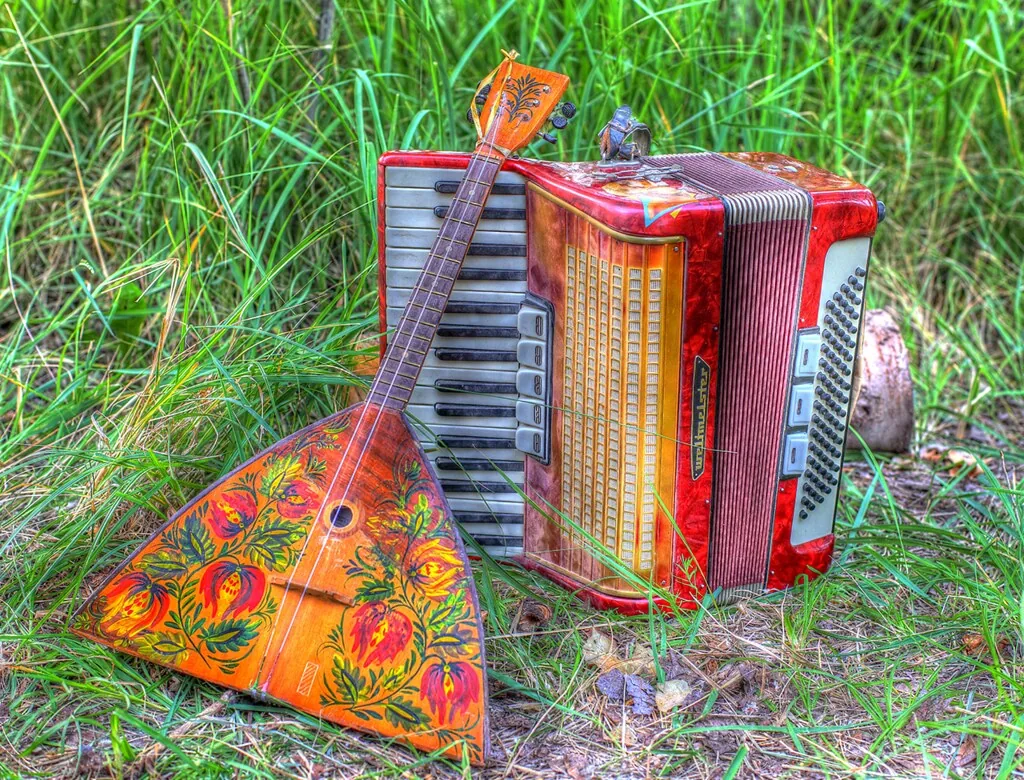
The lute is a plucked string instrument, recognizable by its pear-shaped body and rounded back.
The term refers both to a specific instrument—the Western lute—and to a category in organology.
Its history links Persia and the Arab world to the heart of Europe. The oud, theorbo, archlute and guitar share features, but they are not interchangeable.
This page offers quick reference points: terms, dates, characteristics, and changes to the neck, body and tuning.
As you read, you will discover how the word evolved, how the instrument is played and built, and where it belongs among musical instrument families.
For more on its history and variants, see the entry on exionnaire.
Definition of the lute (a plucked string instrument)
In everyday language, the term distinguishes the fretted, polyphonic Western lute from the fretless Arab oud, which is used more for melody.
In organology, it refers to a group of instruments whose strings run parallel to the neck, according to the Hornbostel–Sachs system. The category therefore includes related, but distinct, forms.
How can you recognize a lute?
- A neck attached to a rounded body and a soundboard.
- A deep, ribbed back, an often bent-back pegbox and a carved rosette.
- Playing with the fingers or a plectrum, depending on the period and region.
| Criterion | Western lute | Oud (Arab lute) |
|---|---|---|
| Frets | Present (movable frets) | Absent |
| Musical role | Polyphony and accompaniment | Melody and solo playing |
| Visual identification | Ribbed back and rosette | Rounded body and shorter neck |
Quick guide: for the rest of this article, “lute” mainly means the European instrument; the oud returns in historical comparisons.
Etymology and origin of the word “lute”
The word comes directly from the Arabic al-ʿūd, literally “the piece of wood.” The term passed from one language to another through trade and cultural exchange, eventually giving Europe the word we know today.
Its lineage is clearly Eastern: Persian traditions established the general form, while Arab contributions influenced the body and its uses. Over several centuries, this transmission followed sea routes, markets and intellectual contacts.
In organological terms, the name reflects a simple fact: this instrument is made almost entirely of wood, and its construction shapes its tone. The etymology helps explain why the soundboard, body and neck remain central to its music.
The transition from oud to Western lute then brought decisive changes, including the addition of frets and the pursuit of polyphony. For further background, see the Wikipedia entry.
Arab lute (oud) and European lute: essential differences
The comparison reveals two complementary approaches: one favors the melodic line, while the other develops harmony. The word covers several instruments, so it is important to specify which one is being discussed.
Frets and intonation
The oud has a short, fretless neck. This makes microtonal inflections and fluid playing on the strings easier.
In Europe, adding frets stabilized pitches. Notes became more reliable for playing chords and counterpoint.
Musical role
The Arab instrument remains chiefly melodic. It accompanies songs and solo improvisations.
The European instrument became polyphonic. From the 14th century onward, playing techniques grew more complex and the repertoire expanded.
Where they were played and when they diverged
The oud spread mainly through North Africa and the Middle East. The European lute spread across Europe and coexisted with the guitar.
A simple reference point: the distinction was clear by the 14th century and became more pronounced during the Renaissance.
- Oud: short, fretless neck and a melodic approach.
- European lute: frets, polyphony and a harmonic repertoire.
- Geography: historical contact between the regions, but distinct uses.
The history of the lute through the centuries
Traces of this instrument reach back to Mesopotamian cities, long before the Common Era. Depictions dating to around 3100 BCE show early forms that later spread toward the Near East.

Early ancient forms: Mesopotamia and their spread
Ancient objects show a technical evolution that followed trade routes. Makers then adapted the body and neck to each region.
Arrival in Europe through Spain
The instrument entered Europe chiefly through two channels: Moorish influence in Spain and exchanges associated with the Crusades. These contacts brought techniques, repertoires and ways of playing.
Golden age: the Renaissance and Baroque periods
In the 15th and 16th centuries, the instrument was central to court music and music played at home. Its repertoire flourished and its construction evolved.
During the Baroque period, makers added bass courses and players adopted complex tunings. Variants such as the theorbo strengthened its role in basso continuo.
Decline in the 18th century and rediscovery
In the 18th century, its volume could no longer compete with emerging orchestras. Its elite image limited its audience, and its use declined.
The late 19th century marked a revival: historical copies, concerts and museums, including the Cité de la musique, helped audiences rediscover the early repertoire.
- Timeline: Mesopotamia → spread to the Near East → Spain → Renaissance peak → 18th-century decline.
The main parts of a lute: body, soundboard, neck and pegbox
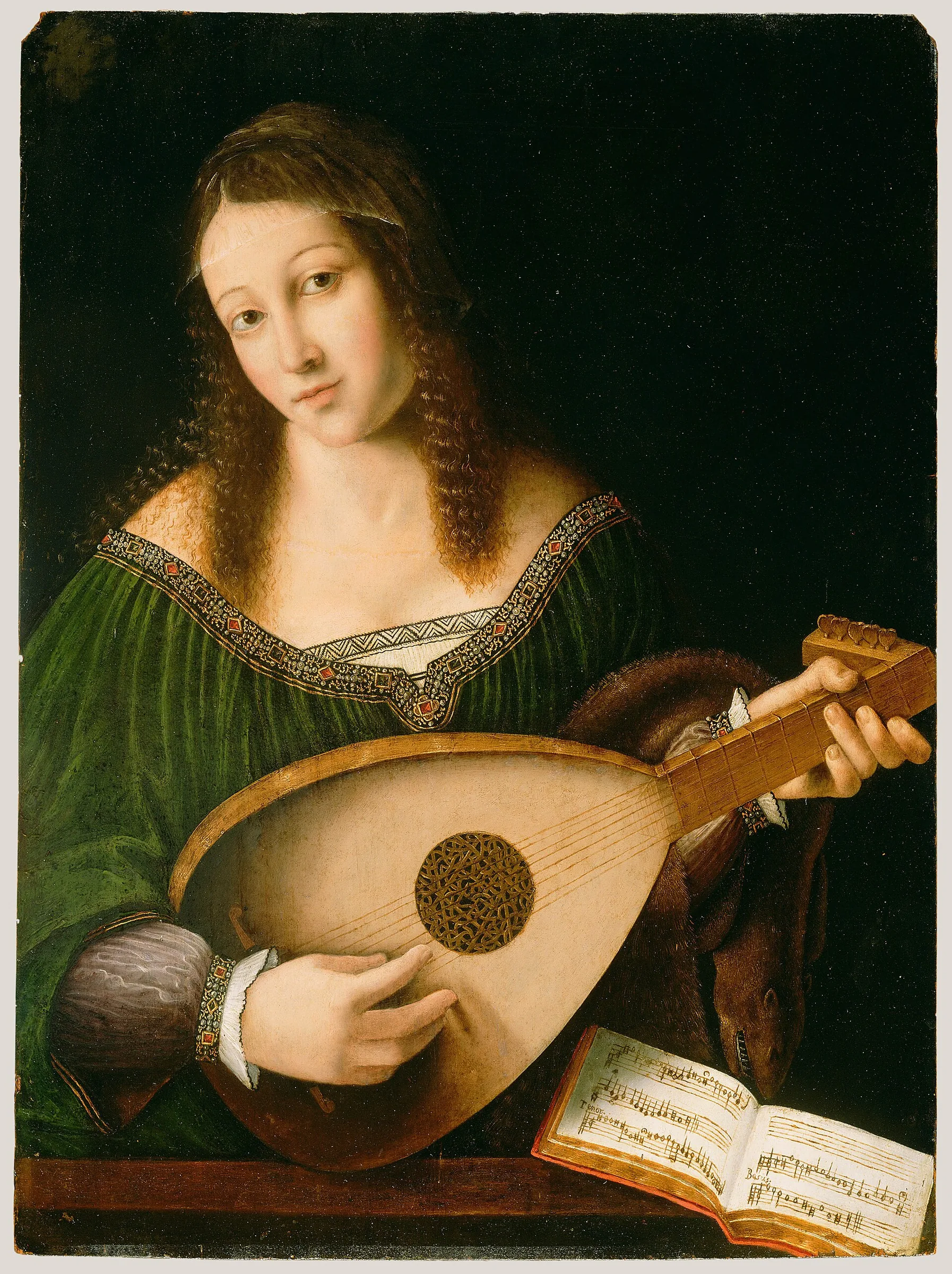
The body defines its voice: its pear shape and deep back encourage resonance and give the instrument its harmonic richness.
The strongly rounded back consists of ribs: thin wooden strips glued edge to edge to form a curved shell. This profile increases projection and colors the sound.
The soundboard, often made of spruce, plays the main role in producing vibrations. It carries one or more carved rosettes, which resemble decorative grilles more than the round soundhole of a modern guitar.
The neck is made of light wood. On historical instruments, the fingerboard, often made of ebony, sits level with the soundboard. This arrangement affects string height and feel.
The head, or pegbox, bends back at a marked angle. Its tapered pegs work by friction: they allow fine adjustment but remain sensitive to humidity.
Quick glossary
- Body: the hollow shell that resonates.
- Soundboard: the vibrating surface, often made of spruce.
- Back: the rounded shell made of ribs.
- Ribs: glued strips that form the back.
- Neck: support for the frets and fingerboard.
- Fingerboard: the ebony surface where the fingers press the strings.
- Pegbox: the angled head that holds the pegs.
- Pegs: tapered pieces used for tuning.
| Part | Usual material | Acoustic function |
|---|---|---|
| Body | Various woods (walnut, maple) | Amplification and tonal color |
| Soundboard | Spruce | Main vibrating surface |
| Back and ribs | Thin strips of wood | Projection and timbre |
| Neck and fingerboard | Light wood and ebony | Playing comfort and pitch accuracy |
Materials and lute making: an instrument made almost entirely of wood
Historical lute making favors lightness: every wooden part contributes to the sound. The choice of woods, the thinness of the ribs and the quality of the glued joints determine the timbre.
Soundboard wood
The soundboard is usually made of spruce, a light, resonant wood. Its fibrous structure supports subtle vibrations and a quick response to each pluck.
Assembling the back and internal reinforcements
The back consists of ribs glued edge to edge. Precise bending and joining keep the shell stable and properly shaped.
Inside, glued strips of parchment reinforce the shell. They add stiffness, limit cracks and hold everything together without making the instrument heavy.
Good to know: despite its size, the instrument remains very light. This affects posture and how it feels to play. Take care with humidity and temperature changes: old glue joints are sensitive and need special attention.
To learn more about construction and the craft, see this account of the instrument maker’s work.
Strings, courses and string counts: how a lute is strung
The way the strings are fitted affects tonal color, volume and how long notes sustain.
What is a “course”? A course is a group of strings played together, usually a pair. This arrangement thickens the sound and enriches its overtones without requiring a stronger pluck.
The chanterelle and string layout
The chanterelle is the highest-pitched string. It is often fitted singly to give melodic lines clarity and definition.
On some later instruments, two upper courses may be single. This makes playing in the high register lighter and changes the balance of the sound.
Materials: gut and metal
Gut strings: the most common historical choice, offering a warm tone and a supple feel under the fingers.
Metal strings were rare. They increase tension and projection but require a suitable structure and body.
Unison and octave tuning
On upper and middle courses, the strings are often tuned in unison for a clear attack.
In the lower courses, unison or octave tuning strengthens the bass: the octave adds depth and supports the accompanying line.
Examples and historical variations
Typical figures: an eight-course Renaissance lute generally has about 15 strings. A 13-course Baroque lute often has about 24.
These figures show that there is no single stringing arrangement: neck width, the number of courses and the choice of strings changed with the period and repertoire.
| Feature | Renaissance (8 courses) | Baroque (13 courses) |
|---|---|---|
| Approximate number of strings | ≈ 15 | ≈ 24 |
| Course layout | Mostly double courses, with a single chanterelle | Several bass courses, with some single upper courses |
| Common materials | Gut strings | Gut strings, with some use of metal strings |
| Effect on sound | Warmth and harmonic richness | Extended bass range and greater volume |
Note: the number of courses and the width of the neck directly affect how complex historical tunings are to play. The next section explains those tunings in detail.
Lute tuning: principles, variations and practices (from the Renaissance to the 17th century)
Tuning shaped the lute’s repertoire and playing techniques during the Renaissance and through the 17th century. It determines hand positions, helps with counterpoint and influences choices about neck design and stringing.
Renaissance tuning: in the standard system, most courses are separated by fourths, with a major third between the fourth and third courses. This pattern makes inversions and inner voices easier to play without complicated fingerings.
Adding bass courses
The gradual addition of bass courses extended the range and enriched the harmony. These low strings complicated fingering: because the neck was wider, bass notes were often easier to play on open strings.
Variety in the 17th century
In the 17th century, especially in France, tunings varied widely by school and repertoire. The “old tuning” (G–C–F–A–D–G) and “new tuning” (A–D–F–A–D–F) are useful historical reference points.
D minor tuning
By the end of the century, “D minor” tuning had become common on many Baroque instruments. It favored resonances, open pedal notes and harmonic progressions valued by Baroque lutenists.
For examples of early setups and source material, see studies of historical tunings.
Pitch and intonation: why there is no single standard
The reference pitch varied considerably by country, repertoire and playing practice.
Concert pitch means a reference frequency, often that of A above middle C. It affects string tension, brightness and balance within an ensemble.
Historical sources document a wide range: the frequency of A varied between 392 Hz and 470 Hz. This spread shows that there was no universal standard.
Documented range by place and context
Reasons include local traditions, the demands of a repertoire, the tuning of other instruments and each maker’s setup. The same instrument can sound warmer or brighter at a different pitch.
In practice, a lute may be tuned below or above today’s reference of A = 440 Hz. Perceived intonation also depends on temperament, strings and movable gut frets.
Tip: instead of searching for the one “correct” pitch, choose one that fits the sources, the other musicians and the style of the century you are exploring.
Playing the lute: technique, posture and sound
The player’s movements directly shape the instrument’s tone and fullness. A stable posture is essential: the instrument rests on the thigh or against the body, the right hand plucks the strings and the left hand selects the pitches.
Fingers or plectrum: how playing practices evolved
Early players used a plectrum for a clear, bright attack. In Europe, finger playing gradually gained ground because it offered greater flexibility and richer polyphony.
The difference: a plectrum produces a stronger attack; the fingers allow subtler dynamics, several voices at once and resonance from open strings.
The left hand on the fingerboard: gut frets and challenges in the bass
Frets are often adjustable loops of tied gut. They shift with use and need regular adjustment.
On bass courses, the width of the neck makes fingering harder. Bass strings are often played open to preserve clarity and resonance.
- Posture: stability supports a precise sound.
- Attack: the right hand controls articulation.
- Pitch: the left hand controls accuracy on the fingerboard.
- Listening: an intimate sound, delicate attacks and the importance of open strings.
Lute tablature: another way to read and write music
Tablature turns reading music into a guide to physical movements. It shows where to place the fingers on the fingerboard instead of naming pitches. This system therefore focuses on what the player does.
The principle: finger positions instead of notes
Tablature shows which fret position and string to play. For someone used to staff notation, the logic is different: you read positions on the instrument before identifying a note’s pitch. Historical lutenists thought in positions and sequences rather than abstract music theory.
Effects on learning and passing on the repertoire
Advantages: tablature makes positions and fingerings easier to read and patterns easier to memorize. Disadvantages: it makes transposition and comparisons between tunings harder. The same sign can produce a different pitch when the tuning changes.
- Transmission: manuscripts, printed books and national schools spread distinct styles.
- Repertoires: Renaissance and Baroque works often survive in regional tablatures, valuable sources for historians.
- The role of lutenists: their copies and editions helped standardize some practices.
For more on related practices, read the history of the guitar, which sheds light on how repertoires and notation spread.
Repertoire and musical roles: solo, accompaniment and ensemble
In the 16th and 17th centuries, the lute served as both a solo and accompanying instrument. At court, its rich polyphonic writing supported songs and dances.
Polyphony and court music
During the Renaissance, its repertoire included fantasias, pavanes, dances and transcriptions. Solo pieces explored polyphony and delicate inner voices.
Basso continuo and larger instruments
In the Baroque period, basso continuo called for lower-pitched instruments. Players used the theorbo, chitarrone or archlute for a deeper foundation and steadier rhythmic support.
Composers and notable performers
John Dowland embodies English melancholy in works such as Lachrimae. Sylvius Leopold Weiss represents German virtuosity. Denis and Ennemond Gaultier, followed by Robert de Visée, illustrate the French school. Modern performers Paul O’Dette and Hopkinson Smith have brought these works back to public attention.
| Role | Examples | Effect on the instrument |
|---|---|---|
| Solo | Fantasias and pavanes (Dowland) | Fine fingerboards and movable frets |
| Accompaniment | Songs and small ensembles | Tunings that favor resonance |
| Basso continuo | Theorbo and chitarrone in ensembles | Extended body and added bass strings |
For an overview of its use at court, see the page on court music.
Lute definition: origins, forms and instrument families
The instrument family discussed here includes a wide variety of forms, from the court lute to large continuo instruments.
Renaissance lute: a standard-sized instrument with a delicate, clear tone. It often has 6 to 12 courses, providing harmonic richness suited to solo playing and polyphonic music.
Baroque lute: it gained bass courses, reaching 13 or 14 and sometimes more. D minor tuning became common later on, strengthening resonance and the bass foundation.
Continuo variants:
- Theorbo: an extended neck and deep basses for ensemble accompaniment.
- Chitarrone: an Italian variant closely related to the theorbo.
- Archlute: a compromise between a solo instrument and a continuo instrument.
Related instruments: the angelica, mandore, guitar and biwa are also played by plucking strings. They differ in body shape, tuning and repertoire.
When to use “lute”: use the term for the historical European instrument. Specify “theorbo,” “archlute” or “chitarrone” when its range or continuo role calls for a more precise name.
Lute, guitar, lyre, oud and mandolin: useful comparisons
Comparing these instruments shows how body shape affects projection and timbre.
Differences in body shape and projection
A deep, rounded back compared with a flat one: the pear-shaped body favors a rounder sound rich in overtones. The guitar’s flat back gives it greater projection and helps it stand out in an ensemble.
Frets, tunings and range
The oud is fretless, allowing slides and microtonal ornaments. Frets stabilize intonation and make polyphony easier.
More courses and strings extend the range downward. The result is richer harmony but more demanding playing for the left hand.
Mandolin and lyre: size, attack and design
The mandolin is small, has metal strings and is played with a plectrum. It produces a bright sound with strong projection.
The lyre, an open-frame instrument, works differently: it has no enclosed body, a straightforward attack and a distinct repertoire.
“Look at the body shape, the head and whether there are frets: these are the most reliable visual clues.”
- Visual clues: pear-shaped or flat body, angled or straight pegbox, visible frets or none.
- In practice: pluck an open string to get a sense of the range and overall tuning.
| Instrument | Feature | Effect on sound |
|---|---|---|
| Guitar | Flat back, metal or nylon strings | Projection and a clear attack |
| Oud | Short, fretless neck | Slides and a warm tone |
| Mandolin | Small body and metal strings | Bright sound with strong projection |
The lute’s legacy, rediscovery and place today (from the late 19th century onward)
Renewed interest in historical sources led to faithful reproductions and the return of forgotten repertoires.
Revival through early music: in the late 19th century, musicians and scholars revisited tablatures and treatises. Research encouraged makers to build instruments based on historical models. This movement revived the lute in concert.
Survival and traces in modern times
The instrument’s story did not end after the 18th century. Notable appearances include a theorbo and a chitarrone at the Salon des Champs-Élysées in 1895, and a lutenist accompanying silent films in the United States.
Contemporary lutenists and composers
20th century: composers such as Jacques Chailley, Yvonne Desportes and Jean Loubier wrote new music for the instrument.
21st century: lutenists and composers including Jozef Van Wissem, Ronn McFarlane and Tsiporah Meiran continue to create personal musical languages for it.
“Early music is no longer only a past to reconstruct: it inspires contemporary forms.”
Institutions and preservation: museums and collections play a crucial role. The Cité de la musique preserves, studies and displays original instruments. Such places support concerts, research and restoration.
- Why it matters: the repertoire regains its original tonal character.
- Practical effect: musicians have instruments and sources that help them perform the repertoire faithfully.
Conclusion
Summary: this plucked string instrument remains both a historical object and a useful organological category for understanding early musical practices.
It developed from the oud, but European players added frets, developed polyphony and multiplied the bass courses. These choices changed its timbre, tuning and string count over time.
Its pear-shaped body, ribbed back, resonant wooden soundboard and rosette make it recognizable. Technically, the chanterelle, paired courses and changing number of strings shape its sound.
In music, the instrument dominated during the Renaissance and Baroque periods. It then declined before a revival in the late 19th century, sustained by performers and continuing research.
Key point: compare the lute with the guitar, oud and mandolin to distinguish their projection, frets and ranges.